
 Ramos Leo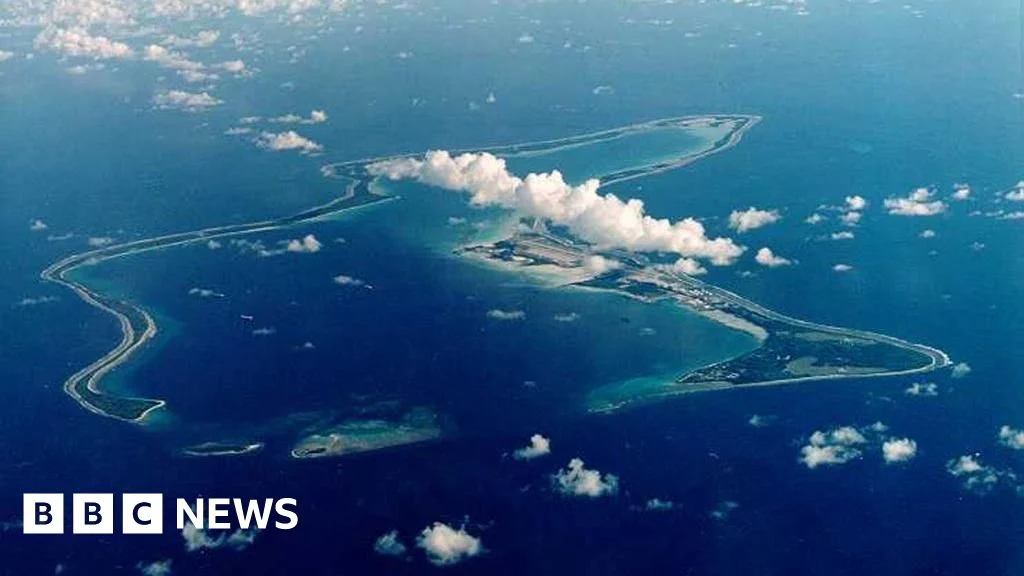
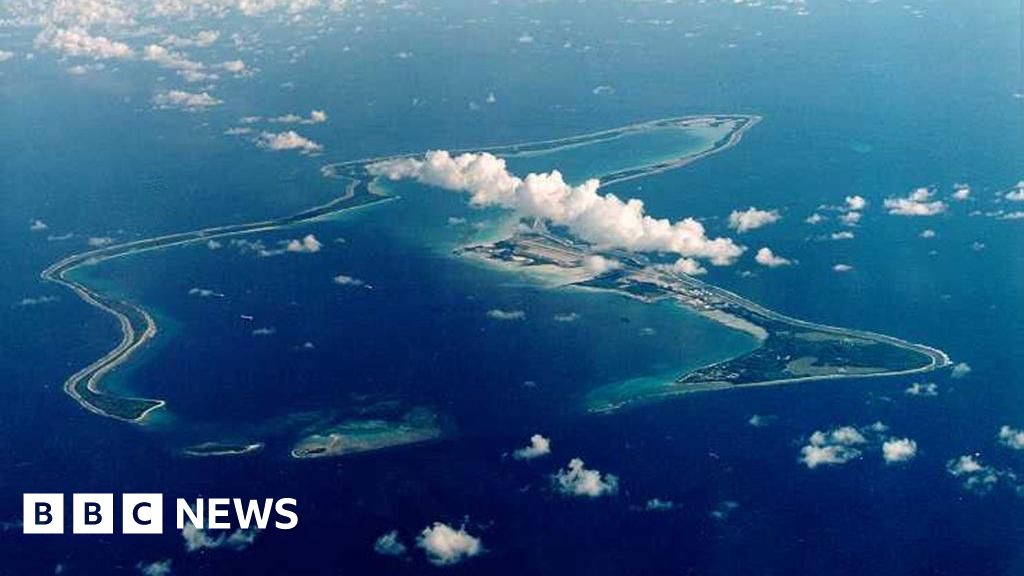
The British government, led by Sir Keir Starmer, has dramatically shelved its long-anticipated deal to transfer sovereignty of the Chagos Islands to Mauritius, a move largely attributed to escalating tensions with former US President Donald Trump and the absence of crucial formal approval from Washington. The decision, coming just hours before Parliament’s impending prorogation, casts a long shadow over the future of the strategic Diego Garcia military base and reignites a decades-old colonial dispute.
The proposed agreement, a cornerstone of Starmer’s foreign policy to align the UK with international law and resolve a protracted post-colonial grievance, sought to cede sovereignty of the British Indian Ocean Territory (BIOT) to Mauritius. In return, the UK and US would lease back the vital military installation on Diego Garcia, the largest island in the archipelago, for an estimated £101 million ($136 million) annually. This arrangement aimed to satisfy a series of international legal rulings, including an International Court of Justice (ICJ) advisory opinion and a United Nations General Assembly resolution, which have overwhelmingly called for the UK to complete the decolonization of the territory.
However, the ambitious plan hit an insurmountable roadblock in the form of renewed and fervent opposition from Donald Trump. While the former president had reportedly expressed support for the treaty during initial discussions, his stance shifted dramatically in recent months. In January, Trump publicly branded the deal an "act of total weakness," signaling a profound disapproval that has now directly undermined its progression. This U-turn has created a diplomatic quagmire for the Labour government, leaving them in a precarious position regarding the future of the strategic base and their relationship with a potentially returning US administration.
UK government officials have clarified that they are not entirely abandoning the agreement, but rather have run out of parliamentary time to pass the necessary legislation before prorogation in the coming weeks. Crucially, a new Chagos bill is notably absent from the anticipated King’s Speech in mid-May, indicating that the deal’s revival is not an immediate priority. A significant procedural hurdle has been the UK’s failure to receive a formal exchange of letters from the US – a legal necessity required for the treaty to be properly enacted. This lack of formal confirmation from Washington, despite the US Department of State having reportedly given its official backing to the plan just a day prior to the shelving announcement, highlights a deep-seated disconnect within the US political landscape or a direct intervention by Trump himself. This apparent contradiction suggests either internal discord within the US administration or Trump’s willingness to override his own diplomatic machinery when it suits his political agenda.
The Chagos Islands, officially designated as the British Indian Ocean Territory, have been under British control since the early 19th Century. Their history is marred by the controversial forced displacement of approximately 1,500 indigenous Chagossians between 1968 and 1973 to make way for the construction of the joint UK-US military base on Diego Garcia. This expulsion, which has been condemned internationally as a grave human rights violation, lies at the heart of the ongoing dispute and the calls for decolonization. The proposed deal was intended to provide a framework for the return of Chagossians, a critical component that many, including Mauritius, deemed essential for justice.
A government spokesperson reiterated the UK’s core priorities: "Diego Garcia is a key strategic military asset for both the UK and the US. Ensuring its long-term operational security is and will continue to be our priority – it is the entire reason for the deal. We continue to believe the agreement is the best way to protect the long-term future of the base, but we have always said we would only proceed with the deal if it has US support. We are continuing to engage with the US and Mauritius." This statement underscores the precarious balance the UK government attempted to strike between international legal obligations, historical injustices, and paramount geopolitical interests.
The legislative process for enshrining the Chagos deal into law was in its final stages, having progressed through various parliamentary readings. However, the clock has now run out, leaving the bill in legislative limbo. The implications of this pause are far-reaching, affecting diplomatic relations, the aspirations of the Chagossian people, and the strategic stability of the Indian Ocean.
The decision has been met with a diverse array of reactions across the political spectrum. Kemi Badenoch, the leader of the Conservative Party, expressed her party’s satisfaction with the deal being shelved. Speaking to reporters in London, she stated, "That deal should never have been on the table. Paying £35 billion to give away territory we already own, at a time when so many people in this country are dealing with the cost of living, shows [the government] were not in any way thinking clearly." Badenoch’s reference to "£35 billion" likely refers to a long-term projection of the lease payments or a more extensive compensation package that was perhaps being discussed, framing it as an exorbitant cost to surrender British territory. She emphasized that the decision was not about appeasing Trump, but rather about acting in the "British national interest," arguing that "Giving away the Chagos Islands was wrong for the British national interest." The Conservatives have consistently advocated for retaining sovereignty over the islands, citing national security and strategic importance.
Lord Simon McDonald, a former Foreign Office permanent secretary, weighed in on the BBC’s Radio 4 Today programme, suggesting the government had "no other choice" but to shelve the deal. He explained, "The UK had two objectives, one was to comply with international law, the second was to reinforce the relationship with the United States. When the president of the United States is openly hostile, the government has to rethink, so this agreement, this treaty will go into the deep freeze for the time being." His analysis highlights the dilemma faced by the Starmer government: prioritizing international legal compliance and a historical wrong versus maintaining a crucial strategic alliance, especially with a US leader known for his unpredictable foreign policy.
The Chagossian community, tragically caught in the middle of this geopolitical chess match, holds complex and often divided views. While many welcomed the prospect of sovereignty transfer to Mauritius as a step towards justice and a clearer path to return, a significant number view the deal as a betrayal. They have long desired the UK to retain sovereignty over the islands, believing it would offer them a more direct route to resettle their homeland and ensure their rights. The shelving of the deal, therefore, brings renewed uncertainty to their long-deferred hopes.
Gavin Glover, the attorney general of Mauritius, reacted with a degree of resignation, stating the UK announcement "doesn’t surprise us." He directly attributed the problem to the "deteriorating relationship" between Sir Keir Starmer and Donald Trump. While acknowledging the setback, Glover remained hopeful, noting that the decision "doesn’t mean that the bill cannot be brought back to Parliament." He expressed Mauritius’s expectation that the US and UK will eventually need to reach an agreement, hoping for "greater clarity in the coming months" regarding the path forward. For Mauritius, the claim to the Chagos Islands is a matter of national integrity and a legacy of decolonization.
Reform UK, a party that has been vocally critical of the proposed deal, also welcomed the shelving. Leader Nigel Farage declared, "This is great news and long overdue. Now the government must right a terrible wrong and help the Chagossians to fully resettle their home." His comments echo a sentiment among some that the deal was flawed and that a more direct approach to Chagossian resettlement, perhaps under continued UK sovereignty, is preferable.
Liberal Democrat foreign affairs spokesman Calum Miller offered a scathing critique of the government’s handling of the situation. "The handling of the Chagos deal has been totally shambolic – from its start under the Tories to this point under Labour," Miller asserted. He went on to highlight Trump’s perceived unreliability, stating, "Trump’s fickle approach shows just how unreliable he is. We had a strong, stable and effective military partnership with the US. Trump has gravely endangered that." Miller concluded by stressing that any future deal "must provide clarity on the future military partnership with the US and address Chagossian rights and Parliamentary scrutiny of the sums involved."
The shelving of the Chagos Islands deal represents a significant foreign policy setback for the Starmer government and underscores the volatile nature of international diplomacy, particularly when dealing with a figure like Donald Trump. It leaves the UK in a legally vulnerable position regarding its administration of the BIOT and creates further uncertainty for the Chagossian people. The "deep freeze" of this treaty means the fundamental questions of sovereignty, decolonization, the rights of the displaced islanders, and the long-term future of the vital Diego Garcia base remain unresolved, waiting for a clearer political and diplomatic climate that, for now, appears distant. The "special relationship" between the UK and US has once again been tested, revealing its fragilities in the face of shifting political winds across the Atlantic.



 Roy Suryo

 Nakalama John
 atisusanti
