
 Nana Banana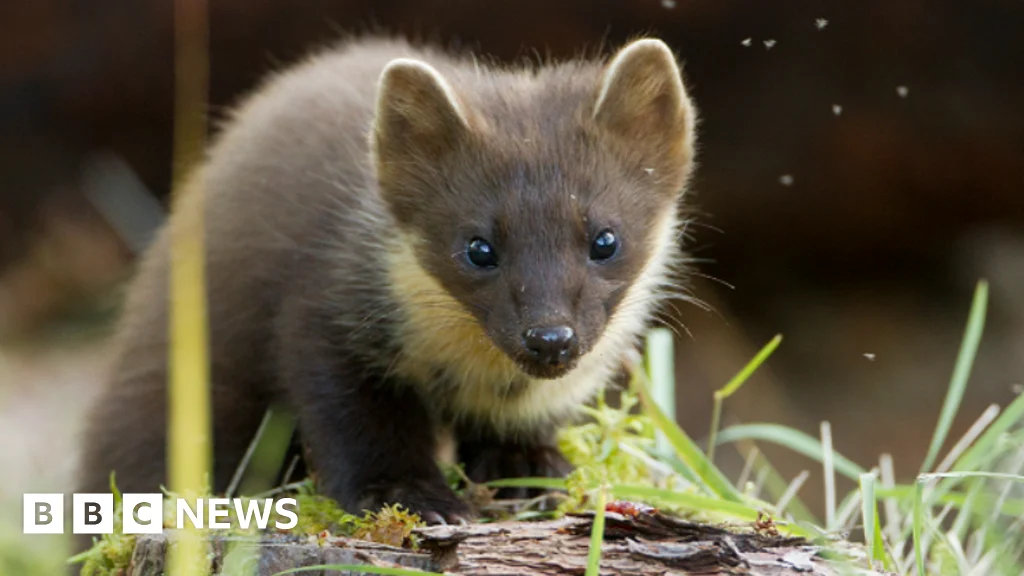
Conservation efforts to reintroduce the elusive pine marten to the ancient woodlands of south-west England are yielding significant success, with experts expressing optimism for a new wave of births this spring. Following confirmation of successful breeding last summer, the "Two Moors Pine Marten project" now anticipates more young kits to emerge from their dens across Dartmoor and Exmoor, marking a crucial step towards establishing a self-sustaining population for a species absent from the region for over a century.
The project, spearheaded by the Devon Wildlife Trust in collaboration with a consortium of partners including Exmoor National Park Authority, Dartmoor National Park Authority, the Vincent Wildlife Trust, Forestry England, and Natural England, commenced its ambitious reintroduction programme in autumn 2024. Since then, dozens of these charismatic mammals, members of the mustelid family and cousins to weasels and stoats, have been carefully released into carefully selected, undisclosed locations within the expansive, interconnected woodlands of both National Parks. These "secret locations" are vital to provide the martens with undisturbed environments to settle and breed, protecting them from human interference while they adapt to their ancestral territories.
The initial confirmation of breeding in July was hailed as a monumental milestone. Project lead Tracey Hamston articulated the profound relief and excitement, stating that the births were "the news we were waiting for." This pivotal moment signaled that the released animals were not only surviving but thriving and reproducing, demonstrating their successful integration into the complex ecosystems of the south-west. The anticipation now centers on the current season, with Hamston noting, "This year’s kits should be being born on both Dartmoor and Exmoor around now." The project team eagerly awaits photographic evidence from their extensive network of remote cameras, which are expected to capture the first glimpses of these new arrivals as they become more active in May and June.
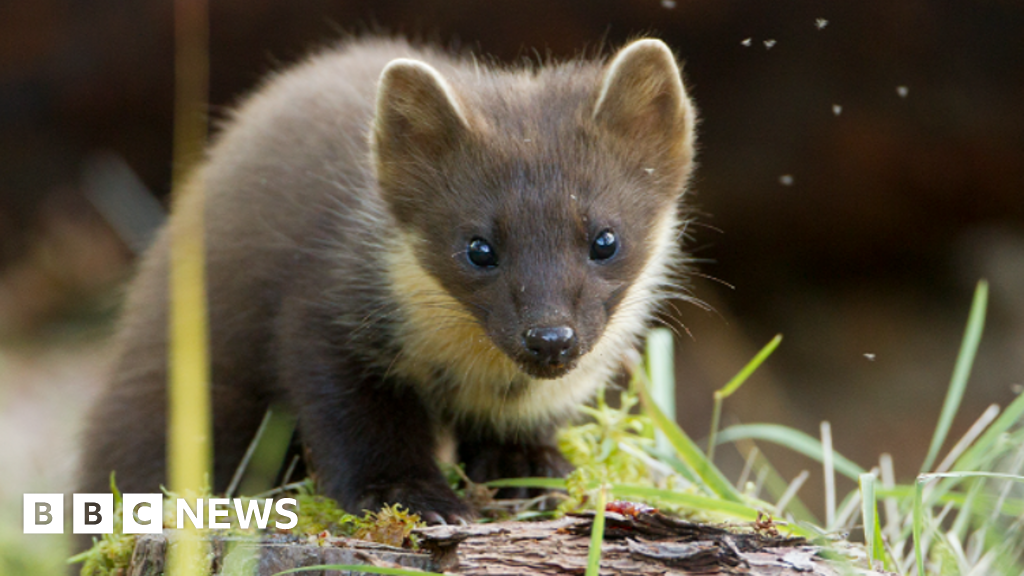
Pine martens, instantly recognizable by their rich chocolate-brown fur, slender bodies, long bushy tails, and a distinctive creamy-yellow ‘bib’ on their throat and chest, are roughly the size of a domestic cat. They are predominantly nocturnal or crepuscular, meaning they are most active at dawn and dusk, making them a rare sight for human observers. Highly agile and arboreal, they are adept climbers, navigating tree canopies with remarkable grace. Their diet is varied and opportunistic, comprising small mammals like voles and mice, birds, insects, eggs, and a significant proportion of seasonal fruits and berries, making them important seed dispersers. Their presence is also thought to have a beneficial impact on woodland biodiversity, including potentially helping to control invasive grey squirrel populations, which in turn could aid the recovery of native red squirrels.
Historically, pine martens were widespread across Britain, but their populations suffered a catastrophic decline from the 18th century onwards. Relentless persecution by gamekeepers and landowners who viewed them as pests, coupled with extensive habitat loss due to deforestation for agriculture and timber, pushed them to the brink of extinction in England. By the early 20th century, they were considered extinct across much of their former range, clinging on only in the remote Scottish Highlands and parts of Ireland. The reintroduction to south-west England marks a significant chapter in the broader national effort to restore this iconic native species, whose absence left a noticeable void in the natural balance of woodland ecosystems.
The rigorous reintroduction process involved careful planning and execution. The initial cohort of pine martens was sourced from healthy, genetically diverse populations in Scotland, where their numbers have rebounded significantly thanks to conservation efforts. Each animal underwent thorough health checks before being transported to their new homes. Upon arrival, they were initially held in temporary enclosures – a "soft release" approach – allowing them to acclimatize to their new surroundings, forage for food within a secure area, and become familiar with the local scents and sounds before being fully released into the wild. This method enhances their chances of survival and successful establishment.
A critical component of the project’s strategy has been the meticulous tracking and monitoring of the released animals. For the first six months post-release, each pine marten was fitted with a small, lightweight radio collar, enabling the team to follow their movements and assess their initial adaptation. These collars, designed to either fall off naturally or be remotely dropped, provide invaluable data on dispersal patterns, habitat use, and survival rates. Once the collars were removed or ceased to transmit, a network of motion-sensitive remote cameras took over, providing continuous surveillance of activity at potential den sites, feeding areas, and key travel routes. This combination of tracking technologies allows conservationists to gather comprehensive data without unduly disturbing the animals.
The data collected has already provided fascinating insights into the martens’ adaptability and exploratory nature. Hamston highlighted that some individuals have been tracked moving more than 20 miles (32km) from their original release points. "It’s been amazing to see where the pine martens have travelled since their release," she remarked, adding, "We can see that they’ve been thoroughly exploring the landscape before settling into their new woodland homes." Such extensive movements are crucial for genetic exchange and the natural expansion of the population, indicating that the martens are actively seeking out suitable territories and potential mates across the vastness of Dartmoor and Exmoor.
However, the journey to full recovery is not without its challenges. Road mortality remains a significant threat, especially for wide-ranging individuals. Habitat fragmentation, while mitigated by the choice of large, connected woodland areas, still presents obstacles. Maintaining public awareness and support is also paramount. While the precise release locations are kept confidential to protect the animals from disturbance and potential illegal trapping, the project actively encourages responsible public engagement. The team has specifically requested that anyone fortunate enough to spot a pine marten report their sighting, providing details such as location, date, and a brief description. This citizen science contribution is invaluable for ongoing tracking operations and helps to build a more complete picture of the martens’ distribution and behavior.
The reintroduction of pine martens in south-west England is more than just about bringing back one species; it’s a testament to a broader vision of ecological restoration and rewilding in the UK. As an ‘umbrella species,’ the protection and restoration of pine marten populations indirectly benefit countless other woodland species by necessitating the conservation of their complex habitat. Their return signifies a step towards repairing past ecological damage and fostering a more resilient, biodiverse landscape. The hope now rests on the continuing success of these pioneering animals, with each new kit born representing a glimmer of a brighter future for England’s ancient woodlands and the wild creatures that call them home.




 George Anjay
 Nakalama John
 atisusanti
 Ramos Leo
 Roy Suryo