Nakalama John
The situation is critical, with a sense of déjà vu for an industry that has faced numerous challenges and changes in ownership over recent decades. The Scunthorpe plant, a colossal industrial complex that forms the heart of the town, directly employs approximately 2,700 staff, representing about three-quarters of British Steel’s total workforce. Its fate is intrinsically linked to the economic wellbeing of the wider Lincolnshire region and the UK’s industrial capacity. On 12 April 2025, the government took decisive control of the plant through unprecedented emergency legislation, stepping in to avert the closure of its last two remaining blast furnaces – a move that would have effectively ended primary steelmaking in a significant portion of the UK. This intervention was a stark acknowledgement of the company’s strategic importance and the catastrophic socio-economic implications of its failure.
MP Nic Dakin expressed his profound disappointment that the ownership issue remains unresolved a full year after the government’s emergency intervention. He had initially hoped for a definitive settlement by the anniversary but now acknowledges its unlikelihood. "I would hope that it’s resolved as soon as possible, certainly by the summer," Dakin stated in an interview with the BBC, underlining the pressing need for clarity. His argument for nationalisation stems from the belief that it would empower the business to make crucial decisions about its future without the conflicting interests of a current owner seemingly unwilling or unable to provide the necessary investment. He posited that public ownership could serve as a temporary but essential bridge, allowing the company to stabilise, attract new capital, and potentially facilitate a more robust long-term private investment or ownership structure down the line.
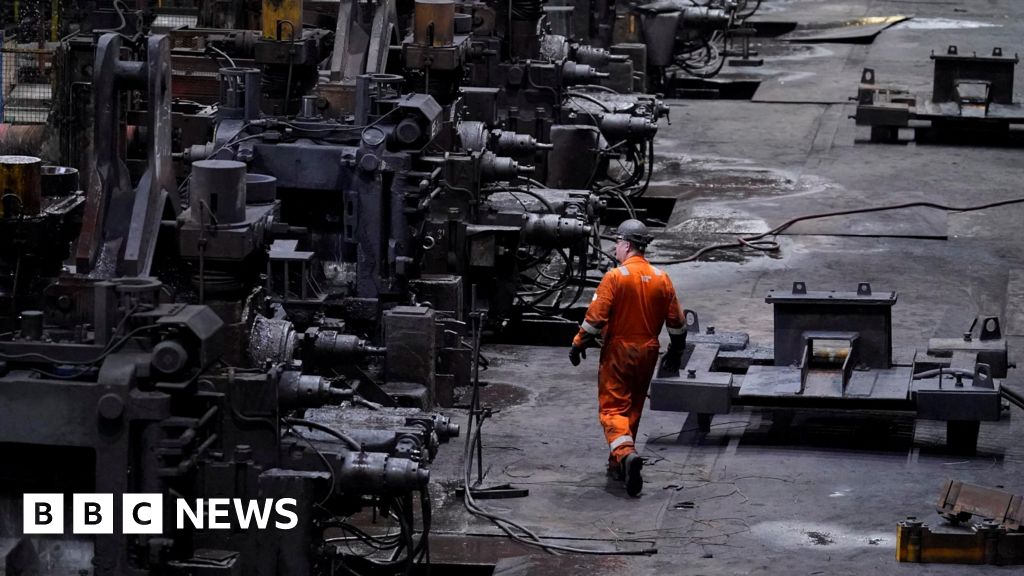
The uncertainty surrounding British Steel’s future casts a long shadow over the workforce and the local economy, creating an atmosphere of anxiety for thousands of families. Thomas Smith, a dedicated steelworker and branch secretary for the Community Union, articulated the collective sentiment: "We’re a year on now. We’re not really any further and we all want to know what’s next." Smith echoed Dakin’s preference for nationalisation, viewing it as the most reliable path to "give security to everybody" in Scunthorpe. He passionately highlighted the national importance of the industry, declaring, "I think the whole nation realises that we need the steel industry. We all know that we’re the best in the world at making steel and we know they believe in us." This sentiment underscores a deep-seated pride in British manufacturing prowess and a strong belief in the strategic necessity of a domestic steel industry.
Beyond economic considerations, Nic Dakin underscored the critical role of securing UK steel production as a matter of national security, particularly in the context of the prevailing geopolitical climate. A robust domestic steel industry ensures resilience in supply chains for critical infrastructure, defence, and manufacturing, reducing reliance on potentially volatile international markets. The current arrangement, where the government effectively runs the company while Jingye retains nominal ownership, is viewed by Dakin as fundamentally "unsustainable." This hybrid model, he argues, stifles long-term planning and investment, creating an operational paradox that drains public funds without offering a clear path to self-sufficiency.
The financial burden of this unresolved situation is substantial. According to an assessment by the National Audit Office, British Steel is currently costing the government an astonishing £1.3 million a day. This considerable expenditure highlights the urgency of reaching a sustainable long-term solution. Dakin stressed that these costs are a compelling argument for a swift resolution. "We need the owner and the controller to be the same entity so we can sort out a business plan and have the investment into the business, so it can do what everybody knows it can do in the future, which is make money and return money to the business and to the taxpayer," he asserted, emphasising the need for clear accountability and strategic alignment.
Industry minister Chris McDonald, representing the Department for Energy Security and Net Zero, acknowledged the "vital importance to the country" of British Steel and reiterated the government’s commitment to resolving a deal. However, he stopped short of offering a specific timetable for settling British Steel’s ownership. While acknowledging the pressures, McDonald maintained that "no decision’s been made on whether to nationalise the company," indicating that the government’s preference remains a private sector solution. He reasoned that "If we can come to a good resolution with Jingye, then that will be the quicker and cheaper route to resolving the issue," suggesting that a complex nationalisation process might entail greater financial and logistical challenges in the short term. The government’s cautious approach reflects the intricate legal and financial implications of such a move, balancing the need for stability with fiscal responsibility and competition law.
British Steel’s product portfolio is extensive, ranging from the railway tracks that form the backbone of national transportation networks to construction beams for major infrastructure projects, and specialised steels used in sectors like defence and automotive. The loss of such a diversified supplier would create significant ripple effects across the UK economy, impacting numerous downstream industries and potentially leading to higher costs and supply chain vulnerabilities. The focus on the "last two remaining blast furnaces" at Scunthorpe underscores its unique role as one of the few sites in the UK capable of producing primary steel from raw materials like iron ore and coal. The alternative, electric arc furnaces, typically rely on recycled scrap metal, which, while more environmentally friendly, cannot entirely replace primary steel production for all applications.
Despite the prevailing uncertainty, British Steel has recently secured significant commercial wins, offering a glimmer of hope. These include a major contract to supply railway infrastructure in Turkey and a substantial £500 million deal to produce tracks for Network Rail, crucial for the ongoing modernisation of the UK’s rail network. These contracts demonstrate the continued demand for British Steel’s high-quality products and the expertise of its workforce. However, analysts remain guarded about their long-term impact. Steel analyst Jonathon Carruthers-Green described these deals as "definitely a step in the right direction" but cautioned that investors would be looking for "sustained momentum rather than isolated successes." The global steel market faces structural challenges, including overcapacity, volatile energy costs, fierce competition from imports, and the immense capital expenditure required for decarbonisation to meet net-zero targets. These factors mean that even significant contracts may not be sufficient to guarantee the company’s future without a fundamental shift in its ownership and investment strategy.

The potential scenarios for British Steel’s future are varied and complex. A successful renegotiation with Jingye would likely involve substantial government financial support for modernisation and decarbonisation efforts, securing jobs under private ownership. Nationalisation, as proposed by Nic Dakin, could provide immediate stability, allowing for strategic investment in green steel technologies and a comprehensive business plan, potentially followed by a managed re-privatisation or the introduction of new private investors. The worst-case scenario, the collapse of British Steel, would be a devastating blow to Scunthorpe, resulting in thousands of job losses, severe economic contraction in the region, and a significant weakening of the UK’s industrial base and national security.
For Scunthorpe, British Steel is more than just a company; it is an integral part of its identity and history. Generations have worked in the steelworks, and its fate profoundly influences every aspect of community life. The uncertainty not only affects the direct employees but also a vast network of ancillary businesses and local services. As the summer approaches, the pressure mounts on the government to deliver a decisive and sustainable plan. The current juncture represents a critical moment for British Steel, its workforce, the town of Scunthorpe, and indeed, the strategic industrial capacity of the United Kingdom.




 George Anjay
 atisusanti
 Ramos Leo