
 Roy Suryo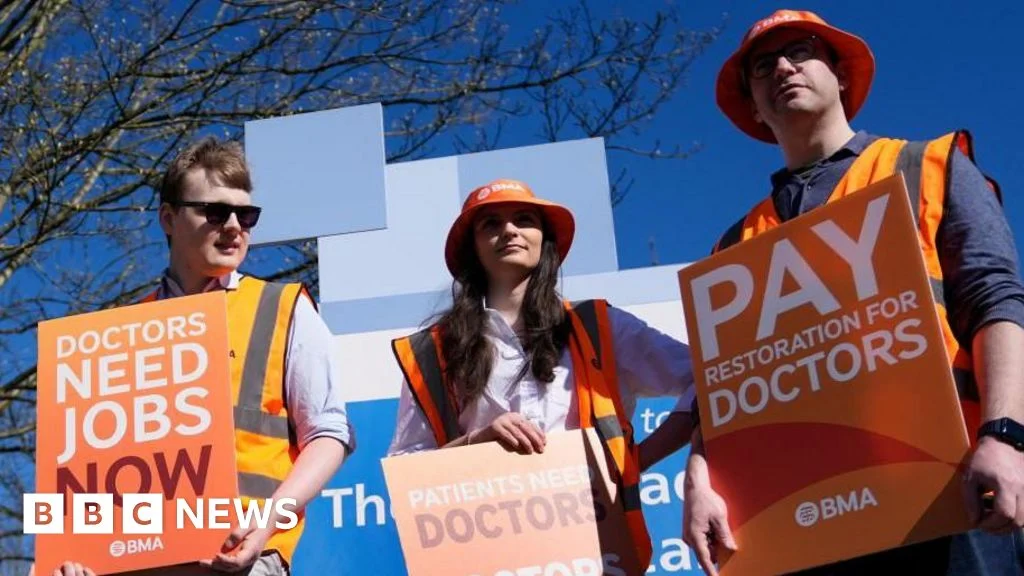
Health Secretary Wes Streeting has vehemently denied that the government altered its pay deal for resident doctors, a move he claims led to the breakdown of negotiations and the continuation of industrial action. Speaking on the BBC’s "Sunday with Laura Kuenssberg," Streeting asserted that the government "categorically" did not change the terms of the proposed agreement designed to resolve ongoing disputes over pay and working conditions. He further expressed his desire to engage in further negotiations with the leadership of the British Medical Association (BMA) resident doctors’ committee, referring to them as the "organ grinders," but claimed they had "point blank refused" to meet.
However, Dr. Jack Fletcher, the chair of the BMA resident doctors’ committee, presented a starkly different account. He stated that discussions had initially included the possibility of one or two-year pay settlements. According to Dr. Fletcher, it was "at the very last minute" that the government insisted on a three-year deal, accompanied by "reduced investment." In a statement released to the BBC, Dr. Fletcher reiterated the committee’s willingness to meet with the Health Secretary, emphasizing that throughout the dispute, the BMA has "negotiated in good faith with a genuine desire to reach a resolution."
Streeting, in his televised interview, highlighted the significant pay increases already awarded to resident doctors under the current Labour government, stating they had received a 28.9% pay rise within the first weeks of the administration. He further detailed the offer on the table, which he described as providing an average of 4.9% more pay for the current year, with some of the lowest-paid doctors potentially receiving a 7.1% increase. Despite these figures, the BMA argues that when inflation is factored in, doctors’ pay has effectively decreased by a fifth since 2008, a point they have consistently raised as the core of their grievance.
Addressing the BMA’s accusation that the deal was changed at the eleventh hour, Streeting, speaking to Victoria Derbyshire who was deputising for Laura Kuenssberg, suggested that such a manoeuvre would be counterproductive to both his and the government’s interests. He posited that either the BMA had not fully grasped the details of the proposed agreement or that, faced with the complexities of their large committee, it was "more convenient to blame the government." Streeting stressed that the government had "gone as far as we can" and acknowledged that he could not solve all the doctors’ problems in less than two years. He urged the BMA to "stop pretending that I can" and called for a more balanced approach, stating, "there has to be some give and take."
The Health Secretary’s remarks came just hours after he publicly shared a letter addressed to the doctors’ union on the social media platform X. In this letter, Streeting conveyed his "disappointment and frustration" regarding the latest series of walkouts. He indicated that "most of the deal remains on the table," but crucially, he stated that "the financial and operational impact of [the BMA’s] latest strikes has made it impossible for us to bring forward 1,000 of the 4,500 extra training places to this year." This suggests a direct link between the ongoing industrial action and the government’s ability to deliver on certain aspects of the proposed agreement, particularly concerning the expansion of training opportunities for junior doctors. The implication is that the strikes have incurred costs and operational disruptions that have necessitated a scaling back of immediate plans for increasing training capacity.
The ongoing dispute centres on a complex interplay of historical pay erosion, the government’s current financial offers, and the BMA’s demands for restoration of lost earnings and improved working conditions. While the government points to recent pay increases and the overall offer, the BMA counters with the long-term decline in real terms of doctors’ salaries, arguing that the proposed increases are insufficient to address decades of underfunding and a significant pay deficit compared to 2008 levels. The BMA’s stance is that the government’s insistence on a three-year settlement, coupled with what they perceive as reduced investment in the overall package, constitutes a significant deviation from earlier understandings and a failure to adequately address their core concerns about pay justice and the sustainability of the medical profession.
The current six-day strike action by resident doctors in England was scheduled to conclude at 06:59 on Monday morning. This period of industrial action has placed considerable strain on the National Health Service (NHS), leading to the cancellation of thousands of appointments and procedures. The protracted nature of these negotiations highlights the deep-seated issues within the healthcare system and the significant challenges in finding common ground between the government and its medical workforce. The BMA maintains that their members are striking not out of a desire for prolonged disruption, but as a last resort to secure fair pay and conditions that will help retain doctors in the NHS and ensure the future of high-quality patient care.
Streeting’s public statements and the letter shared on X serve as a clear indication of the government’s position, framing the BMA’s leadership as unwilling to compromise and suggesting that the responsibility for the continuation of the dispute lies with the union. The mention of "organ grinders" could be interpreted as a tactic to diminish the authority of the negotiating committee and potentially appeal directly to the wider membership or the public, framing the committee as intransigent and unreasonable. The government’s strategy appears to be one of publicly presenting its offer as generous and its actions as conciliatory, while placing the onus on the BMA to accept what it terms a "deal on the table."
Conversely, the BMA’s reiteration of their openness to dialogue and their account of the negotiations suggest a belief that the government has not been forthcoming with a truly equitable solution. The accusation of a last-minute change to the deal, particularly concerning the duration of the settlement and the level of investment, is a serious one and directly contradicts Streeting’s claims. The BMA’s emphasis on negotiating in "good faith" aims to counter any narrative that they are acting unreasonably or are not genuinely seeking a resolution. The core of the disagreement, therefore, remains the interpretation of the negotiation process and the substance of the offers made and withdrawn.
The government’s position, as articulated by Streeting, suggests a focus on fiscal constraints and the need for a balanced approach to public sector pay. The mention of the impact of strikes on the ability to deliver training places underscores the government’s concern about the broader consequences of industrial action on the functioning and future development of the NHS. The BMA, on the other hand, frames the issue as one of fundamental fairness and the need to rectify a significant decline in the real value of doctors’ remuneration, which they argue is essential for recruitment and retention. The resolution of this dispute hinges on whether a mutually acceptable compromise can be found that addresses the concerns of both parties and ensures the long-term stability and effectiveness of the NHS.



 George Anjay
 Nakalama John
 atisusanti
 Ramos Leo
 Nana Banana