George Anjay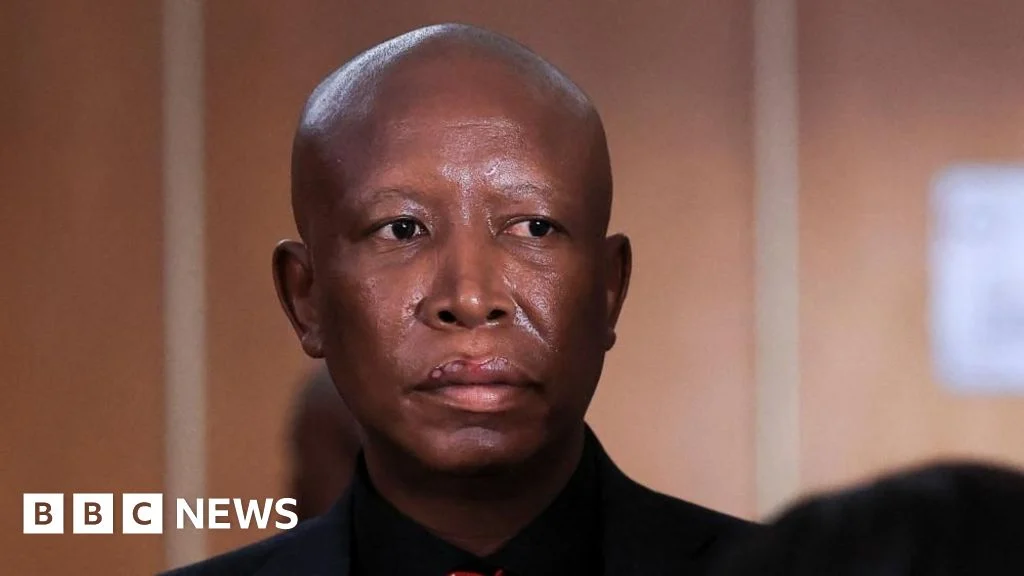
East London, South Africa – April 16, 2026 – Julius Malema, the fiery and often controversial 45-year-old leader of South Africa’s Economic Freedom Fighters (EFF) party and a Member of Parliament, has been handed a five-year prison sentence after being found guilty of the illegal possession of a firearm and discharging it in public. However, in a significant development that has reverberated through the nation’s political landscape, Magistrate Twanet Olivier granted Malema leave to appeal both the verdict and the sentencing. This crucial decision means that the firebrand politician will not be immediately incarcerated, providing a temporary reprieve and allowing him to continue his political activities while the legal process unfolds.
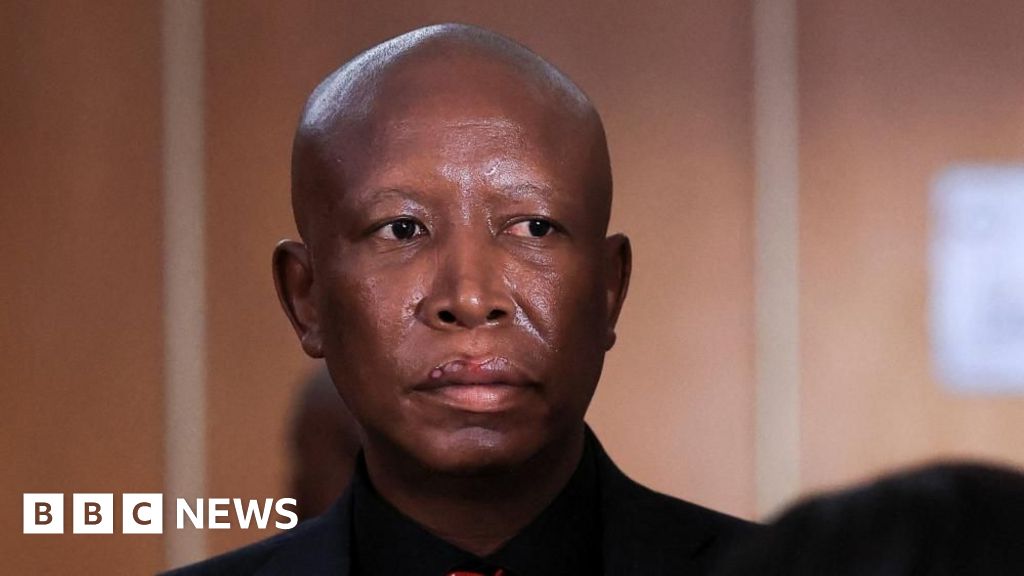
Standing before the East London court, clad in his customary dark suit and a bold red tie that signifies his party’s allegiance, Malema displayed a striking lack of outward emotion as Magistrate Olivier delivered the news of his sentence. The gravity of the situation, with his political career and freedom hanging precariously in the balance, appeared to be met with a stoic resolve. This conviction stems from a series of charges, including the unlawful possession of a firearm and reckless endangerment, to which he was found guilty last year.
The legal proceedings are rooted in a widely publicized incident from 2018. A video that circulated extensively showed Malema, during his party’s fifth-anniversary celebrations in the Eastern Cape province, firing several shots into the air with a semi-automatic rifle. The act, captured on camera, ignited a firestorm of controversy and ultimately led to the charges he faced.
In his defence during the trial, Malema maintained that the firearm in question did not belong to him. He asserted that the shots were fired not out of malice or recklessness, but rather as a means to energize and incite the celebratory mood of the large crowd gathered for the event. This explanation, however, was not persuasive to the court. Magistrate Olivier, in her sentencing ruling, characterized the act as far from an impulsive reaction, stating, "it wasn’t… an impulsive act. It was the event of the evening." Her judgment underscored the seriousness of Malema’s actions, emphasizing that his prominent public profile carried significant weight. She noted that while his political standing was not a direct factor in her findings, as a figure with a substantial following, he bore a greater responsibility to account for his conduct.
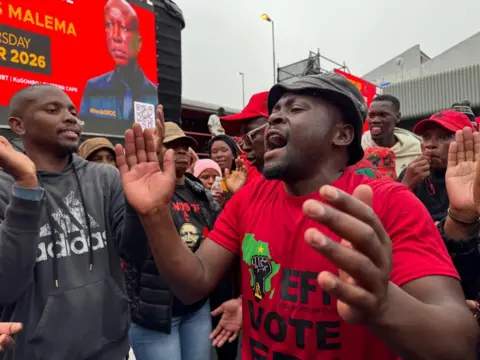
Julius Malema has long been recognized as a charismatic, outspoken, and radical left-wing politician. His rhetoric, often critical of economic inequality and historical injustices, has resonated deeply with a significant segment of the South African population, cultivating a fiercely loyal base of supporters. This loyalty was palpably demonstrated outside the East London courthouse. Hundreds of EFF supporters gathered, their presence a powerful display of solidarity. They voiced their unwavering support for Malema through fervent chants and the singing of revolutionary songs, underscoring their commitment to his cause. Upon hearing that an appeal had been granted, the mood of the crowd erupted with renewed energy. In the Xhosa language, they jubilantly proclaimed, "sigoduka naye," a phrase translating to "we are leaving with him today," signifying their intention to stand by him through the ongoing legal challenges.
Malema’s political journey is a significant chapter in modern South African history. He initially rose to prominence as the leader of the youth wing of the ruling African National Congress (ANC). However, a significant falling-out with then-President Jacob Zuma led to his expulsion from the party. This setback marked the genesis of his independent political path, culminating in the formation of the Economic Freedom Fighters (EFF). Under Malema’s leadership, the EFF has carved out a distinct niche in South African politics. His calls for the expropriation of white-owned land without compensation and his arguments for more robust redistribution of wealth to the black majority have resonated with voters disillusioned by the pace of economic transformation. The EFF’s assertive stance and its focus on economic justice have steadily eroded the ANC’s traditional support base, culminating in its emergence as the country’s fourth-largest political party following the 2024 general elections.
Following his conviction last October, Malema had defiantly addressed his supporters outside the court in East London. He declared that "going to prison or death is a badge of honour," articulating a willingness to endure hardship for his political ideals. He further asserted, "We cannot be scared of prison [or] to die for the revolution. Whatever they want to do, they must know we will never retreat." This statement underscored his commitment to his revolutionary agenda and his readiness to face the consequences. He also unequivocally vowed to challenge the judgment all the way up to South Africa’s apex court, the Constitutional Court, demonstrating his determination to fight the verdict through every available legal avenue.
The prosecution of Malema was initiated after the Afrikaner lobby group AfriForum, an organization with a well-documented history of contentious interactions with Malema and the EFF, filed a case against him following the viral dissemination of the video. AfriForum has also played a significant role in another legal challenge against the politician. In August of the previous year, Malema was found guilty of hate speech by the equality court. This ruling pertained to remarks he made at a rally in 2022, following an alleged assault on an EFF member by a white man. During his speech, Malema reportedly stated, "No white man is going to beat me up… you must never be scared to kill. A revolution demands that at some point there must be killing." The equality court concluded that these statements "demonstrated an intent to incite harm," a finding that the EFF has contested, arguing that his words were taken out of context and misrepresented.
The legal battles and the conviction underscore the deeply polarized political and social landscape of South Africa, where issues of race, land ownership, and economic inequality continue to be potent forces shaping public discourse and political action. Malema’s conviction and subsequent sentencing, despite the allowance for appeal, represent a pivotal moment, raising questions about the future of the EFF, the trajectory of opposition politics in South Africa, and the enduring legacy of the country’s struggle for liberation and equality.
Additional reporting by Nobuhle Simelane.


 Nakalama John
 Ramos Leo
 Nana Banana