Nana Banana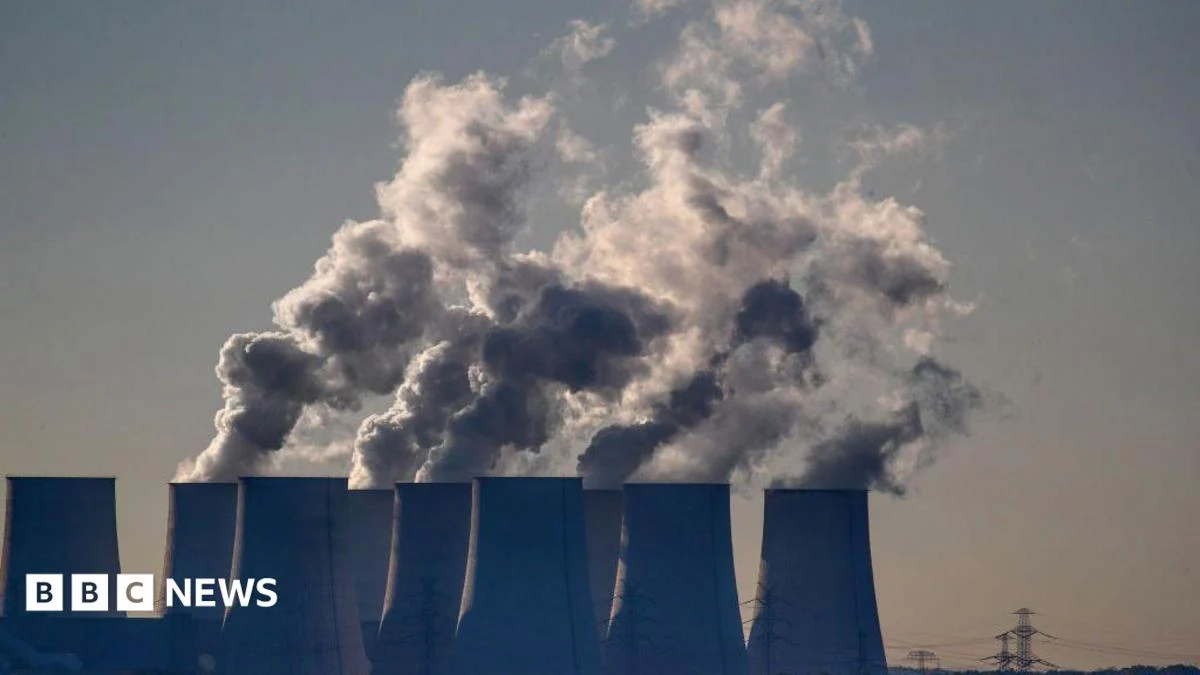
Under the new proposals, the strictures of the EU’s ETS would be eased, allowing certain industries to secure emission allowances for a longer duration, specifically until 2038 instead of the previously mandated cut-off of 2034. This extension, however, comes with a critical caveat: companies would need to commit demonstrably to investing in decarbonisation efforts within the EU. The move signifies a strategic adjustment by the European Commission, the EU’s executive arm, which argues that these changes will better align the ETS with the bloc’s overarching goal to reduce carbon emissions by 90% by 2040, compared with 1990 levels, while fostering a more resilient and competitive European industry.
The proposals, which represent a complex balancing act between environmental imperatives and economic realities, still require approval from EU member states and the European Parliament. This legislative process is anticipated to be lengthy and potentially contentious, with deliberations expected to span up to a year as various national and sectoral interests are debated. EU climate commissioner Wopke Hoekstra articulated the Commission’s rationale, stating, "We are adopting a more business-friendly and, may I say so, savvy approach." This sentiment underscores a recognition of the significant challenges faced by European industries in a globally competitive landscape, particularly amidst fluctuating energy prices and the substantial investment required for green transitions.
The Emissions Trading System, established in 2005, stands as the cornerstone of the EU’s strategy for curbing greenhouse gas emissions from its power sector and heavy industry. It operates on a "cap-and-trade" principle, where a limit (cap) is set on the total amount of greenhouse gases that can be emitted by installations covered by the system. Within this cap, companies are required to buy or receive permits, known as allowances, for each tonne of carbon dioxide they emit. This mechanism creates a financial incentive for businesses to invest in cleaner technologies and reduce their carbon footprint, as lowering emissions means fewer allowances need to be purchased, thereby saving costs. Companies can trade these allowances, creating a market price for carbon. A portion of allowances has historically been given for free to industries deemed at risk of "carbon leakage" – the phenomenon where businesses might move production outside the EU to avoid carbon costs, potentially leading to increased global emissions.
The current ETS cap is designed to decrease annually, ensuring a steady reduction in overall emissions. The European Commission’s latest proposal suggests a significant slowdown in the rate at which this cap is lowered each year. Specifically, the annual reduction rate is proposed to drop from the current 4.3% to approximately 3.7% starting from 2031, further decelerating to 1.7% from 2036. This moderation in the cap reduction trajectory aims to alleviate some of the immediate cost pressures on industries, giving them more breathing room to implement decarbonisation strategies without facing excessively steep annual increases in carbon costs.
Crucially, the proposed changes also involve extending the provision of free emission permits. These free allowances were originally slated to be phased out by 2034, a timeline linked to the full implementation of the EU’s Carbon Border Adjustment Mechanism (CBAM). CBAM is designed to impose a carbon price on imports of certain carbon-intensive goods from non-EU countries, thereby leveling the playing field for European industries that pay a carbon price under the ETS. The new proposal suggests continuing these free permits until 2038, four years beyond the previous deadline. This extension would delay the full impact of the ETS on some sectors, giving them more time to adapt to a world where they bear the full cost of their emissions.
To ensure that these extended free allowances genuinely contribute to the EU’s climate goals rather than simply delaying action, the Commission has introduced a conditional element. Under this new scheme, companies with credible plans to invest in decarbonisation efforts within Europe would receive 80% of their free permits upfront. The remaining 20% would only be granted once these promised investments are demonstrably made. This innovative approach seeks to strike a balance: providing financial relief to industries while simultaneously compelling them to actively pursue green transitions. It aims to prevent companies from simply pocketing free allowances without making the necessary changes to their operations.
The ETS has, since its inception, faced scrutiny and criticism from various quarters. Member states like Italy have been particularly vocal in condemning the trading scheme, often characterizing it as a "de facto tax" that has contributed to artificially high energy prices, especially during periods of energy market volatility. These concerns resonate with other nations, particularly those in Central and Eastern Europe, whose economies often rely more heavily on carbon-intensive industries and are still undergoing complex energy transitions. The financial burden imposed by the ETS, they argue, can hinder economic growth and competitiveness.
The political reactions to the proposals have been starkly divided, reflecting the inherent tension between economic protection and environmental ambition. Polish climate minister Paulina Hennig-Kloska welcomed the shift, stating, "For the first time, we are seeing a softening of the stance rather than a toughening of it – this is a huge success for Poland. Although we will fight for more." This response highlights the ongoing advocacy from countries like Poland, which often seek greater flexibility in climate policies to manage their unique national circumstances and industrial structures. Their push for further concessions suggests that the upcoming negotiations will be fraught with demands for tailored approaches and extended transition periods.
Conversely, environmentalists and Green politicians have expressed deep dismay. Michael Bloss, a German member of the European Parliament from the Green party, sharply criticized the plans, warning that they would lead to "gigantic climate pollution." He further contended that such a weakening of climate policy would inevitably result in a "worse quality of life" for future generations. This perspective emphasizes the urgency of climate action and fears that any delay or relaxation of targets could jeopardize the planet’s ecological stability and the long-term well-being of its inhabitants. Environmental NGOs are expected to lobby intensely against these changes, arguing that they undermine the EU’s leadership role in global climate efforts and send a negative signal to other major emitters.
The proposed changes come at a time when the EU is grappling with a complex interplay of geopolitical instability, energy security concerns exacerbated by the war in Ukraine, and a broader economic slowdown. Many European industries, from steel to chemicals, are struggling with high energy costs and intense competition from regions with less stringent environmental regulations. The Commission’s proposals can be seen as an attempt to shore up the competitiveness of European industry, prevent deindustrialization, and ensure that the green transition is socially and economically feasible. However, critics argue that this "business-friendly" approach risks diluting the ambition of the European Green Deal and could ultimately prove more costly in terms of climate impacts.
The broader implications of these adjustments extend beyond the immediate financial relief for businesses. They touch upon the EU’s credibility on the global stage as a climate leader, the pace of innovation in green technologies, and the overall coherence of its environmental policies. While the Commission insists the changes are aligned with the 2040 emissions reduction target, environmental groups and some scientists will likely challenge this assertion, arguing that a slower pace of emissions reduction now makes achieving future, more ambitious targets exponentially harder. The upcoming legislative debate will therefore be a crucial test of the EU’s resolve and its ability to reconcile its economic aspirations with its foundational commitment to combating climate change.

 Nakalama John
 George Anjay
 Ramos Leo
 atisusanti
 Roy Suryo