George Anjay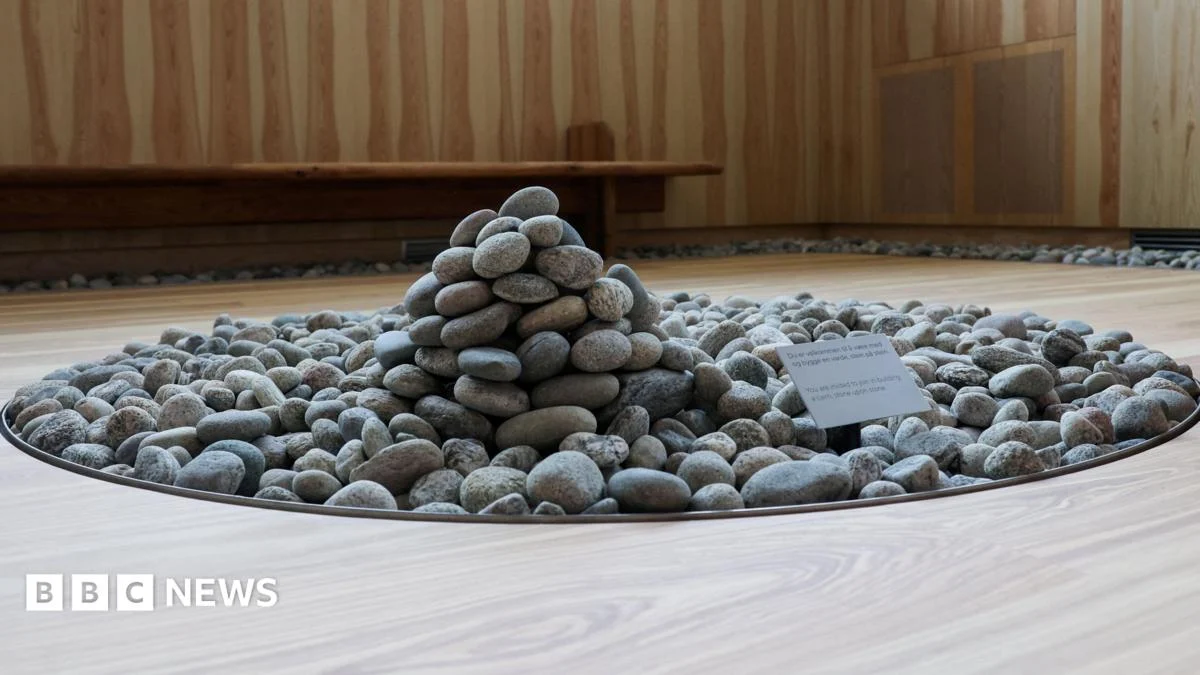
In the heart of Oslo, amidst the revitalized grandeur of the government district, Norway has unveiled a poignant and powerful new memorial, a testament to the enduring spirit of a nation scarred by its deadliest peacetime terror attack. This solemn inauguration, held just days before the 15th anniversary of the horrific events of July 22, 2011, serves as a profound reminder of the lives lost and the resilience forged in the face of unimaginable hatred. The memorial, a monumental artwork titled "Upholding," stands not only as a place of remembrance for the 77 souls brutally extinguished but also as a vibrant call to action, urging the public to actively engage in the defense of democratic values against the insidious creep of far-right extremism that fueled the atrocity.
The horrific events of that fateful day in 2011 are etched into the collective memory of Norway and the world. Neo-Nazi extremist Anders Breivik, driven by a warped and hateful ideology, unleashed a calculated barrage of violence. His initial act of terror was a devastating car bomb detonated in Oslo’s government quarter, claiming the lives of eight innocent individuals and leaving a trail of destruction. The carnage, however, did not end there. In a chilling escalation, Breivik then made his way to the island of Utoeya, where he systematically gunned down 69 more people, predominantly teenagers who were attending a summer camp organized by the youth wing of the Norwegian Labour Party, the AUF. Hundreds more were left physically and psychologically wounded, forever bearing the indelible scars of Norway’s most atrocious act of violence in recent history.
The unveiling ceremony on Sunday drew survivors, bereaved families, and national dignitaries, united in their grief and their unwavering commitment to never forget. Against the backdrop of Oslo’s reconstructed cityscape, a symbolic artwork was revealed: a magnificent avian representation, a bird native to the serene shores of Utoeya island. This choice of imagery is deeply resonant, evoking the natural beauty of the place where so many young lives were so cruelly extinguished, yet also symbolizing hope and the enduring presence of life.
The artist behind this monumental work, Matias Faldbakken, articulated the dual purpose of his creation. "Upholding" is designed to serve as a perpetual memorial, ensuring that the memory of the victims is honored and preserved for generations to come. Simultaneously, it is envisioned as an active participant in the ongoing struggle for democratic resilience. By engaging the public, the artwork aims to foster a deeper understanding of the far-right ideologies that motivated Breivik’s heinous acts and to inspire a collective commitment to actively resist and counter such dangerous narratives.
The contemporary artwork itself is a breathtaking spectacle. A vast, imposing frame of blue steel cradles a magnificent stone mosaic, stretching an impressive 12 meters (39 feet) into the sky. This intricate mosaic depicts a delicate wading bird, its form rendered with exquisite detail, alongside elements of straw and sticks, all artfully reflected in the surrounding water. The imagery evokes a sense of peace and natural harmony, juxtaposed with the violent disruption that shattered it. Located in Oslo’s renovated government district, the memorial is strategically positioned in close proximity to the very site where Breivik’s bomb detonated, grounding the artwork in the physical reality of the tragedy it commemorates.
Matias Faldbakken’s personal connection to the imagery further imbues the memorial with profound meaning. He recounted witnessing the very bird depicted in the mosaic on Utoeya island, a place that was meant to be a sanctuary for young people, a space for political engagement and personal growth. The tragic irony of this idyllic setting becoming the scene of such unspeakable violence underscores the senselessness of Breivik’s actions. The memorial’s inscription of the names of all 77 victims serves as a stark and personal reminder of the individual lives that were stolen, transforming the abstract tragedy into a tangible enumeration of loss.
Merete Stamneshagen, the head of a support group for victims and survivors, eloquently captured the profound impact of the attacks. Quoted by the AFP news agency, she stated, "July 22, 2011 was a brutal attack not only on individuals, but also on our democracy." This sentiment resonates deeply, highlighting that Breivik’s violence was not merely an assault on innocent lives but a direct assault on the very fabric of Norwegian society and its democratic ideals.
The inauguration ceremony was attended by a distinguished assembly, including Norway’s Crown Prince Haakon and several government officials, underscoring the national significance of the event. Crown Prince Haakon also paid his respects at the newly opened 22 July Centre, Norway’s national memorial and education center dedicated to the attacks. This center serves as a crucial resource for understanding the history of the events, learning from the past, and fostering a more informed and resilient future.
The perpetrator of this horrific violence, Anders Breivik, was sentenced in 2012 to 21 years in prison, the maximum penalty that can be imposed by Norwegian courts. However, this sentence can be extended indefinitely as long as he is deemed a threat to society, a testament to the severity of his crimes and the ongoing concern for public safety. Over the years, Breivik has repeatedly challenged the conditions of his incarceration and sought legal recourse, a process that has often drawn public attention and highlighted the complex legal and ethical considerations surrounding the detention of such individuals.
In 2016, Breivik achieved a partial victory in a human rights case he brought against the Norwegian state, though this ruling was subsequently overturned the following year. His persistent attempts to gain parole have also met with failure. In 2022, a court ruled that he had not undergone sufficient rehabilitation and continued to pose a significant risk to society, denying his bid for release. More recently, in 2024, he unsuccessfully sued the government, alleging mistreatment and isolation. These legal battles, while perhaps seeking to manipulate public perception or exploit the legal system, have consistently reinforced the judicial consensus on his continued dangerousness. Breivik’s isolation within the prison system is a direct consequence of security concerns, a measure deemed necessary to prevent further harm and maintain order.
The opening of the "Upholding" memorial and the establishment of the 22 July Centre mark a significant step in Norway’s ongoing journey of remembrance, healing, and democratic affirmation. They serve as powerful reminders that while the scars of the past may never fully fade, they can also serve as catalysts for strength, unity, and an unwavering commitment to the principles of a free and open society. The memorial stands as a solemn promise: that the victims will never be forgotten, and that the values they represented will continue to be upheld against all forms of hatred and extremism.

 Nakalama John
 Ramos Leo
 Nana Banana