
 Ramos Leo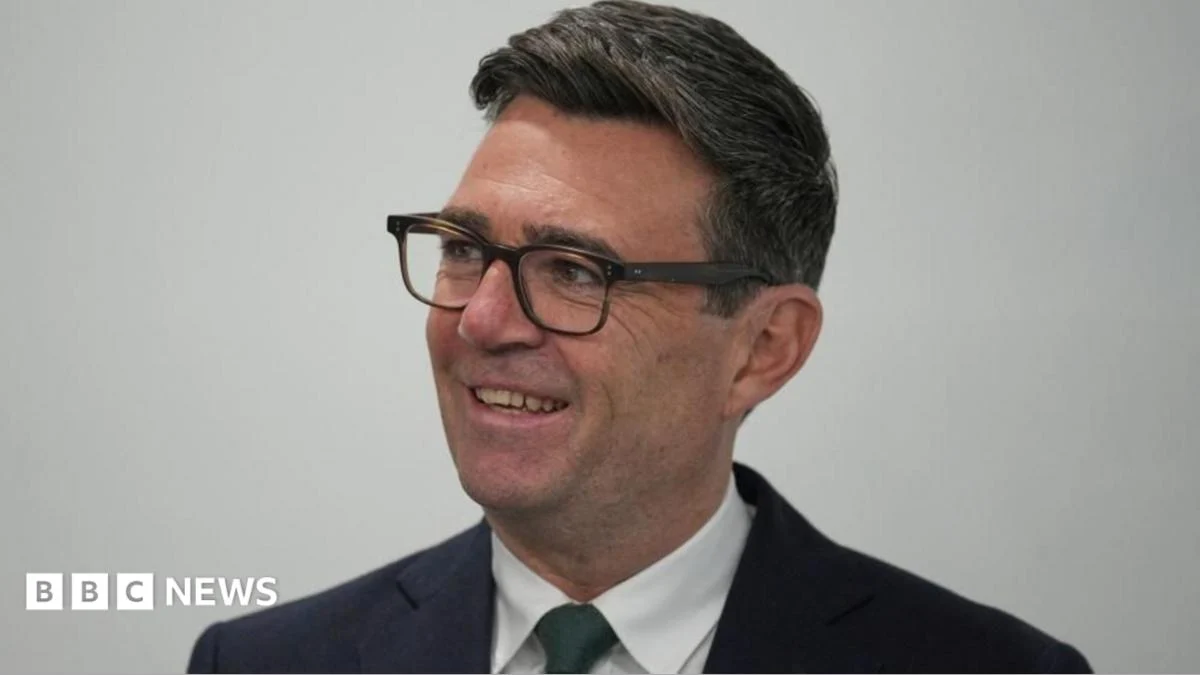
The launch of No 10 North is not merely symbolic; it represents a tangible commitment to decentralisation. Ministers Lucy Powell and Louise Haigh are also slated to operate regularly from the Manchester site, signifying a genuine dispersal of ministerial presence beyond the capital. Furthermore, the ambitious plan anticipates the relocation of up to 300 civil servants to Manchester by the close of next year, marking a substantial administrative shift. These civil servants will be instrumental in executing the government’s regional strategy, working closer to the communities they serve. To facilitate this transition, Whitehall officials expressing a willingness to relocate to Manchester are reportedly being offered attractive relocation packages, a measure designed to ease the practicalities of moving and ensure a smooth transition for staff and their families.
The chosen initial location for No 10 North is Heron House in central Manchester. Intriguingly, this building already houses offices for the Government Communications Headquarters (GCHQ), a presence that brings with it an inherent level of security and strategic importance. Specialist police officers have been observed guarding the building, highlighting the significance and sensitivity of housing the Prime Minister’s northern office within this established security footprint. While Heron House will serve as the immediate base, the long-term vision for No 10 North involves a purpose-built government site currently under construction in Manchester’s burgeoning Ancoats area. This more permanent home, however, is not slated for completion until 2032, indicating a decade-long commitment to this decentralisation project and suggesting the current arrangement is a crucial interim step.
On Friday, a pivotal moment will unfold in Manchester as Prime Minister Burnham chairs a meeting of the National Economic Council (NEC). This cabinet committee, originally established in 2008 in the throes of a global financial crisis, is being revitalised with a renewed mandate to address contemporary economic challenges and foster growth across all corners of the UK. The decision to convene the NEC outside London, particularly in a city synonymous with industrial innovation and regional resilience, sends a powerful message about the new government’s focus. The meeting is expected to delve into strategies for generating sustainable economic growth and investment, with a particular emphasis on how to leverage existing devolution frameworks and local growth policies more effectively.
Ahead of this crucial gathering, the Prime Minister articulated his vision, stating: "For 40 years, power and resources have been sucked into the centre, and too many communities have felt forgotten, without the attention and investment they deserve." This candid acknowledgment serves as a clear indictment of past centralising policies and sets the stage for a new era of governance. He further declared, with unequivocal resolve: "The days of Whitehall resisting devolution are over, for good." This powerful assertion signals a decisive break from previous governmental hesitancy to cede control, promising a more collaborative and empowered relationship between central government and local authorities.
A key structural change emanating from the establishment of No 10 North is the strategic decision-making process surrounding devolution and local economic growth. These vital policy areas will now begin to shift out of the direct, exclusive purview of the Treasury, currently led by Chancellor John Healey, and Angela Rayner’s Ministry of Housing, Communities and Local Government. While both departments will naturally retain significant input and expertise in these domains, the intent is to foster a more regionally-driven approach, with decisions made closer to their implementation. Angela Rayner, whose constituency lies within Greater Manchester, holds a particularly significant connection to this initiative and is also anticipated to work from the new northern site for the first time on Friday, further cementing the local ties of the new administration.
Burnham’s packed first day as Prime Minister in No 10 North will include vital discussions with a cross-section of business leaders. Representatives from influential organisations such as the Federation of Small Business, the Confederation of British Industry (CBI), and the British Chambers of Commerce are expected to attend. These dialogues are crucial for understanding the prevailing economic climate and for collaboratively charting a course to stimulate growth and attract investment. Labour’s broader economic strategy aims to synthesise existing devolution strategies and local growth policies into a coherent, actionable plan, fostering closer cooperation between civil servants, elected mayors, local councils, and businesses. This integrated approach seeks to unlock regional potential and ensure that economic benefits are broadly distributed.
The Prime Minister’s first week in power has already seen a series of decisive interventions aimed at alleviating the pervasive cost of living crisis. Among these is the announcement of a significant 20% cut in business rates for pubs, social clubs, and live music venues, slated to take effect from April next year. This targeted measure is designed to provide crucial relief to sectors that are not only vital for local economies but also serve as important social hubs, demonstrating a pragmatic response to immediate economic pressures.
However, the ambitious scope of Burnham’s early agenda has not escaped criticism. Conservative leader Kemi Badenoch has launched a direct challenge, dismissing his initial ambitions as "too small." Speaking on Thursday, Badenoch urged the new Prime Minister to broaden his focus, specifically highlighting the pressing need to tackle high energy costs for businesses – a major concern across industries – and to address a perceived gap in defence funding, thereby attempting to frame the national security agenda against the backdrop of regional economic policy.
Badenoch’s critique directly contrasted Burnham’s new role with his previous one: "When you are mayor of Manchester, you are handed a big pot of someone else’s money, and you decide where to spend it." She continued, "I’m sure this is great fun. It can make you very popular. But it is not the same as being prime minister." Her pointed remarks aimed to underscore the fundamental difference in scale and responsibility between leading a major city-region and governing the entire United Kingdom. She concluded with a sharp admonition: "Andy Burnham needs to do better. He is behaving like he’s still the mayor of Manchester. He is now the prime minister of the United Kingdom, he needs to start acting like it." This criticism highlights the political tightrope Burnham must walk, balancing his regional roots and decentralisation agenda with the overarching demands of national leadership.
The push to decentralise government functions and personnel is not entirely new. Successive governments have, to varying degrees, sought to move civil servants out of London. Last year, a specific target was set to reduce the number of civil service roles in the capital by 12,000, reflecting a growing consensus on the need for broader geographical distribution. According to the most recent official figures, 19.6% of all civil servants are currently based in London, a figure that has shown a gradual decrease over the past four years, suggesting a slow but steady shift. However, a more telling statistic reveals that only 13.5% of senior civil service roles are located outside of London, starkly contrasting with the 34.7% of senior roles that remain concentrated within the capital. This disparity underscores the depth of the challenge Burnham faces in truly rebalancing power and ensuring that strategic decision-making capacity is genuinely distributed across the country, making his first day working from No 10 North a potent symbol of his administration’s determination to redefine the geography of power in Britain.




 Roy Suryo

 Nakalama John
 atisusanti
