
 atisusanti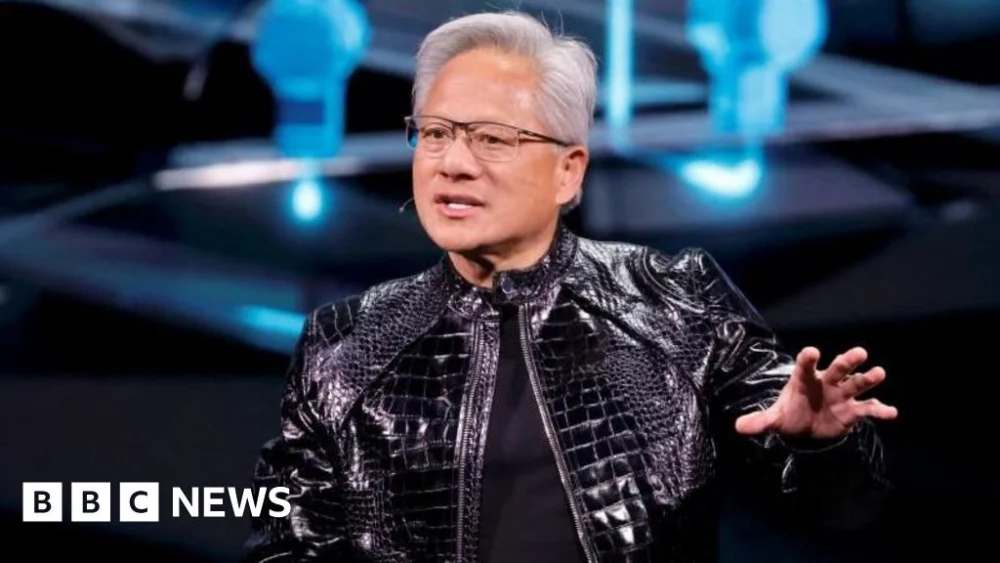
Nvidia, the undisputed titan of artificial intelligence hardware, has dramatically escalated its ambitions in the autonomous vehicle sector with the unveiling of Alpamayo, a groundbreaking AI platform designed to imbue self-driving cars with human-like reasoning capabilities. Speaking from the prestigious stage of the annual CES technology conference in Las Vegas, Nvidia CEO Jensen Huang declared that Alpamayo represents a paradigm shift, enabling autonomous vehicles to navigate the complexities of the real world with unprecedented intelligence and safety. "Alpamayo brings reasoning to autonomous vehicles, allowing them to think through rare scenarios, drive safely in complex environments, and explain their driving decisions," Huang stated, underscoring the platform’s core innovation.
This revolutionary technology is not merely theoretical; Nvidia has already begun producing a driverless car powered by Alpamayo. In a significant collaboration with German automaker Mercedes-Benz, Nvidia is leveraging its AI prowess to equip the Mercedes-Benz CLA with autonomous driving capabilities. The vehicle is slated for an initial release in the United States in the coming months, with subsequent rollouts planned for Europe and Asia, signaling a tangible step towards widespread adoption of advanced AI in personal transportation.
Donning his signature black leather jacket, Huang engaged an audience of hundreds, highlighting the immense learning experience Nvidia has gained through this project. The company’s deep dive into assisting partners in building sophisticated robotic systems has evidently paid dividends, culminating in the Alpamayo platform. Industry analysts have been quick to recognize the strategic significance of this announcement, reinforcing Nvidia’s dominant position in the seamless integration of AI hardware and software. This move further solidifies Nvidia’s commitment to the burgeoning field of "physical AI," where digital intelligence is applied to the tangible world.
Paolo Pescatore, a respected analyst at PP Foresight, commented from Las Vegas, stating, "NVIDIA’s pivot toward AI at scale and AI systems as differentiators will help keep it way ahead of rivals." He further elaborated on the transformative nature of Alpamayo, noting, "Alpamayo represents a profound shift for NVIDIA, moving from being primarily a compute to a platform provider for physical AI ecosystems." This strategic evolution positions Nvidia not just as a supplier of the fundamental building blocks of AI but as a creator of comprehensive AI solutions that can power entire industries.
The market’s reaction to Huang’s presentation was immediate and positive, with shares of the AI chip designer experiencing a slight uptick in after-hours trading. The unveiling was further illuminated by a compelling video demonstration showcasing the AI-powered Mercedes-Benz navigating the bustling streets of San Francisco. In the footage, a passenger comfortably relaxed in the driver’s seat, hands completely off the steering wheel, while the vehicle executed its maneuvers with apparent ease and precision.
"It drives so naturally because it learned directly from human demonstrators," Huang explained, emphasizing the human-centric approach to training Alpamayo. Crucially, he added, "but in every single scenario… it tells you what it’s going to do, and it reasons about what it’s about to do." This ability to articulate its decision-making process is a key differentiator, fostering greater trust and transparency in autonomous systems. The open-source nature of Alpamayo further democratizes access to this cutting-edge technology. The underlying code has been made available on the prominent machine learning platform Hugging Face, allowing autonomous vehicle researchers worldwide to access, study, and retrain the model without cost.
Nvidia’s long-term vision for autonomous technology is ambitious, with Huang articulating, "Our vision is that someday, every single car, every single truck, will be autonomous." This declaration signals a belief that fully autonomous vehicles will not remain a niche product but will become the norm across the transportation landscape.
The emergence of Alpamayo and Nvidia’s aggressive push into autonomous driving inevitably sets the stage for potential competition with established players. Companies like Elon Musk’s Tesla, with its well-known Autopilot driver assistance software, are directly in Nvidia’s sights. Following the Alpamayo announcement, Musk himself took to social media, posting, "Well that’s just exactly what Tesla is doing. What they will find is that it’s easy to get to 99% and then super hard to solve the long tail of the distribution." This remark highlights the formidable challenge of achieving true Level 5 autonomy, where a vehicle can handle all driving conditions without human intervention, often referred to as solving the "long tail" of rare and unpredictable scenarios.
Mirroring Tesla’s own ambitious plans, Nvidia also revealed its intention to launch a robotaxi service by next year. While details remain scarce, the company is reportedly collaborating with an unnamed partner for this venture. The location of this service has also been kept confidential, adding an element of anticipation to Nvidia’s future deployment strategies.
Nvidia’s current market standing is nothing short of extraordinary. As the world’s most valuable publicly traded company, its market capitalization currently exceeds $4.5 trillion. The company achieved a significant milestone in October, becoming the first to reach a $5 trillion valuation. However, this remarkable ascent has also been accompanied by fluctuations, with recent concerns about whether the demand for AI is potentially overhyped leading to some value erosion.
Beyond the Alpamayo platform, Nvidia also provided an update on its next-generation hardware. The company confirmed that its highly anticipated Rubin AI chips are currently in production and are slated for release later this year. These new chips are designed to offer a significant improvement in energy efficiency compared to Nvidia’s current AI chip offerings. This enhanced power management is expected to be a crucial factor in driving down the overall cost of developing and deploying advanced AI technologies, making sophisticated autonomous systems more economically viable for a wider range of applications. The Rubin chips are poised to further solidify Nvidia’s technological lead and accelerate the pace of innovation across the AI landscape.



 George Anjay
 Nakalama John
 Ramos Leo
 Roy Suryo
 Nana Banana