
 Nana Banana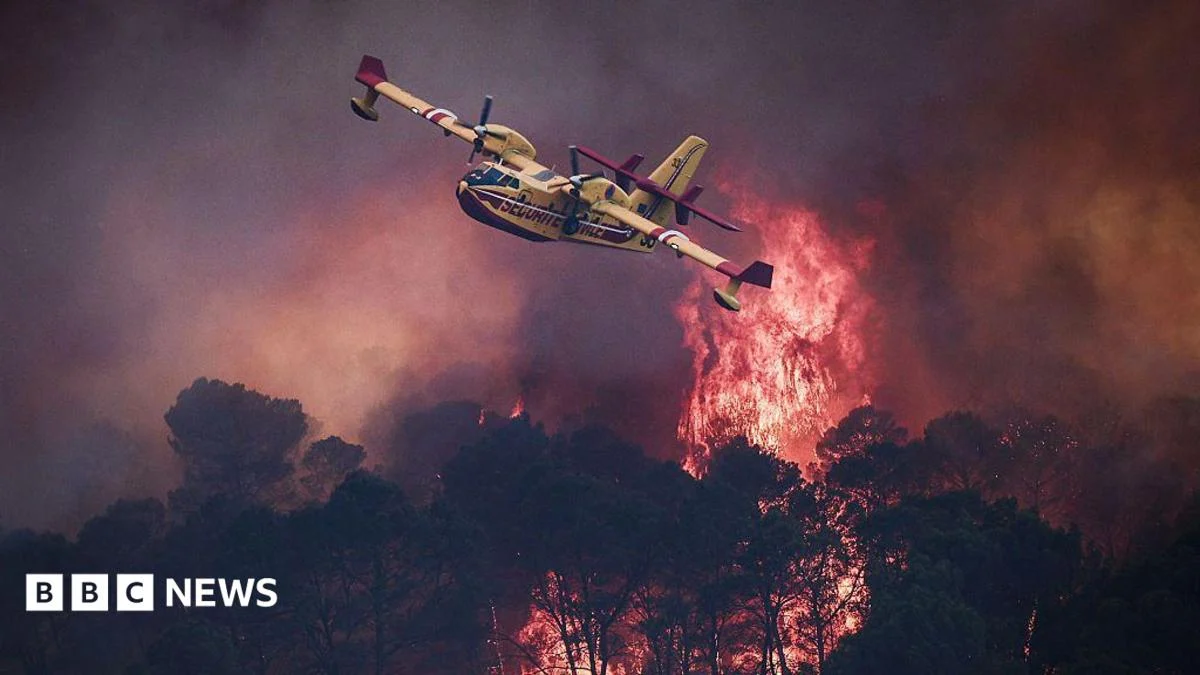
Europe has been grappling with increasingly extreme and unpredictable wildfire conditions, a stark manifestation of climate change that renders these blazes all the more difficult to stop. Record-breaking heatwaves, prolonged droughts, and strong, erratic winds create an incendiary landscape, turning once-manageable fires into infernos that engulf vast swathes of land, threaten communities, and devastate ecosystems across the continent. From the sun-baked hills of Portugal and Spain to the forests of France, Italy, Greece, and even regions less accustomed to such intensity like Germany and the UK, emergency services are stretched to their limits, employing a sophisticated array of techniques to combat these formidable adversaries.
At the forefront of the battle against these rapidly spreading blazes are specialized aircraft, deploying both water and fire retardant with precision and speed. French firefighters, in particular, have extensively utilized planes loaded with fire retardant, a chemical mixture designed to suppress flames and prevent their spread. Typically composed of ammonium phosphate or ammonium sulfate, this retardant is dyed red for visibility, allowing pilots and ground crews to clearly see where it has been applied. When dropped, it coats vegetation, acting as a chemical barrier that starves the fire of fuel by inhibiting combustion. Its primary role is to create a defensible line, slowing the fire’s advance and giving ground crews crucial time to establish direct attack positions.
Alongside retardant bombers, iconic aircraft like the Canadair series (CL-215, CL-415, and the newer DHC-515) play an indispensable role. These amphibious aircraft are engineering marvels, capable of scooping an astonishing 6,000 litres of water from lakes, reservoirs, or the sea in a mere 12 seconds while skimming across the surface. This rapid replenishment capability makes them incredibly efficient, allowing for continuous water bombing runs directly onto the fires. The ability to quickly refill without returning to an airport significantly reduces turnaround times, enabling a relentless aerial assault that is critical in containing fast-moving fronts. The precision of these drops can cool hotspots, reduce flame intensity, and protect vulnerable structures or escape routes for ground personnel.
A proactive approach is also fundamental to their strategy. On days deemed high-risk due to weather conditions, loaded aircraft often patrol identified danger zones even before any fires have been reported. This pre-emptive positioning ensures that, should a blaze ignite, they can drop their payload within minutes of a sighting, hitting the fire during its critical initial attack phase when it is smallest and most manageable. This rapid initial response is often the difference between a minor incident and a catastrophic wildfire. Once a fire is underway, planes frequently fly in a continuous shuttle, coordinating their efforts to lay retardant lines along the edges of the fire while ground crews simultaneously attack the flames directly, creating a synchronized land-and-air offensive.
The human element remains the backbone of the firefighting effort, requiring massive deployments of personnel. In the particularly hard-hit Gironde region of southwestern France, the scale of the operation underscores the severity of the challenge. Approximately 2,500 dedicated firefighters have been involved in tackling the blazes, working tirelessly in shifts under grueling conditions. Their roles encompass direct flame suppression using hose lines and hand tools, constructing smaller firebreaks, conducting mop-up operations to extinguish embers and hotspots, and protecting structures. Complementing their efforts are 1,500 military personnel, often drawn from engineering or logistics units, who provide invaluable support. Their capabilities include operating heavy machinery, transporting vital equipment and supplies, establishing field camps, and assisting with logistical coordination. Furthermore, around 1,200 police officers and gendarmes are deployed to manage the broader operational perimeter, enforce evacuations, secure affected areas, manage road closures, and maintain public order, ensuring the safety of both residents and emergency responders. This multi-agency collaboration is crucial for managing the complex logistical and security challenges posed by large-scale wildfires.
Beyond direct suppression, strategic engineering plays a vital role in containing wildfires. Around the town of Lacanau, for instance, French media reported the extensive use of heavy machinery like bulldozers, diggers, and mechanical shovels to carve out an immense firebreak, reaching an impressive 100 meters (328 feet) wide at certain points. A firebreak is essentially a strategic stretch of land that has been meticulously stripped of all vegetation, creating a barren zone devoid of any potential fuel. The principle is simple yet effective: by removing all combustible material in a wide path, the fire’s advance is halted when it reaches this barrier, as it has nothing left to burn. The creation of such a substantial firebreak requires significant planning and resources, often involving clearing dense forests or scrubland. It is a critical preventive measure, particularly when a fire is heading towards populated areas or critical infrastructure, designed to strip the land of any potential fuel before the fire has a chance to reach it, thereby protecting communities and guiding the fire’s trajectory away from vulnerable assets.
The challenges and techniques are not unique to France. Spanish teams have been using many of the same techniques to tackle their own devastating wildfires, which frequently plague the Iberian Peninsula during hot, dry summers. Spain operates its own fleet of firefighting aircraft, including Canadairs and Air Tractor AT-802F single-engine air tankers, and relies heavily on highly trained ground crews and military support. This shared struggle has fostered extensive cross-border cooperation within the European Union. Mechanisms like rescEU, the EU’s common reserve of emergency response assets, enable member states to request and receive assistance from other countries in the form of specialized aircraft, ground personnel, and equipment. This mutual aid system has seen firefighting planes from Italy, Greece, Sweden, and Croatia deployed to assist in other affected nations, demonstrating a collective European effort to combat the escalating wildfire crisis. Satellite monitoring and advanced early warning systems also play an increasingly important role, providing real-time data on fire locations, spread trajectories, and atmospheric conditions, enabling better resource allocation and more effective strategic planning.
The long-term implications of these devastating wildfires extend far beyond the immediate damage. The destruction of forests leads to significant carbon emissions, habitat loss for countless species, and increased risks of soil erosion and landslides in subsequent heavy rains. Air quality is severely impacted by the smoke plumes, affecting public health across vast areas. As climate change continues to intensify, forecasters predict even hotter and drier summers, suggesting that the frequency and intensity of European wildfires will only increase. This necessitates not only enhanced firefighting capabilities but also a proactive shift towards better forest management strategies, including controlled burns, forest thinning, and the creation of more resilient landscapes. Building community resilience through improved early warning systems, evacuation protocols, and defensible space initiatives around homes is also paramount.
In conclusion, the battle against Europe’s devastating wildfires is a complex and arduous undertaking, demanding the coordinated efforts of thousands of dedicated professionals, sophisticated aerial assets, and strategic ground operations. From the swift, precise drops of water and retardant by specialized aircraft to the relentless direct attacks by ground crews and the creation of massive firebreaks with heavy machinery, every technique is employed to mitigate the destructive power of these blazes. The shared experience has forged stronger international cooperation, but the ongoing and escalating threat posed by climate change underscores the urgent need for continuous innovation, increased investment in resources, and a holistic approach to prevention, preparedness, and response to protect Europe’s natural landscapes and its communities for future generations.



 Roy Suryo

 Nakalama John
 atisusanti
 Ramos Leo
