
 Nana Banana
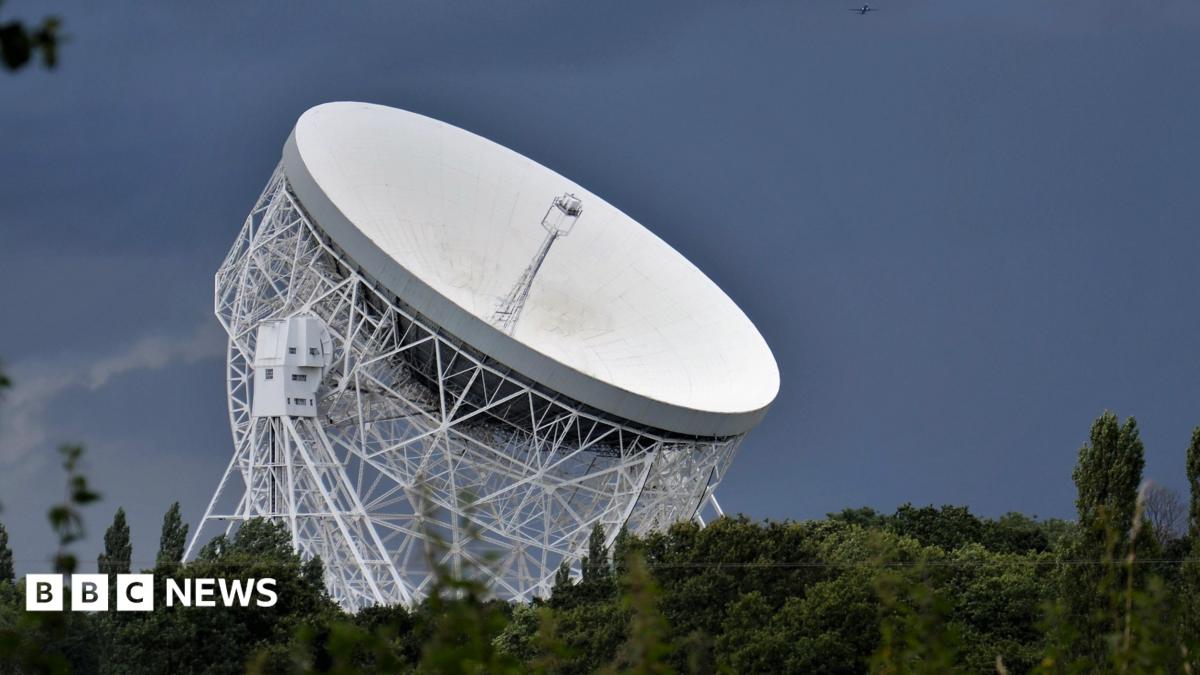
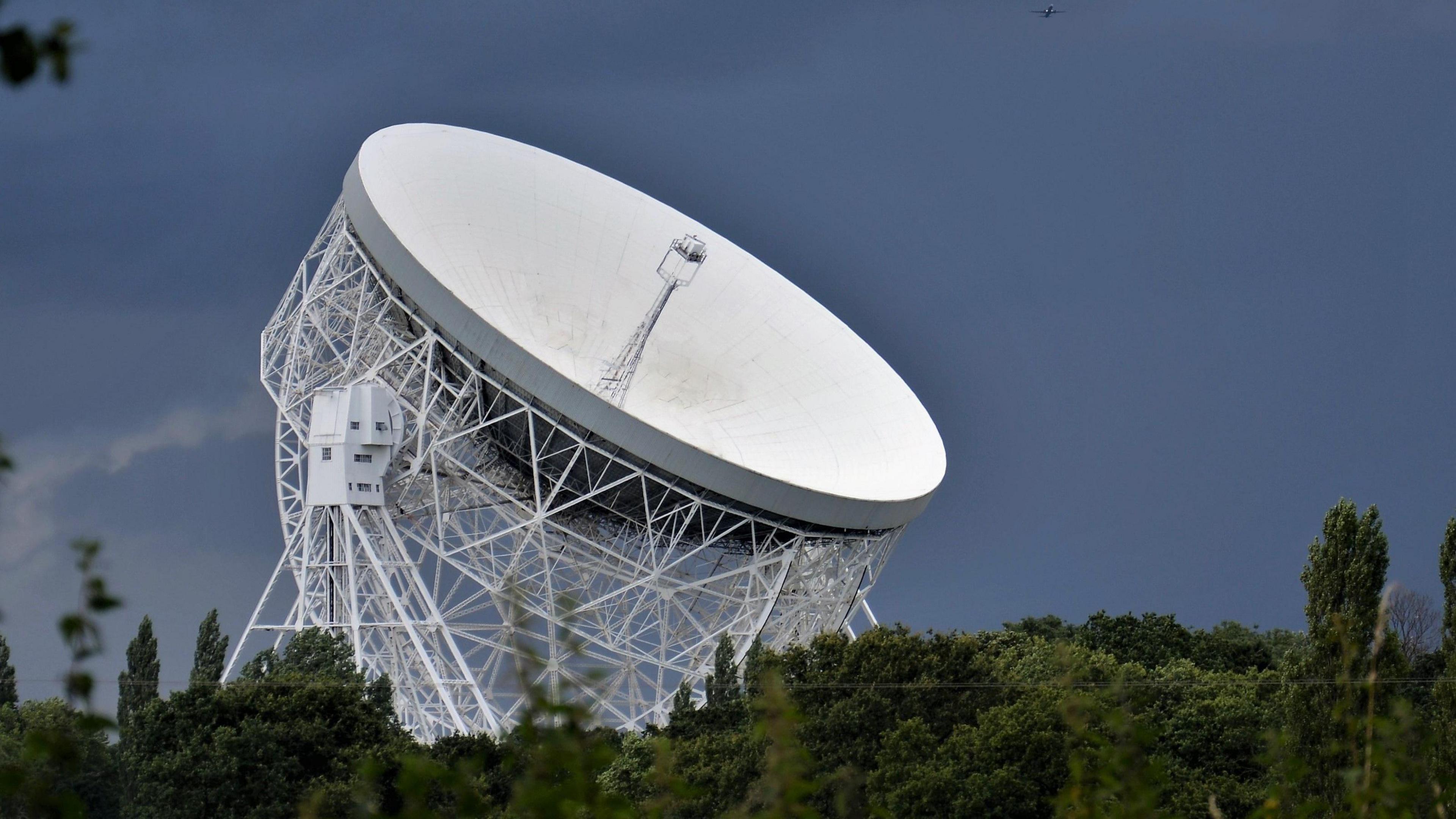
Jodrell Bank Observatory holds the prestigious designation of a UNESCO World Heritage Site, nestled amidst the tranquil, undulating countryside of rural Cheshire, specifically situated between the villages of Lower Withington and Goostrey. This relatively compact site, spanning less than one square mile, is immediately recognizable by the monumental presence of the Lovell Telescope. With its colossal 250-foot (76-meter) diameter dish, the telescope dominates the landscape and is a landmark visible from as far afield as Manchester, some 20 miles to the north. Beyond the primary Lovell instrument, the campus hosts the equally significant Mark II Radio Telescope, a network of sophisticated control rooms that serve as the nerve centre for its operations, and a popular visitor centre designed to engage and educate the public about the wonders of the universe. The site’s unique location, characterized by its remarkably quiet radio environment, was meticulously chosen by the pioneering astronomer Sir Bernard Lovell. In 1945, Lovell began moving experimental radar equipment into these open fields, transforming the area into a dedicated research station for the University of Manchester, specifically because its isolation offered minimal interference from terrestrial radio signals, which are crucial for detecting faint cosmic whispers.
The genesis of Jodrell Bank Observatory stems directly from Sir Bernard Lovell’s visionary pursuit of a new frontier in astronomy. Following his invaluable work on radar during World War II, Lovell recognized the immense potential of radio waves to unlock secrets of the cosmos that were invisible to traditional optical telescopes. Prior to the advent of radio astronomy, celestial observation was almost exclusively reliant on visible light, which is often obscured by interstellar dust and gas, and limited in the types of phenomena it can detect. Lovell’s ambition was to establish a facility where researchers could meticulously study the radio signals emanating from space, providing a completely new window into the universe. His initial experiments quickly revealed the necessity for a much larger, more sensitive instrument to capture the exceedingly weak radio signals from distant celestial objects. This led to the ambitious construction of the Lovell Telescope, which, upon its completion in 1957, was not only the largest but also the world’s first fully steerable radio telescope. Its groundbreaking design allowed astronomers to track objects across the sky with unprecedented precision, marking a pivotal moment in astronomical history. The telescope swiftly proved its worth, famously tracking the Soviet Union’s Sputnik 1 satellite in 1957 and subsequently assisting NASA with the Apollo missions, firmly establishing its critical role in the nascent Space Race. A decade later, the smaller, yet highly capable, Mark II telescope was constructed to operate in conjunction with the Lovell Telescope, significantly enhancing the observatory’s capabilities, particularly through the development of interferometer techniques which combine signals from multiple dishes to achieve higher resolution.
At its core, Jodrell Bank Observatory, through instruments like the giant Lovell dish, functions as a colossal ear to the universe. A radio telescope captures the incredibly faint radio signals emitted by distant stars, galaxies, pulsars, quasars, and even planets across vast cosmic distances. These signals, which are far beyond the spectrum of visible light, are then converted into intricate images and invaluable scientific data, offering insights into phenomena that optical telescopes cannot perceive. The sheer size of the Lovell Telescope is paramount, enabling it to detect signals that are extraordinarily weak, originating from billions of light-years away. Complementing its primary role, the observatory’s other telescopes, including the Mark II, work in concert to paint a more detailed and comprehensive picture of celestial sources. Furthermore, Jodrell Bank is the central hub of the UK’s e-MERLIN network, an advanced array that links the Lovell Telescope with five other radio telescopes distributed across the UK, spanning approximately 125 miles. This network employs Very Long Baseline Interferometry (VLBI) techniques, effectively creating a "virtual telescope" with a diameter equivalent to the distance between its furthest dishes. This dramatically improves its angular resolution, allowing astronomers to discern finer details in cosmic structures. Through these combined capabilities, Jodrell Bank has been instrumental in a myriad of groundbreaking discoveries, including the identification of supermassive black holes at galactic centres, the discovery of new galaxies, the meticulous tracking of numerous spacecraft, and a deeper understanding of the formation and evolution of planets and their parent stars. The e-MERLIN network’s research has specifically illuminated crucial aspects of how galaxies evolve, from their earliest stages to their current forms, and provided critical data on the birth of stars and planetary systems within our own galaxy and beyond.
The campaign to save Jodrell Bank stems from a deep concern within the global scientific community regarding the severe repercussions of the proposed funding cuts. While the Lovell Telescope has indeed been surpassed in sheer physical size by more recently constructed radio telescopes around the world, it has undergone continuous, extensive modernization since its inception. This ongoing investment has ensured its continued relevance and maintained its position as a cornerstone of the UK’s radio astronomy capability. It remains an indispensable tool for thousands of scientists globally who rely on its unique research data. The withdrawal of funding by the UK Research and Innovation (UKRI) agency threatens not only the operational continuity of a world-leading facility but also the livelihoods of 28 highly skilled staff members. Beyond immediate job losses, the cessation of research activities would result in an irreparable loss of expertise and institutional memory. The timing of this funding cut is particularly alarming as it coincides with the active construction phase of the Square Kilometre Array (SKA), a monumental international super radio telescope project being built in South Africa and Australia. Jodrell Bank holds a pivotal role in the SKA, as it hosts the SKA Organisation’s global headquarters, making the UK a central player in this next-generation astronomical endeavor. Professor Philip Diamond, a former head of Jodrell Bank and subsequently the Director-General of the SKA Organisation, has articulated the profound danger, stating that by failing to support Jodrell Bank, the UK risks being marginalized from the impending scientific bonanza promised by the SKA, which is set to begin gathering data within the next five years. He emphasizes that "it’s removing the science capability which is essential for the long-term health of UK radio astronomy and the SKA," warning of a "severe impact on the training and career of young researchers." This sentiment underscores a broader concern that the UK’s reputation as a leader in global scientific research, particularly in astronomy, could be significantly damaged. The potential loss of Jodrell Bank’s operational capabilities would not only represent a tragic squandering of a unique national asset and a UNESCO World Heritage Site but also severely hamper the pipeline of talent essential for future scientific breakthroughs, potentially leading to a "brain drain" of top researchers and engineers.
In conclusion, Jodrell Bank is far more than just a collection of large dishes; it is a vibrant, world-leading observatory that has consistently pushed the boundaries of human understanding about the cosmos for over 75 years. It serves a dual and critical role: as a site of groundbreaking scientific research that has unveiled many of the universe’s mysteries, and as a public gateway to science, inspiring countless individuals through its visitor centre and educational outreach. The current funding crisis poses an unprecedented threat to this invaluable institution. The potential cessation of its scientific work would inflict irreversible damage on the UK’s astronomical research landscape, jeopardizing its contributions to global science, undermining its role in major international projects like the SKA, and dissolving a unique centre of expertise. Securing alternative funding is not merely about keeping telescopes operational; it is about safeguarding a legacy of discovery, preserving a vital hub of scientific innovation, and ensuring the UK continues to play a leading role in unraveling the secrets of the universe for generations to come.




 Roy Suryo

 Nakalama John
 atisusanti
 Ramos Leo
