George Anjay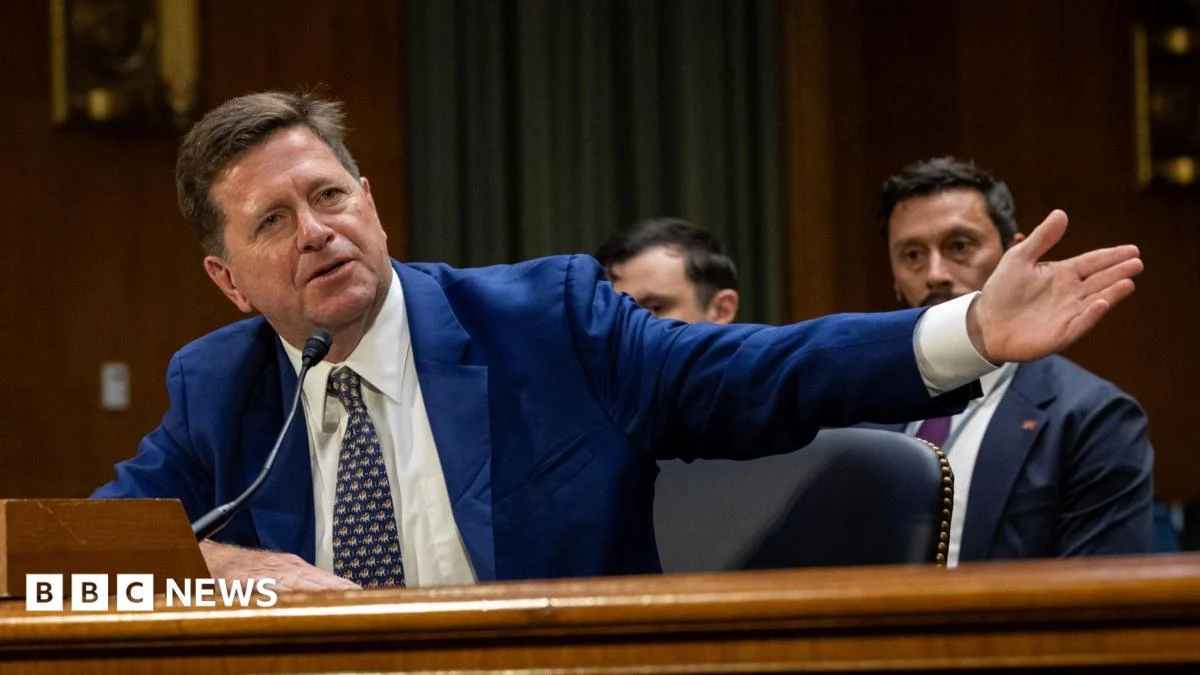
Jay Clayton has officially been confirmed as the United States’ next Director of National Intelligence (DNI), a pivotal appointment following significant legislative hurdles and public scrutiny of President Donald Trump’s initial nominee. The U.S. Senate, in a decisive vote of 51 to 47 on Tuesday, installed Clayton, marking a shift in leadership from the acting DNI, Bill Pulte. Pulte, Trump’s original choice for the permanent role, faced considerable backlash from lawmakers due to his background as a housing official with no discernible experience in the realm of national intelligence, a factor that ultimately led to his rejection.
Clayton, a seasoned legal professional, previously served as the U.S. Attorney for the Southern District of New York. In this capacity, he helmed numerous high-profile cases, including the significant drug trafficking investigation targeting former Venezuelan president Nicolás Maduro. President Trump, expressing his strong endorsement of the newly confirmed DNI, took to his social media platform, Truth Social, to declare, "Jay is outstanding in every way, and will do a spectacular job as Director!" This statement underscored Trump’s confidence in Clayton’s ability to lead the nation’s intelligence apparatus.
The path to Clayton’s confirmation was not without its complexities. He succeeds Tulsi Gabbard, who departed from her position last month, with Bill Pulte stepping in as the interim DNI. Pulte’s initial appointment in early June immediately sparked alarm across both political aisles. His tenure as federal housing regulator was marked by controversial actions, including referring several of the president’s political adversaries for potential prosecution and overseeing significant staffing reductions within the agency. These actions fueled concerns about the politicization of intelligence roles and the potential for abuse of power.
Shortly before the Senate vote on Clayton’s appointment, Pulte himself posted on the social media platform X (formerly Twitter) about the ongoing staff reductions, stating, "we are, this morning, executing a 5th and near final round of terminations, an approximately 30% staff reduction from weeks ago." This announcement further amplified concerns about the stability and integrity of the intelligence community under interim leadership.
In the wake of the widespread concern surrounding Pulte’s initial appointment, President Trump swiftly moved to nominate Clayton as his replacement. The Senate, recognizing the urgency to fill the critical DNI position, sought to expedite Clayton’s confirmation process. However, Clayton’s first scheduled appearance before the Senate Intelligence Committee on June 17 was unexpectedly canceled by President Trump. At the time, Trump cited the lawmakers’ failure to reauthorize the Foreign Intelligence Surveillance Act (FISA) as the reason for the postponement, suggesting a broader political entanglement influencing the nomination process.
Initially, Democrats expressed a degree of optimism regarding Clayton’s nomination, viewing him as a more conventional and experienced choice compared to Pulte. However, this sentiment appeared to shift during Clayton’s confirmation hearing earlier this month. A central point of contention during the hearing revolved around his stance on the integrity of the 2020 presidential election. Clayton was repeatedly pressed by senators regarding whether former Democratic President Joe Biden had legitimately won the election. His response, stating that Biden had been "certified" as the winner and affirming, "I’m not an election denier," was met with mixed reactions.
Senate Intelligence Committee Vice-Chair Mark Warner, a Democrat, articulated significant reservations following Clayton’s hearing. In a statement, Warner expressed, "I came away from [Clayton’s] confirmation hearing with serious reservations about whether he would be willing to stand up to political pressure." He further added, "I sincerely hope he proves those concerns unfounded, because the Intelligence Community deserves steadier leadership than it has received in recent months." Warner’s concerns highlighted a persistent worry among some lawmakers that the DNI role might be subjected to undue political influence, potentially compromising the independence and objectivity of the intelligence agencies.
Clayton’s confirmation is anticipated to have a tangible impact on ongoing legislative negotiations concerning Section 702 of FISA. This critical piece of legislation empowers the U.S. government to collect the communications of foreigners located abroad without the necessity of obtaining an individual warrant. President Trump has been a vocal proponent of the long-term renewal of this authority, and Clayton’s appointment is seen by some as a potential catalyst for reviving stalled congressional discussions.
Senate Majority Leader John Thune, a Republican, voiced his hope that Clayton’s confirmation would facilitate progress on this front. On Monday, Thune stated, "I hope [Clayton’s appointment] will encourage my colleagues to stop blocking reauthorization of the Foreign Intelligence Surveillance Act." The renewal of Section 702 is a complex issue, with significant privacy and civil liberties concerns being debated alongside national security imperatives. Clayton, with his background in law and regulation, is expected to engage actively in these debates and advocate for the administration’s position.
The appointment of Jay Clayton as Director of National Intelligence represents a significant development in the Trump administration’s efforts to shape the leadership of the nation’s intelligence apparatus. His confirmation, after a period of uncertainty and political maneuvering, signals a move towards more experienced, albeit debated, leadership in a critical national security role. The coming months will reveal whether Clayton can effectively navigate the complex political landscape and provide the steady, apolitical leadership that the Intelligence Community requires. His ability to gain the trust of both political parties and to champion the independence of intelligence gathering will be crucial in his success. The implications of his tenure are likely to extend beyond domestic policy, influencing the U.S.’s engagement with global intelligence partners and its approach to complex international threats. The focus now shifts to his operational leadership and his capacity to unite a diverse and vital sector of the government.



 Nakalama John
 atisusanti
 Ramos Leo