Ramos Leo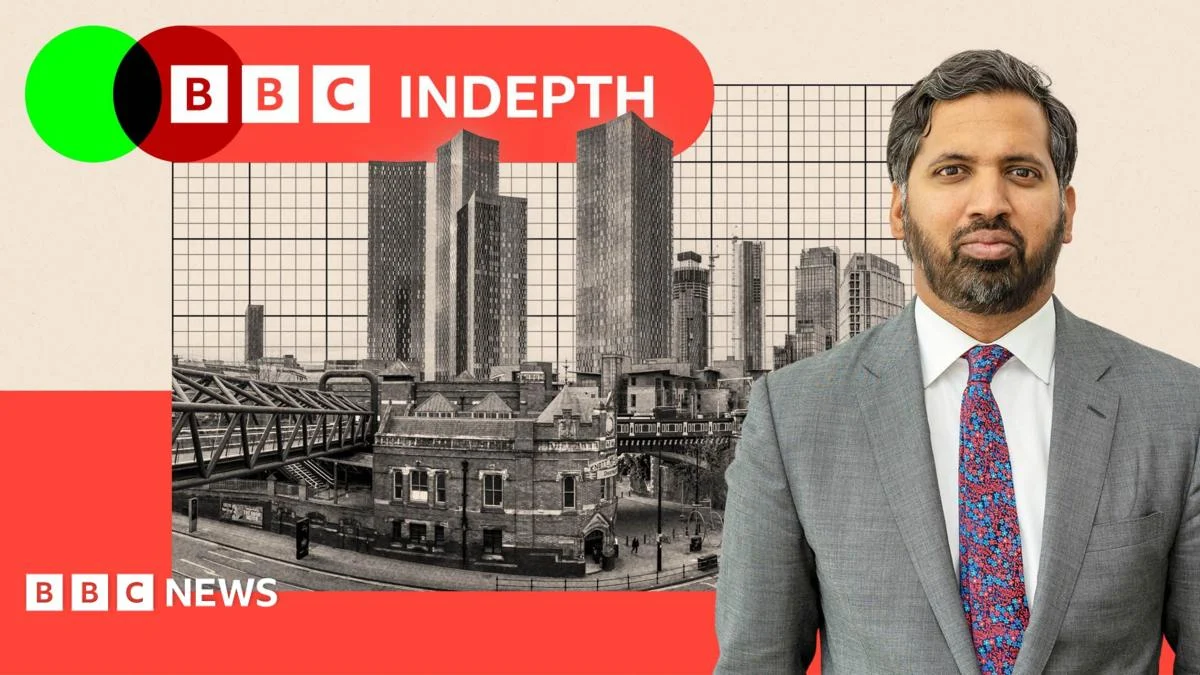
Andy Burnham, a figure often dubbed "King of the North," has successfully carved out a powerful political identity rooted in his experience as Mayor of Greater Manchester. His brand of "Manchesterism" – a potent cocktail of regional advocacy, constitutional reform, and a focus on social justice – has not only elevated him to a prominent national voice but has also fueled speculation about his ambitions for Downing Street. Yet, the question remains whether the principles and policies that have resonated so deeply in the North West can genuinely be scaled to address the multifaceted challenges facing the entire United Kingdom. His recent book, "Head North," and numerous speeches lay out a detailed manifesto for change, predicated on a fundamental rebalancing of power and resources away from Westminster.
Burnham relays a stark story from his time as Chief Secretary to the Treasury in 2007, a period when he was told, bluntly: "No project in the north passed the Green Book, Minister." This was not merely an anecdote but a systemic indictment of the Treasury’s appraisal methodology, which, by its very nature, often prioritises projects in already economically dense areas like London and the South East. The Green Book, a set of guidelines for evaluating public sector projects, historically uses metrics such as agglomeration effects and travel time savings that inadvertently penalise regions with lower population densities or less existing infrastructure. This bias has meant that vital infrastructure, transport, and regeneration projects in the North, despite their potential for significant social and economic uplift, frequently struggle to demonstrate the same ‘value for money’ as their southern counterparts, perpetuating a cycle of underinvestment and widening regional disparities. Burnham reiterated this concern in 2020 amidst murmurings of reform to the formula, highlighting the enduring nature of the problem. Chancellor Rachel Reeves, acknowledging these deep-seated issues, has since pursued pilot projects designed to overhaul the approach, seeking to introduce metrics that better account for social value, environmental impact, and the long-term benefits of local investment, particularly in areas historically neglected by the Green Book’s narrow lens.
Central to Burnham’s vision for a rebalanced UK is the urgent need to tear up the Barnett formula. This mechanism, established in 1978, allocates public spending increases to Scotland, Wales, and Northern Ireland based on population share relative to England, effectively topping up their budgets so they do not lose out compared to England as a whole. While intended to ensure fairness in the wake of devolution, Burnham argues its effect is to leave the North of England squeezed in a "pincer." He contends that the formula inadvertently benefits the devolved nations at the expense of English regions outside the South East, as increases in spending in England are often disproportionately focused on the capital and its surrounding areas. This means that while devolved nations receive a proportional uplift, English regions, particularly the North, do not receive a corresponding direct allocation, leaving them competing for a smaller, often underfunded, share of resources within England. This structural disadvantage, Burnham suggests, exacerbates the regional inequalities that his "Manchesterism" seeks to eradicate.
In "Head North" and his recent speeches, Burnham frequently points to Germany’s "Basic Law" (Grundgesetz) as a model for enshrining regional equity. Article 72 of the German Basic Law includes a duty to ensure "equivalent living standards" (gleichwertige Lebensverhältnisse) across its regions. This is not merely a political aspiration but a constitutional commitment that underpins significant federal funding mechanisms and regional development policies, ensuring that access to public services, economic opportunities, and quality of life do not vary wildly across the country. Such a law, Burnham argues, would fundamentally protect local government in the UK, providing a legal bedrock for greater autonomy and financial stability. Crucially, it would also give regions a statutory right to be consulted on long-term national decisions, moving away from a highly centralised model where regional voices are often an afterthought. This constitutional guarantee, he believes, would transform the relationship between central government and local authorities, fostering genuine partnership and equitable development.
Beyond economic rebalancing, Burnham advocates significant constitutional change, proposing a wholesale reimagining of the UK’s governance structure. He calls for a form of proportional representation (PR) for general elections, arguing that the current first-past-the-post system distorts outcomes, wastes millions of votes, and often leads to governments with a disproportionate share of power based on a minority of the popular vote. PR, he contends, would lead to fairer representation, encourage broader political consensus, and better reflect the diverse political landscape of the UK. Even more radical is his proposal for the replacement of the House of Lords with a "Senate of the Nations and the Regions." This elected chamber, comprising representatives directly accountable to the devolved nations and English regions, would serve as a powerful second chamber, ensuring that regional interests are not only heard but actively shape national legislation and policy. Alongside these reforms, he champions the widespread devolution of powers over large swathes of public services – including transport, health, education, housing, and economic development – to regional levels. This radical shift would empower local leaders to tailor services to the specific needs and priorities of their communities, fostering innovation and greater public accountability, moving away from the "Whitehall knows best" mentality.
On the critical issue of Net Zero, Burnham proposes a distinct "Northern Way," sharply contrasting it with what he characterises as a "Whitehall Way." The "Whitehall Way," in his view, relies too heavily on top-down mandates, bans, charges, and taxes that disproportionately hit the poorest households and businesses, potentially undermining public support for the transition. The "Northern Way," conversely, would be a bottom-up, community-led approach focused on proactive investment and opportunity. This strategy would involve significant subsidies for the transition, a massive national programme of retrofitting homes to cut energy bills and improve living standards, and the proactive building of exportable, locally owned green industries. He envisions the North as a powerhouse of renewable energy, hydrogen production, carbon capture, and advanced green manufacturing, creating high-quality jobs and fostering economic prosperity while simultaneously tackling climate change. This approach, he argues, would not only achieve Net Zero targets but also deliver tangible economic and social benefits directly to communities.
However, the actual policy consequences of this ambitious agenda will have to reckon with a complex web of economic and political realities. Rising global energy prices, for instance, place immense pressure on household budgets, making any Net Zero strategy, whether "Northern" or "Whitehall," incredibly challenging to implement without causing further financial strain. The political and economic power of North Sea energy interests, particularly in Scotland and parts of the North East, also presents a significant hurdle, as these sectors push for continued oil and gas extraction, complicating a rapid transition away from fossil fuels. There are also some inherent contradictions in certain proposals. For example, the idea of full tax and spend devolution for every region, while appealing in principle, raises questions about national solidarity and redistribution. Would the economically powerful South-East get to keep the vast majority of the taxes it raises, potentially exacerbating disparities with less prosperous regions? Such a scenario could lead to a fragmented economic landscape rather than a cohesive, rebalanced nation. Furthermore, the political sensitivity surrounding the Barnett formula is immense. Despite Burnham’s strong advocacy for its abolition, some aides have recently played down any immediate changes, reflecting deep concerns from Scottish politicians who view it as a crucial pillar of their devolved financial settlement. Tampering with Barnett could trigger significant constitutional friction, potentially undermining the stability of the Union itself. Ultimately, while Burnham’s "Manchesterism" offers a compelling blueprint for regional empowerment and national rebalancing, its successful implementation across the entire UK would demand unprecedented political will, deft navigation of entrenched interests, and a willingness to confront deep-seated constitutional and economic orthodoxies. The journey from Manchester’s mayoral office to shaping the future of the UK is fraught with challenges that extend far beyond the Green Book.



 Roy Suryo
 George Anjay
 Nakalama John