
 Ramos Leo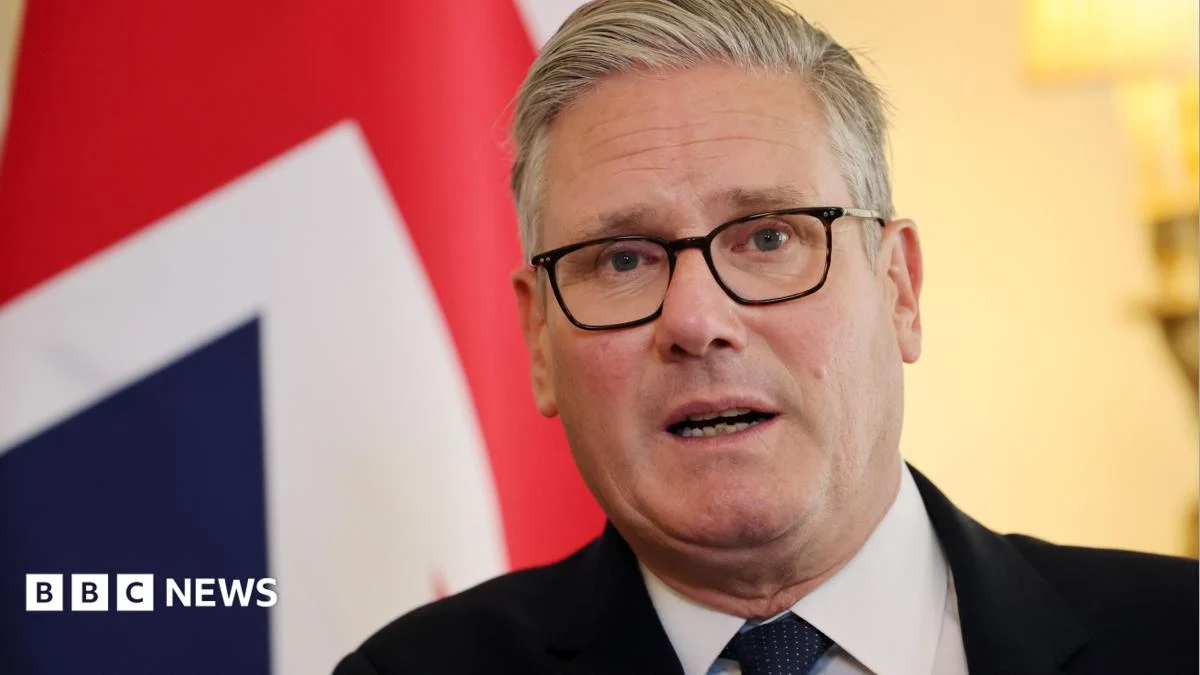
The controversy originated in March when Sir Keir Starmer, then holding the nation’s highest office, addressed Members of Parliament. During a session of the House of Commons liaison committee, he asserted that his government was committed to increasing defence spending by a substantial £270 billion. This figure quickly became a central talking point, championed by the government as evidence of its unwavering commitment to national security. The claim was subsequently echoed by other key governmental departments, notably the Ministry of Defence and the Wales Office, further cementing its presence in public discourse. In June, an MoD spokesman reiterated similar figures, and on June 3, the Wales Office’s official X (formerly Twitter) account posted: "The UK government is increasing defence spending by £270bn over this Parliament to strengthen our national security." These statements projected an image of a significant financial uplift in the country’s defensive capabilities, intended to reassure the public and international allies alike.
However, the UK Statistics Authority, acting as the nation’s statistical arbiter, has unequivocally stated that this presentation of the figures is incorrect and misleading. The watchdog clarified that the £270 billion figure does not represent an increase in defence spending over the current parliamentary term. Instead, it constitutes the proposed overall amount that the government plans to allocate to defence between the fiscal years 2025 and 2029. This distinction is crucial: an increase implies additional funds beyond what was previously budgeted or projected, whereas overall spending refers to the total sum allocated, irrespective of whether it represents a rise, fall, or static level compared to prior plans.
The ramifications of this clarification were immediate and tangible. The Wales Office, led at the time by the then-Welsh Secretary Jo Stevens, promptly deleted the contentious post from its X account, acknowledging the error. This swift removal indicated a recognition of the statistical authority’s findings and an attempt to rectify the misleading information. A UK government spokesperson addressed the issue, stating: "We have previously acknowledged this phrasing and took immediate steps to ensure it was not replicated." Despite the acknowledgment, Downing Street, the official residence and office of the Prime Minister, opted to offer no further comment, maintaining a notable silence on the matter. The UK Statistics Authority, in its assessment, noted that the steps taken by both the Wales Office and the MoD to address the misrepresentation should effectively mitigate the risk of the inaccurate claim being repeated in the future.
The revelation follows a period of significant political transition. Sir Keir Starmer, who had occupied Downing Street, resigned from his premiership in July, making way for his successor, Andy Burnham. This change in leadership, occurring amidst the fallout from such statistical discrepancies, added another layer of complexity to the political landscape. The original statement made by Sir Keir in March to the House of Commons liaison committee was precise in its misleading nature: "We have already committed to 2.5% in 2027, and we will hit that. That means that, in this Parliament, we will spend £270bn more on defence than we would otherwise have done." This phrasing directly implied an additional £270 billion expenditure, a claim now definitively refuted by the UK Statistics Authority.
Further investigation into the origins of the misleading figure by BBC Wales revealed that the £270 billion sum did not originate within the Wales Office itself, but rather within the Ministry of Defence. This suggests a potential breakdown in communication or an oversight in the verification process within the broader government apparatus before the figure was disseminated across various departments. The Wales Office, an integral part of the UK government, plays a vital role in overseeing the system of devolution in Wales and serves as a crucial voice for Welsh interests within the Westminster Parliament. Its involvement in propagating UK-wide defence spending figures, even if the information originated elsewhere, highlights the collective responsibility of government departments to ensure the accuracy of public statements.
The formal condemnation came in a letter penned by Penny Young, the interim chair of the UK Statistics Authority, to James Cartlidge, the Conservative Shadow Defence Secretary. In her correspondence, Young articulated the authority’s unequivocal position: "We agree that it is incorrect and misleading to describe the £270bn as an increase in defence spending over the course of this Parliament, or to describe it as an extra £270bn." She further clarified the true nature of the figure, stating: "The £270bn represents the proposed overall spending on defence over the lifetime of the current Parliament, from 2025-26 to 2028-29." This direct and unambiguous statement served as a powerful indictment of the government’s previous communications.
According to Young’s letter, the Wales Office communicated to the authority that the figure used "was a mistake and was amended as soon as it was noticed." This response, while acknowledging the error, also outlined the steps taken to prevent recurrence. Young detailed these measures: "In addition, Wales Office has told us it has reviewed its press office lines in relation to this topic, and its quality assurance process for press lines, to ensure that this mistake is not replicated elsewhere." Similarly, the MoD, which was identified as the source of the figure, also took corrective action. Young added that "The MoD has taken steps to ensure that future communications use precise and consistent language when presenting defence spending figures." These commitments are crucial for restoring confidence in government data and ensuring that public statements are rigorously vetted for accuracy.
The political reaction to the watchdog’s findings was swift and critical. Mims Davies MP, the Conservative Shadow Wales Secretary, seized upon the opportunity to underscore the importance of governmental integrity. "At a time of growing global instability, the public deserves honesty and transparency about our defence budget," she asserted. Davies’ statement highlighted the broader context of geopolitical uncertainties, where accurate information regarding national security spending is paramount for public trust and informed debate. She continued, "Labour ministers and civil servants in the Wales Office should be setting out the facts, not presenting figures in a way that risks misleading people." Her comments reflect the opposition’s concern over what they perceive as a lapse in governmental accountability and a potential erosion of public confidence in official figures.
The incident serves as a potent reminder of the vital role played by independent watchdogs like the UK Statistics Authority in upholding the integrity of public information. In an era where information spreads rapidly and can be easily misinterpreted, the precise use of language and the accurate presentation of statistics by government bodies are more critical than ever. Defence spending, in particular, is a highly sensitive area, directly impacting national security, international alliances, and public finances. The ongoing debate about achieving defence spending targets, such as the 2.5% of GDP commitment mentioned by Sir Keir, makes the accuracy of related figures indispensable. Misleading claims, even if unintentional, can distort public understanding, fuel political controversy, and potentially undermine trust in the institutions responsible for safeguarding the nation. The authority’s intervention reinforces the principle that governmental communications must not only be informative but also unimpeachably factual, especially when discussing critical budgetary allocations.

 George Anjay
 Nakalama John
 atisusanti
 Roy Suryo
 Nana Banana