
 Nakalama John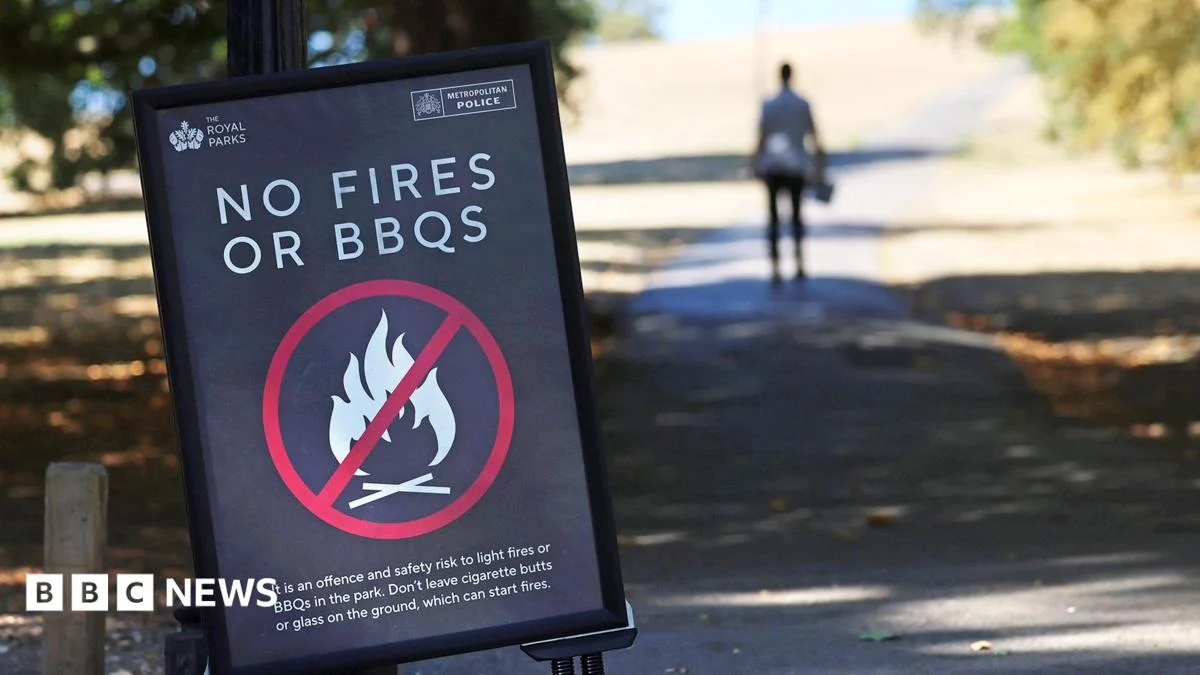
England and Wales are currently grappling with an unprecedented surge in wildfires, prompting a critical nationwide alert and a temporary ban on disposable barbecues, firepits, garden incinerators, and fireworks due to extreme risk conditions. The escalating crisis has necessitated the deployment of military personnel, with Gurkha logistics teams equipped with vital water tankers and skilled military engineers now actively assisting overstretched fire services in South Wales. This intervention underscores the severity of the situation, with Greater Manchester Mayor Andy Burnham promising further military deployments across the country should the need arise, highlighting the extraordinary strain on civilian resources.
The scale of the current wildfire threat is stark: a staggering 1,017 wildfires have already been recorded across England and Wales this year, a figure that alarmingly matches last year’s record-breaking tally. Fire crews, working tirelessly in challenging conditions, have battled multiple blazes across both nations, with the emergency situation culminating in a national alert sent to millions of mobile phones on Friday evening. This urgent message served as a stark warning of a "very high risk of wildfires nationally" and implored residents, landowners, and visitors to refrain from any activity that could spark a blaze, specifically naming disposable barbecues, firepits, garden incinerators, and fireworks as high-risk culprits. Government officials confirmed this to be the most extensive use of the emergency alert system to date, reflecting the critical nature of the threat.
The devastating impact of these fires is evident across numerous locations. In the West Midlands, particularly around Stourbridge, residents fled their homes as fires spread rapidly through bone-dry grass, consuming dozens of properties and leaving a trail of destruction. West Midlands Ambulance Service reported treating 54 casualties across eight different fires in the region, with 19 individuals requiring hospital treatment for injuries or smoke inhalation. In Wales, a major incident was declared near Llandovery, Carmarthenshire, forcing the evacuation of dozens of homes and the closure of key roads as firefighters fought to contain expanding blazes. Meanwhile, in Hampshire, fire crews have endured a grueling sixth day battling a persistent wildfire in the New Forest, which ignited on Sunday and continues to pose a significant challenge. Norfolk Fire and Rescue Service alone tackled sixteen emergencies on Thursday afternoon, including a notable fire at Mousehold Heath in the city, showcasing the widespread nature of the incidents.
The immediate focus on disposable barbecues stems from their documented role in igniting such catastrophic events. Andy Burnham explicitly stated that some of the wildfires currently raging across the country were undoubtedly started by these seemingly innocuous devices. The Prime Minister echoed this concern, describing Britain as a "tinderbox right now" during an interview with BBC Radio 5 Live. He revealed that 37 fires were active across England and Wales at that moment, with four classified as major incidents. "We’re going into a difficult weekend," he cautioned, "please just think about the situation that we’re in. Setting a fire in any outdoor setting of any kind is a risk to other people’s homes, it’s a risk to other people’s lives, don’t do it, please don’t do it."
This heightened warning builds upon previous efforts to mitigate the risk posed by disposable barbecues. Many large retailers and supermarkets had already voluntarily ceased selling these items under a comprehensive framework agreed upon in 2023 between fire chiefs, represented by the National Fire Chiefs Council (NFCC), and the British Retail Consortium. This framework advised retailers to suspend sales whenever an extreme heat event was declared imminent or in response to "reasonable, evidence-based" requests from local councils. Andy Burnham confirmed that all retailers would now receive official guidance regarding this temporary change, with the policy remaining under continuous review.
Beyond the immediate crisis, the ongoing wildfires have exposed deep-seated concerns about the preparedness of the UK’s fire and rescue services and the broader implications of climate change. Burnham critically observed that the national fire and rescue service is "not properly set up to deal with these incidents," lacking the necessary "capability" to effectively fight these increasingly frequent and intense blazes. He lauded the thousands of firefighters on the ground, describing their "back-breaking work, in full kit, in the most difficult conditions," but emphasized the systemic shortcomings. He stressed that the UK must confront the realities of a "changing climate" and accelerate its transition to "more clean energy" to prevent future catastrophes.
These comments came shortly before the announcement of Baroness Blake of Leeds’ appointment as the new fire minister, a role that will be crucial in addressing the challenges currently facing fire services. Environmental advocacy group Friends of the Earth swiftly urged the Prime Minister to tackle the "root cause" of the "climate emergency" that is demonstrably fueling this summer’s extreme weather events. The group issued a dire warning: "Without urgent action to curb the carbon emissions driving this crisis, future heatwaves, droughts and wildfires will only get worse and the ability for future generations to adapt will disappear."
The current meteorological conditions across the UK serve as a stark fulfillment of warnings from climate scientists, who have long predicted that human-induced climate change would lead to more frequent and intense heatwaves, alongside an increased likelihood of summer droughts. Thursday, the day before the national alert, saw the UK experience its hottest day of the year, providing the perfect tinder for the numerous blazes. The National Fire Chiefs Council had previously warned that climate change was increasing both the risk and severity of wildfires, referencing a previous record-breaking year where fire and rescue services in England and Wales responded to nearly 1,000 wildfire incidents. The cascading effects of these drought conditions are already impacting other sectors; in England, the Rugby Football Union has taken the precautionary measure of delaying the start of the community rugby season, citing concerns about player welfare and the dangerously dry and hard pitch conditions. The collective challenges underscore the urgent need for both immediate preventative measures and long-term climate action to safeguard lives, homes, and the environment from the escalating threat of wildfires.



 atisusanti
 Nana Banana
 George Anjay
 Ramos Leo