
 Ramos Leo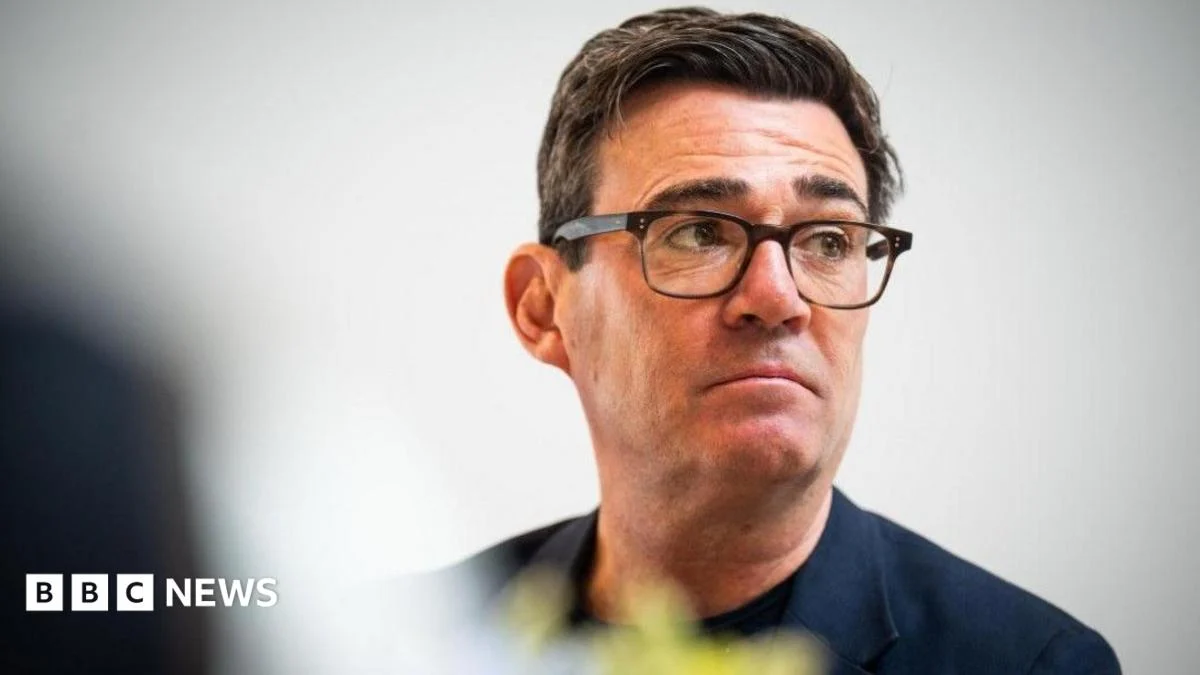
The incident highlights the critical importance of robust communication security protocols within government, particularly for world leaders who are frequent targets of state-sponsored and criminal actors. Politico’s report indicated that officials within the government confirmed Burnham had communicated with the individual purporting to be Wiles for a period of time "before becoming suspicious that the contact was illegitimate." This suggests an initial period where the Prime Minister or his staff believed the communication to be genuine, a concerning detail given the potential for sensitive information to be compromised during such an exchange. Sources close to the investigation, however, were quick to downplay the significance of the exchange, stating that only a "few messages" were exchanged and that "no messages of significance" were passed between Burnham and the impersonator. These texts were reportedly "quickly reported to the appropriate authorities" once suspicions arose, indicating a swift internal response once the deception was identified.
Despite assurances that no significant information was compromised, the mere fact that a head of government engaged with an impersonator, however briefly, raises serious questions about vetting procedures for incoming communications and the general awareness of sophisticated phishing and impersonation techniques among senior officials. A government spokesperson reiterated the standard line for such incidents, stating, "We do not comment on national security matters." This customary refusal to elaborate, while designed to protect ongoing investigations and maintain operational security, often fuels speculation and can leave the public uneasy about the true scope of such breaches. It is understood that the communication between Prime Minister Burnham and the individual posing as Wiles took the form of text messages, rather than a direct phone conversation, which might have made the deception harder to detect initially. Text-based communication can lack the vocal cues and nuances that might expose an impersonator in a live call, making it a preferred medium for sophisticated social engineering attempts.
This incident is not an isolated one in the landscape of high-level impersonation attempts and cyber threats. The BBC had previously reported on an FBI probe initiated in May 2023 following the hacking of Susie Wiles’ personal phone. At that time, Wiles herself confirmed that her device had been compromised by an impersonator or impersonators who exploited her contacts file to send messages to a wide array of prominent US officials. Recipients of these fraudulent messages included US senators, state governors, and top business executives, illustrating the broad reach and ambition of the attackers. The fact that the impersonation targeted her personal phone, rather than a government-issued device, underscores a persistent vulnerability: the blurring lines between personal and professional communication for public figures, which can be exploited by malicious actors. This prior incident involving Wiles’ hacked phone adds a critical layer of context to the current situation, suggesting that the impersonator targeting Prime Minister Burnham may have been leveraging intelligence or contacts gained from the earlier breach, or was part of a broader, ongoing campaign.
Furthermore, Susie Wiles, a pivotal ally of Donald Trump, has been identified as a target of a cyber espionage unit associated with Iran’s Revolutionary Guards in 2024. The Revolutionary Guards, a powerful and highly influential branch of Iran’s armed forces, are known for their sophisticated cyber capabilities and their involvement in state-sponsored hacking operations aimed at intelligence gathering, disruption, and political influence. Their targeting of individuals like Wiles signifies the strategic importance placed on key political figures by adversarial nations. This pattern of targeting, from simple phone hacks to state-sponsored espionage, illustrates the relentless and multi-faceted threats faced by those in the orbit of high-level political power. Such operations are designed not only to glean information but also to sow discord, test vulnerabilities, and potentially manipulate public discourse or political decisions.
The UK itself is no stranger to such sophisticated hoaxes. In 2024, the Foreign Office (FCDO) publicly confirmed that then-Foreign Secretary David Cameron had also fallen victim to a hoax call. In that instance, Cameron engaged in a video call with someone falsely claiming to be former Ukrainian President Petro Poroshenko. Lord Cameron also exchanged a series of text messages with the impersonator. Poroshenko served as Ukraine’s president between 2014 and 2019, a period during which Cameron, then Prime Minister, had numerous dealings with him, including meetings at international summits. This pre-existing relationship and familiarity would have made the impersonation particularly convincing, as the imposter could have leveraged public knowledge of their past interactions.
The FCDO took the unusual step of releasing details of the Cameron exchange publicly, explaining that it did so over fears that the content of the conversation could be "manipulated." This concern highlights a key motivation behind such hoaxes: the potential for disinformation campaigns. Recordings or fabricated summaries of such calls, even if brief or inconsequential, can be edited, taken out of context, and disseminated to create false narratives, embarrass officials, or undermine trust in government. The public disclosure was a pre-emptive measure to mitigate potential damage from hostile state actors who might have sought to exploit the incident for propaganda purposes. The comparison between the Cameron and Burnham incidents is striking: both involved high-ranking UK officials, both involved impersonators of foreign political figures, and both involved initial success by the impersonators in establishing communication. The shift from a video call (Cameron) to text messages (Burnham) could suggest an adaptation in tactics by the perpetrators, perhaps seeking to avoid the visual scrutiny of a video call while still exploiting the trust and access associated with key contacts.
These incidents serve as stark reminders of the pervasive and evolving nature of cyber warfare and hybrid threats in the 21st century. High-ranking government officials are prime targets for intelligence agencies and hostile actors seeking to gather sensitive information, disrupt diplomatic relations, or simply cause embarrassment. The methods employed are increasingly sophisticated, often combining advanced technical skills with deep social engineering tactics, leveraging publicly available information and psychological manipulation to create convincing deceptions. The "spear phishing" attempts, where messages are highly tailored to the target, are particularly effective against individuals who manage vast networks of contacts and communicate constantly across various platforms.
The ramifications of such breaches, even if no classified information is overtly compromised, can be far-reaching. They can erode public trust in government security, create diplomatic awkwardness, and expose vulnerabilities that hostile actors may seek to exploit further. For Prime Minister Burnham, the incident undoubtedly prompts a review of communication protocols within Downing Street and among his closest advisors. It underscores the continuous need for rigorous cybersecurity training, not just for technical staff, but for all senior officials who are likely to be targeted. The digital age demands constant vigilance and a proactive approach to security, recognizing that the human element remains the most critical, and often the most vulnerable, link in any security chain. As the lines between legitimate and malicious digital interactions become increasingly blurred, the onus is on governments to equip their leaders with the tools, knowledge, and protocols necessary to navigate this complex and perilous landscape.

 George Anjay
 Nakalama John
 atisusanti
 Roy Suryo
 Nana Banana