
 Ramos Leo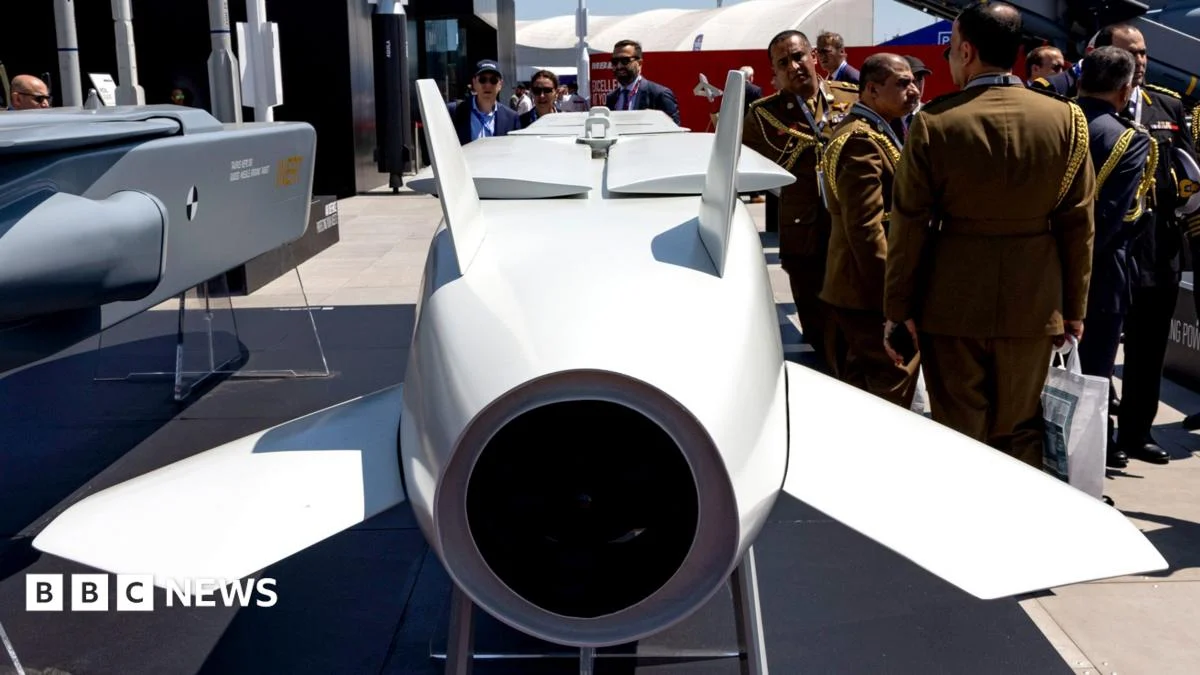
The UK’s offer to potentially share blueprints and facilitate local assembly of advanced cruise missiles like Storm Shadow (known as SCALP in French service) with Ukraine is a significant gesture, yet it addresses a strategic need that is not immediately critical for Kyiv. These weapons, while potent, trace their origins back to the 1990s, making them an older generation of technology. Their complexity means they are inherently expensive, with each missile costing approximately £1 million. Moreover, their production relies heavily on intricate global supply chains, developed during an era of relative peace where manufacturing rates were intentionally kept low – in the hundreds, not the thousands, reflecting a strategy of quality over quantity.
For Ukraine, attempting to replicate this production model would present immense challenges. Even with access to blueprints, sourcing the highly specialized components from a fragmented global market, especially under wartime conditions, would be a monumental task. The establishment of dedicated manufacturing facilities, the training of skilled personnel, and the intricate process of quality control could realistically take months, potentially even years, before a meaningful number of these cruise missiles could be produced indigenously.
This scenario underscores a critical realization now dawning upon NATO nations: copying Western weapons production in peacetime is an ineffective strategy for winning a protracted, high-intensity conflict. For decades, Britain and many of its allies prioritized small quantities of exceptionally advanced, costly weapons systems. The inherent flaw in this approach became glaringly obvious when wargames consistently demonstrated that these limited arsenals would be quickly depleted in any sustained engagement. A stark warning came in 2021 from Gen Ben Hodges, the former head of the US Army in Europe, who highlighted that in a NATO wargame, the UK military exhausted its critical munitions within a mere matter of days. This vulnerability has driven a fundamental shift in strategic thinking across Western defense establishments.
Concrete proof of this evolving mindset is the UK military’s decision to cease further procurement of Storm Shadow missiles for its own forces. Instead, under the ambitious initiative known as Project Brakestop, the UK is rapidly developing its own next-generation long-range cruise missile. This new weapon is being designed specifically to be free of foreign components, thereby enhancing supply chain resilience and national security, and critically, to be produced at less than half the price of a Storm Shadow. Project Brakestop is proceeding at an unprecedented pace, with the UK aiming to have a new cruise missile ready for deployment by the end of the year, explicitly promising to supply this new, more adaptable weapon to Ukraine. This represents a proactive effort to address the lessons learned from the ongoing conflict and pivot towards a more sustainable and scalable defense industrial base.
The very concept of cheap, mass-produced weapons necessary for a long, protracted conflict has been pioneered and demonstrated most effectively by Ukraine itself. At the outset of the full-scale invasion, Ukraine’s armed forces were largely reliant on aging Cold War-era Soviet weaponry. The initial, slow trickle of Western military aid prompted Ukraine to innovate and adapt at an astonishing pace. Today, a testament to its ingenuity and resilience, Ukraine proudly produces an estimated 70% of its own weapons. This indigenous production encompasses a wide array of systems, from artillery shells and armored vehicles to electronic warfare systems and naval drones.
Key to this success has been Ukraine’s rapid and innovative development of drone technology. This spans the spectrum from small, inexpensive First Person View (FPV) one-way attack drones, which have become indispensable on the front lines, to larger, sophisticated long-range drones capable of striking deep into Russian territory, often exceeding the operational range of even the Storm Shadow missiles. Kyiv has set an ambitious target of building 10 million drones by the end of this year, leveraging cost-effective, mass-produced Chinese parts to achieve scale and affordability. This approach stands in stark contrast to NATO allies, whose equivalent drones can be twice as expensive, largely due to their deliberate efforts to shun Chinese components for security and political reasons. While this divergence presents a strategic dilemma for NATO, it highlights Ukraine’s pragmatic and urgent need for readily available, affordable solutions.
However, despite its remarkable progress in indigenous production, there remain critical weapon systems that Ukraine desperately needs and struggles to produce on its own. Among these are fast fighter jets, essential for achieving air superiority and providing close air support. Yet, the most urgent and pressing example is the acute shortage of interceptor missiles required to counter Russia’s relentless barrages of ballistic missiles.
The most effective weapon for this purpose, by a considerable margin, is the US-made Patriot interceptor. Ukraine has, by all accounts, all but exhausted its supply of these crucial missiles, leaving its air defenses increasingly vulnerable. Consequently, Russian ballistic missiles, including advanced hypersonic variants like Kinzhal and repurposed S-300 anti-aircraft missiles, now penetrate Ukrainian air defenses with alarming ease, causing devastating damage to critical infrastructure, residential areas, and civilian populations. The global demand for Patriot interceptors, exacerbated by other geopolitical commitments and regional conflicts, has further constrained their availability.
Patriot interceptors are not only incredibly effective but also exceedingly expensive, with each missile costing around £3 million. Production rates for these highly complex systems have historically been slow, averaging around 600 missiles per annum. While the US is planning a significant ramp-up, aiming to double production to 2,000 missiles annually, this ambitious increase will take several years to materialize. The political landscape in the US has also added to Ukraine’s uncertainty. Former President Donald Trump had initially signaled a willingness to share Patriot technology with Ukraine, only to subsequently retract this stance. Even if such approval were to be granted, it would still take Ukraine an estimated minimum of a year to establish its own production capabilities, assuming it could overcome the hurdle of securing the same sophisticated components that are already in high global demand.
Recognizing this critical vulnerability, Ukraine has embarked on its own ambitious program to develop indigenous interceptor missiles with substantial European support, known as Project Freya. However, the technological challenges inherent in building a high-speed missile capable of precisely intercepting another missile traveling at thousands of miles per hour are immense. This endeavor is not only extraordinarily expensive but also inherently time-consuming, requiring cutting-edge research and development in guidance systems, propulsion, warheads, and sensor technology.
Simultaneously, Ukraine’s military industrial complex, demonstrating remarkable learning agility, has seen one of its own companies, Fire Point, develop its own ballistic missiles. These are reportedly on track to be ready for deployment by next year, aiming to provide Ukraine with its own long-range strike capabilities to deter and retaliate against Russian aggression. However, this race against time is made more challenging by Russia’s own aggressive ramping up of ballistic missile production, now estimated at around 100 missiles per month.
Developing sophisticated weapons, particularly those at the cutting edge of missile technology, demands colossal financial investment and cannot be achieved quickly. Ukraine, tragically, is short of both time and money as it battles for its very existence. Therefore, while the move to potentially hand missile blueprints to Ukraine is a welcome demonstration of long-term commitment and strategic cooperation, it is fundamentally not an immediate solution for Ukraine’s most pressing problems, nor will it dramatically alter Kyiv’s immediate ability to strike Russia in new and decisive ways. The immediate imperative remains robust air defense against a relentless ballistic missile threat, a challenge that requires proven, readily available solutions now, not in months or years.


 George Anjay
 Nakalama John
 atisusanti
 Roy Suryo
 Nana Banana