Nakalama John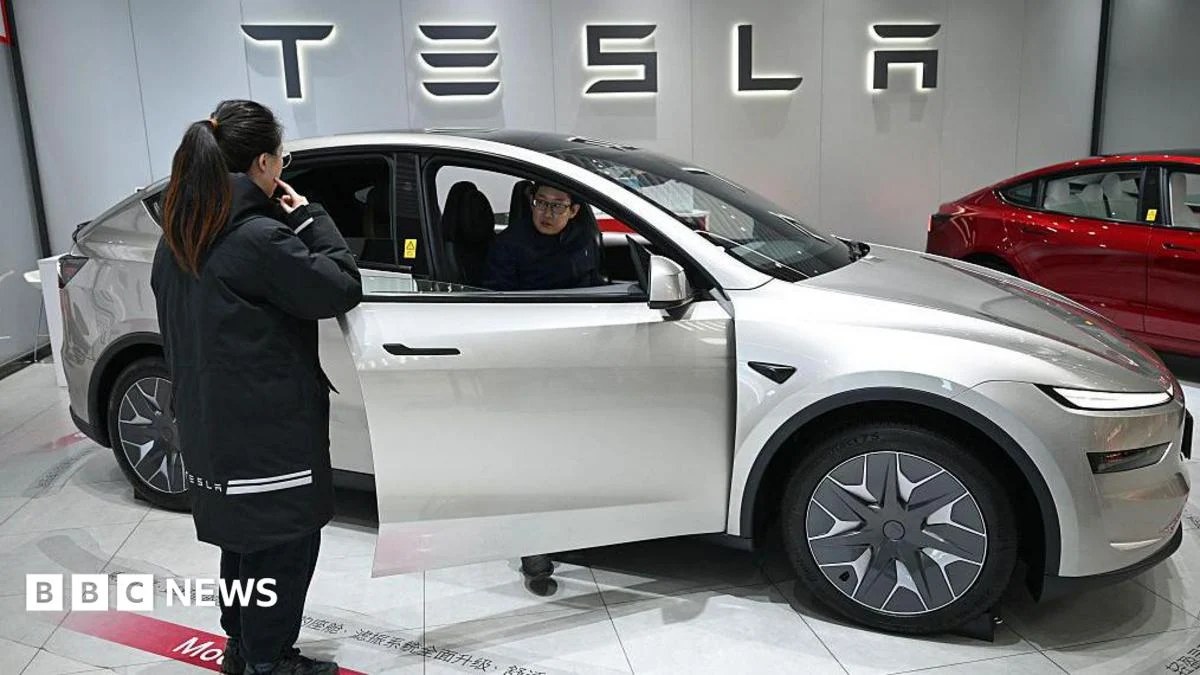
The "sleek look and reduced wind drag" offered by these flush handles are undeniable advantages in a market increasingly valuing both style and efficiency. However, as car industry analyst Stephen Dyer from consultancy AlixPartners points out, this design choice often comes at the cost of intuitive usability. Based in Shanghai, Dyer candidly admits, "Even I often find it difficult to locate the switch to open the door from the inside of an unfamiliar vehicle." This common experience highlights a fundamental challenge: while visually appealing, the functionality of these handles can be confusing, especially for new users or in moments of urgency. The psychological aspect of encountering an unfamiliar interface, particularly in a high-stress situation, can exacerbate this difficulty, making even a simple action like opening a door a source of frustration or delay.
Beyond mere convenience, the design of electronically powered door handles has escalated into a serious safety concern, drawing intense scrutiny from experts and regulators alike. Nanyang Technological University associate professor Lyu Chen emphasizes that while these handles became an industry trend, they raised "real safety concerns" when doors failed to open promptly, potentially delaying crucial rescue efforts after accidents. Chen underscores the critical role of these seemingly simple components: "A door handle may seem simple, but it becomes safety-critical in the seconds after a crash." In an emergency, every second counts, and any impediment to quickly exiting a vehicle or accessing occupants from the outside can have dire consequences.
The severity of these concerns was tragically highlighted by a series of incidents involving Chinese carmaker Xiaomi. The company faced intense scrutiny following two fatal crashes in 2025 involving its highly anticipated SU7 model, when suspected electrical failures allegedly trapped occupants. These incidents cast a shadow over the promising debut of the SU7, a model that marked Xiaomi’s ambitious entry into the competitive EV market. One particularly harrowing incident occurred on a highway in Tongling city, eastern China, resulting in the deaths of three people, according to regional news coverage cited by state-controlled media Global Times. The aftermath of this collision revealed a critical flaw: relatives of the victims reported that the passengers were tragically stuck in the car as the vehicle’s doors could not be unlocked after the collision. This inability to escape painted a stark picture of the dangers posed by door systems that rely solely on electrical power in post-crash scenarios.
In response to the mounting pressure and public outcry, Xiaomi’s representatives stated at the time that the SU7 was equipped with mechanical emergency release handles designed to function even without power. These crucial backup mechanisms were reportedly located at the bottom of each door, intended as a fail-safe. The company affirmed its commitment to safety by announcing that it was thoroughly investigating the matter and cooperating fully with the police authorities. However, the incidents spurred a significant design evolution: the latest models of the SU7 now feature new door handles that can be opened without power, signaling a clear acknowledgment of the safety imperative. Despite these actions, Xiaomi has not responded to BBC requests for comment on the matter, leaving further details about their internal findings and design rationale undisclosed.
The challenges are not unique to Chinese manufacturers. Tesla, a global pioneer in electric vehicles, has also faced similar lawsuits in the US over its door handle designs, highlighting a pervasive industry-wide issue. A prominent case emerged from a tragic crash in 2024 involving a Cybertruck, Tesla’s distinctive electric pickup, which resulted in the deaths of three college students in California. The sole survivor of the crash, Jordan Miller, subsequently sued the company, alleging that the Cybertruck’s innovative design had trapped passengers in the burning vehicle, effectively blocking their rescue. His lawyers from The Veen Firm contended that the vehicle’s lack of traditional door handles and the alleged failure of the electronic buttons meant to open the doors compounded the tragedy. In a powerful statement, one of the lawyers articulated the core of their argument: "When you design a vehicle with no mechanical way to open the doors from the outside, you are betting the electronics will work in every scenario, including a high-speed crash followed by a fire." This statement encapsulates the critical flaw in designs that prioritize aesthetics and advanced technology over fundamental mechanical reliability in emergency situations.
In court filings, Tesla vehemently denied any wrongdoing, asserting that the Cybertruck is fully compliant with US federal safety standards, as reported by The Guardian. This defense often centers on meeting existing regulatory requirements, but the lawsuits underscore a potential gap between current standards and real-world crash dynamics, particularly with novel vehicle designs. Beyond the Cybertruck incident, there have been other documented cases in the US where passengers, including children, have allegedly been trapped in Tesla cars after the electronic door systems suddenly stopped working, raising consistent concerns about the reliability of these systems. The BBC has contacted Tesla for comment regarding these allegations and ongoing lawsuits, but a response has not been provided.
Despite the industry’s efforts to address these concerns, some engineers argue that current measures may not go far enough to fully resolve the underlying safety issues. Engineering instructor Lim Hong Wee from the National University of Singapore critically notes that many of the proposed solutions do not adequately address the fundamental need for a mechanical way to open the doors, both from the inside and the outside. Lim emphasizes that access to a car during an emergency should never be dependent on software or electrical systems, which are inherently vulnerable to failure in the event of a severe collision or power outage. This perspective highlights a crucial distinction between user convenience and absolute emergency functionality.
Gokul Krithivasan, a specialist from risk management consultancy SecureSafe, further elaborates on the shortcomings, stating that while some measures might enable occupants to get out, they often fail to provide a reliable way for rescuers to get in. This poses a significant challenge for emergency services, who need swift and unobstructed access to victims. Krithivasan also dismisses warning labels or small instructions as a "weak remedy." He explains, "When panicked, people fall back on their instinctive responses, and don’t read small print in a dark and possibly smoke-filled cabin." In such chaotic and life-threatening scenarios, cognitive function is impaired, and reliance on learned behavior or subtle cues is unrealistic, underscoring the need for intuitively obvious and mechanically robust door mechanisms.
For now, the full scope of similar recalls outside China remains unclear. The BBC understands that carmakers have not yet notified authorities of any definitive plans for a similar recall in the US. However, the robust regulatory environment in China, coupled with a strong emphasis on consumer safety and a willingness to mandate design changes, means that such issues are likely to be addressed with significant force within the Chinese market. The precedents set by incidents involving other manufacturers, combined with the ongoing scrutiny of Tesla’s designs globally, create a compelling framework for why Tesla, as a major player with a significant presence and influence in China, could indeed be caught up in broad-reaching safety directives and potential recalls aimed at ensuring the fundamental safety of vehicle door mechanisms in the world’s largest automotive market. The evolving landscape of automotive design continues to challenge regulators and manufacturers to balance innovation and aesthetics with uncompromising safety standards, especially when human lives are at stake.



 Roy Suryo

 George Anjay
 Ramos Leo