
 Ramos Leo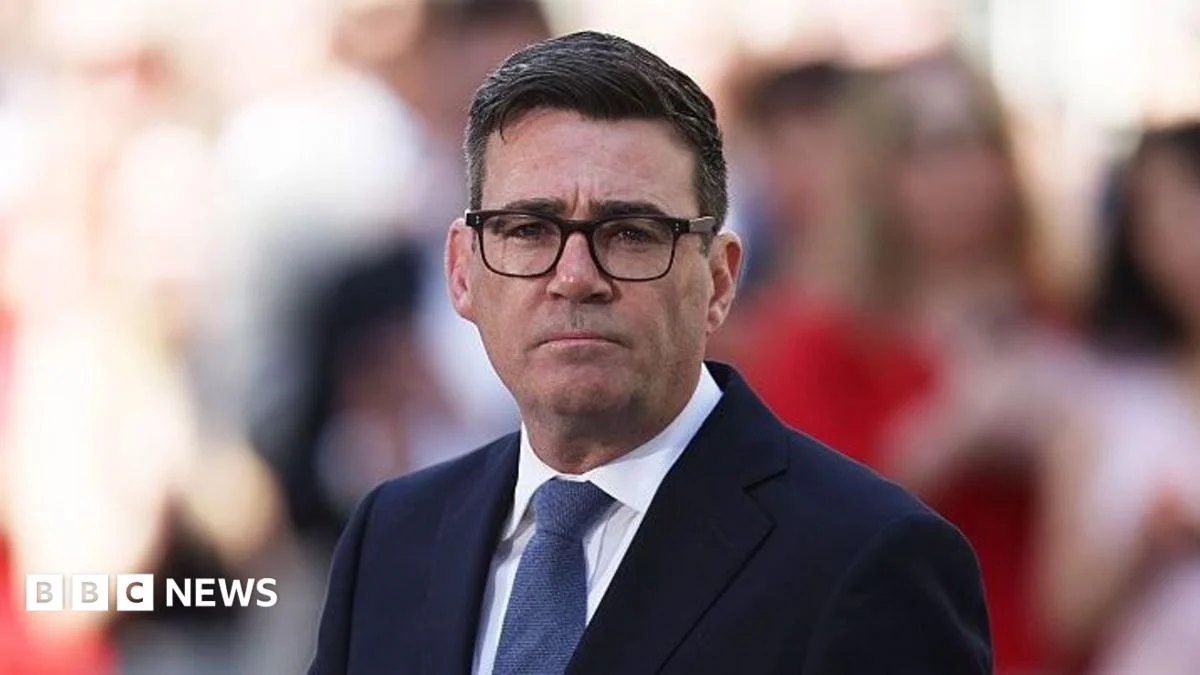
During this interlude, Burnham embarked on an extensive "summer tour" of the UK, an initiative dubbed by Downing Street as a strategic engagement exercise. This period saw him traverse the country, appearing on various podcasts and leveraging a more informal communication style to connect directly with the electorate. He unveiled a series of attention-grabbing policies, predominantly engineered to address the pervasive cost of living crisis, a central pillar of his campaign platform. These announcements, made outside the confines of the parliamentary chamber, allowed him to set an agenda largely unimpeded by the daily cut and thrust of Westminster politics. However, this period of relative tranquility is now drawing to a close, as the machinery of Parliament grinds back into action, ready to hold the government to account.
The real test begins with his maiden statement to Parliament, where he will outline his priorities as Prime Minister. While Burnham is no stranger to the Commons dispatch box, having previously served as a minister in the Labour governments of Tony Blair and Gordon Brown, Tuesday will represent his first appearance on the government front bench in 16 years. This return to the heart of legislative debate, but now from the pinnacle of executive power, signifies a fundamental shift in his role and the nature of the challenges he faces. His previous experiences as a departmental minister, answering questions on specific portfolios, pale in comparison to the comprehensive responsibility and intense political pressure inherent in leading the country.
Those within Burnham’s inner circle view the initial phase of his premiership as a demonstrable success, citing the positive public reception to his summer engagements and policy pronouncements. Yet, there is an underlying sense of relief among his team at the prospect of returning to the "structure" of parliamentary politics. This reflects an understanding that while public outreach is vital, the institutional rigour of Parliament is where a government truly defines itself. The ultimate symbolic arrival for any Prime Minister, however, is their debut at Prime Minister’s Questions (PMQs), an event Burnham will experience on Wednesday, almost two decades after first aspiring to the top job.
PMQs is a theatrical crucible, a world away from the nine years Burnham spent as Mayor of Greater Manchester, navigating regional politics and council chambers. He will face a packed Commons chamber, bristling with anticipation, where hostile opposition politicians will hurl "curveball questions" designed to destabilize and expose any perceived weaknesses. The session will be broadcast live to the biggest television and online audience of the week, amplifying every stumble and triumph. A Number 10 source candidly described Burnham’s impending debut as a "learning exercise," a strategic opportunity to "discover what works and what doesn’t" in this unique parliamentary arena. Burnham is reportedly keen to adopt a "tonal shift" at the weekly half-hour session, aiming to inject more humour into the often acrimonious proceedings, a stylistic departure that could either endear him to the public or be perceived as a lack of seriousness by his opponents.
Historically, most Prime Ministers approach PMQs armed with a thick folder of meticulously prepared notes, an exhaustive compendium covering every conceivable question and pre-emptive answer. Burnham, however, is known for his preference for speaking without notes, a style he adopted for his inaugural speech outside Downing Street. He is said to be contemplating a similar unscripted approach for PMQs, a move that could showcase his confidence and spontaneity but also carries significant risks in such a high-stakes environment. His aides, perhaps remarkably, convey an equally relaxed demeanour about the formidable task ahead, even while acknowledging that the next few weeks in Parliament could critically shape, or even define, the entirety of his premiership. The perception of competence and control established in these early parliamentary encounters will be crucial for setting the tone of his administration.
Beyond the immediate spectacle of PMQs, the government’s fiscal agenda looms large, with an emphasis on "message discipline" emanating from the Treasury. The most significant moment for the Burnham government this autumn will undoubtedly arrive on 28 October, when Chancellor John Healey unveils his inaugural Budget. The preceding Labour leadership, under Sir Keir, and his Chancellor Rachel Reeves, had faced considerable political damage when many of their proposed Budget policies prematurely found their way into the media. In response to these damaging leaks, Burnham’s administration has implemented stringent new measures, with the Treasury reportedly instructing officials that Budget security is now to be treated with the same paramount importance as "national security." This unprecedented level of caution underscores the political sensitivities surrounding fiscal policy in a challenging economic climate.
Nevertheless, speculation surrounding the Budget’s contents is already dominating Westminster, particularly regarding potential tax increases. Burnham has repeatedly affirmed his commitment to Labour’s 2024 manifesto pledge, vowing not to increase income tax, VAT, or national insurance. However, he has also conceded that there is "room for movement" on other taxes within the framework of that pledge, a subtle nuance that the Conservative opposition has seized upon as a fertile ground for political attacks, suggesting a potential stealth tax raid. The Treasury, under Healey, is intensely focused on delivering a Budget that not only addresses the nation’s financial needs but also avoids spooking already jittery financial markets. A senior Treasury source has insisted that the core themes of Healey’s plans will be "fiscal discipline" – a commitment to responsible spending and deficit reduction – and "fiscal devolution," aligning with Burnham’s long-standing advocacy for empowering local and regional authorities, particularly from his base in Greater Manchester.
John Healey’s appointment as Chancellor carries its own narrative, having resigned as Sir Keir’s defence secretary over what he perceived as an inadequate funding commitment to the armed forces. Now, the onus falls squarely on him to identify the necessary funds to bolster the nation’s defence capabilities, with an additional £4.7bn required in the Budget to meet the government’s defence investment plan. While the immediate pressure to increase defence spending is palpable, Healey is not expected to commit to the ambitious target of spending 3% of GDP on defence within this Budget. Instead, that more substantial commitment is anticipated to be deferred until next spring’s comprehensive Spending Review. When queried about potential apprehension regarding the reactions of military chiefs to this phased approach, a senior Treasury source confidently asserted that one would be "hard-placed to find anyone sceptical" of Healey’s unwavering commitment to national security and the armed forces, implying a trust in his long-term vision despite immediate constraints.
Further enriching the political landscape is the persistent speculation that Prime Minister Burnham intends to loosen the Treasury’s traditionally tight grip on policymaking across government departments. Just prior to Parliament’s summer break, a significant announcement confirmed the transfer of "local economic growth policy" from the Treasury to Burnham’s newly established Manchester base, imaginatively titled Number 10 North. This move, seen by some as a symbolic and practical decentralization of power, hints at a potential rebalancing of influence within Whitehall. While the Treasury is downplaying the notion that Number 10 North could evolve into a rival department, the implications of such a transfer of policy control are profound, potentially signalling a shift towards a more regionally focused economic strategy, deeply rooted in Burnham’s own political history and commitment to levelling up beyond London.
Despite his predominant focus on domestic policy during the initial weeks of his premiership, Burnham will also swiftly pivot his attention to foreign affairs. An early and significant diplomatic engagement will be the visit of French President Emmanuel Macron to Downing Street, a meeting that will test Burnham’s ability to navigate complex international relationships and assert Britain’s role on the global stage. This interaction will be crucial for establishing rapport with a key European ally and addressing pressing bilateral and multilateral issues, from trade to security.
Finally, and perhaps most critically for the longevity of his administration, Burnham must ensure he cultivates a significantly happier relationship with his own parliamentary party than his predecessor. Many Labour backbenchers felt marginalized and unheard under Sir Keir’s leadership, creating an underlying current of discontent. Burnham is acutely aware of this sentiment and is expected to adopt a far more visible and engaged approach within the Commons voting lobbies and tea rooms. Sources close to the Prime Minister reveal that he made a concerted effort to meet with most Labour MPs in the weeks leading up to his ascent to power, believing that MPs "value that bit of face time" and direct engagement. However, despite these proactive measures, a persistent ideological and policy divide remains among the more than 400 Labour MPs, particularly concerning which policy areas should be prioritized at a time when the nation’s financial situation is expected to remain challenging for the foreseeable future. Those advising the Prime Minister are acutely conscious of the difficult and potentially unpopular decisions that may lie ahead. One Number 10 source encapsulated the formidable challenge by acknowledging that there is a collective understanding in Downing Street that "the public’s expectation bar is high and we’ve got to meet it," underscoring the immense pressure on Burnham to deliver tangible results now that his summer tour of promises has concluded, and the era of parliamentary accountability has truly begun.

 George Anjay
 Nakalama John
 atisusanti
 Roy Suryo
 Nana Banana