Nakalama John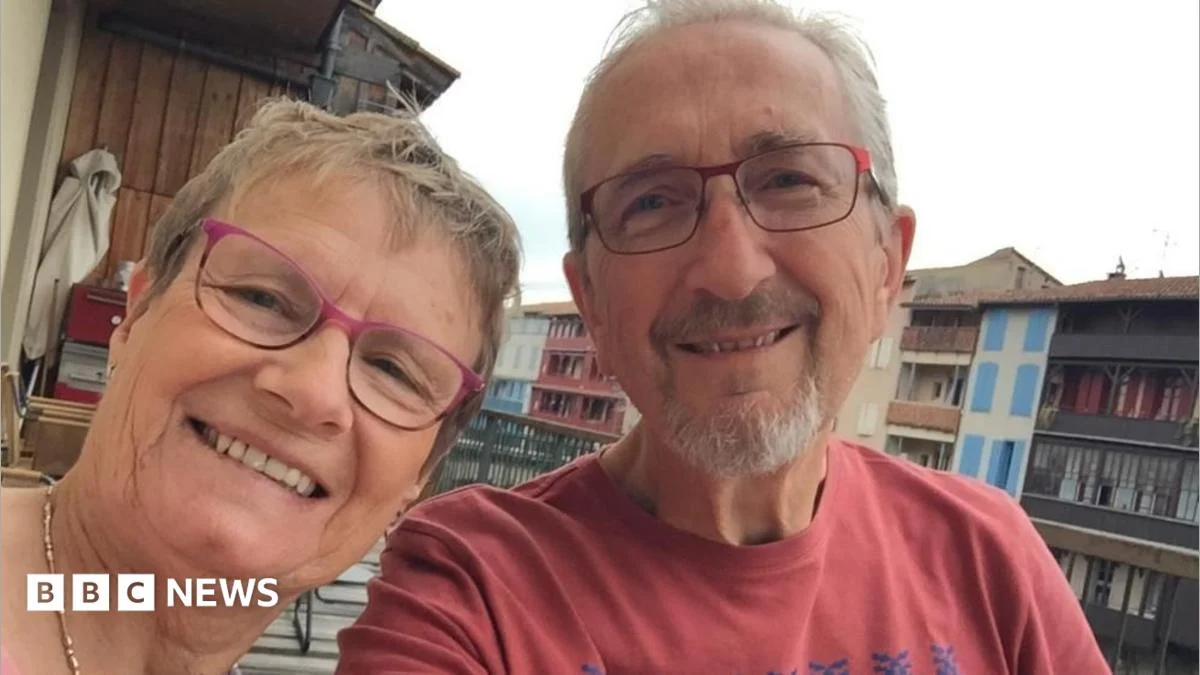
Linda Kitchen, a 74-year-old widow from Thornbury near Bristol, has initiated legal proceedings against Singapore Airlines following the tragic death of her husband, Geoff Kitchen, 73, and her own severe injuries sustained during a flight marred by "severe turbulence." The incident, which occurred in May 2024, involved Singapore Airlines flight SQ321 from London Heathrow to Singapore, a journey that unexpectedly turned catastrophic, ultimately claiming Geoff’s life and leaving Linda with a broken back.
The couple, described by Linda as "soul mates," had embarked on what was meant to be a six-week dream holiday, planning to explore Singapore, Indonesia, and Australia. Their eagerly anticipated adventure, however, was violently interrupted approximately 10 hours into the flight, when the aircraft encountered extreme turbulence over Myanmar. Lawyers representing Linda Kitchen assert that her husband was "fatally injured" as the Boeing 777-300ER experienced a sudden and dramatic drop of around 6,000 feet (1,828 metres) in a matter of minutes.
The lawsuit, filed at the High Court, seeks substantial damages from the airline. These damages are intended to provide Linda with access to the specialized support and ongoing care necessary for her debilitating spinal injuries, as well as to compensate for the profound loss of her husband. Speaking about the harrowing experience, Linda shared her devastation: "When I got separated from Geoff, I knew he was in a bad way, but nothing prepared me for hearing he had died. It was absolutely devastating."

The flight had reportedly experienced some minor turbulence earlier over Europe, but it was the abrupt and intense jolt over Myanmar that proved fatal. Linda recounted the terrifying moments: "It was so severe; it felt like the aircraft was dropping. I noticed my Kindle and Geoff’s phone had fallen to the floor, and I thought the plane was going down." The sudden, violent descent created a scene of chaos and panic within the cabin. Unsecured passengers and items were reportedly thrown around, causing widespread injuries.
During the rapid plummet, Linda described how her husband was thrown on top of her, crushing her into the armrest and exacerbating her own injuries. Amidst the pandemonium, other passengers and crew members bravely intervened to move Geoff, and a doctor who happened to be on board immediately commenced CPR, attempting to resuscitate him.
The severity of the incident necessitated an emergency diversion to Bangkok, Thailand, where the aircraft made an unscheduled landing. Upon arrival, emergency services swarmed the plane, attending to the scores of injured passengers and crew. Over 100 people on board suffered various injuries, ranging from head trauma and spinal damage to broken bones and internal bleeding. Linda was among those immediately transported to a local hospital for urgent medical attention. Heart-wrenchingly, it was two agonizing days later, while she was recovering from her own severe injuries, that she received the unbearable news of Geoff’s death. It is understood that Geoff Kitchen suffered a heart attack after the extreme forces exerted on his body during the plane’s sudden drop at high altitude. He was the sole fatality directly onboard attributed to the turbulence during this specific incident.
Linda’s recovery journey has been arduous and prolonged. She spent 10 days in a Bangkok hospital, battling immense pain and grappling with the profound shock and grief of losing her husband. "I was in so much pain that the journey was a blur," she recalled of her eventual airlift back to Bristol. Once back in the UK, she remained hospitalized for approximately another week, undergoing further treatment and assessment. Following her discharge, her condition necessitated "significant assistance at home," underscoring the long-term impact of her injuries and the drastic changes to her independent life.

Anthe Korelidou, a specialist aviation lawyer from Irwin Mitchell representing Linda Kitchen, underscored the gravity of the situation and the family’s pursuit of answers. "That Geoff was fatally injured and Linda suffered severe injuries vividly highlights the severity of what happened," Korelidou stated. She emphasized that despite the passage of time since Geoff’s death, Linda and her family continue to grapple with "a number of questions and concerns about what happened and if more could have been done to prevent their injuries." The legal proceedings initiated at the High Court represent a critical step in this quest for clarity and accountability. "All Linda wants is for the most thorough investigations to be conducted. The issuing of High Court proceedings is a major milestone in being able to provide Geoff’s loved ones with the answers they deserve," Korelidou added.
This tragic event has brought renewed global attention to the dangers of severe turbulence and aviation safety protocols. While turbulence is a common meteorological phenomenon encountered during flights, severe clear-air turbulence (CAT) – often invisible to radar – can pose significant challenges. It is typically caused by sudden changes in wind speed and direction at high altitudes, often associated with jet streams or mountain waves. While fatalities due to turbulence are extremely rare, the Singapore Airlines incident serves as a stark reminder of the immense forces involved and the importance of adhering to safety instructions, particularly the seatbelt sign. Investigations into the SQ321 incident, including analysis of flight data recorders and cockpit voice recorders, have been ongoing to understand the precise sequence of events and contributing factors. Singapore Airlines, a carrier with a strong safety record, had previously acknowledged the incident, offered apologies, and provided compensation to other affected passengers for their injuries and medical expenses, expressing deep condolences to Geoff Kitchen’s family. However, this specific lawsuit by Linda Kitchen signals a demand for a more comprehensive accountability and support for the enduring impact of the tragedy.
For Linda Kitchen, the legal battle is not merely about financial compensation but about finding closure and ensuring that the circumstances leading to her husband’s death and her own debilitating injuries are fully understood. It is a testament to her enduring grief and her determination to seek justice for the man she described as her "soul mate," whose life was so abruptly and tragically cut short on what should have been the beginning of a joyous adventure. The outcome of this High Court action will be closely watched, not only by the Kitchen family but by the wider aviation community, as it underscores the critical importance of passenger safety in the face of unforeseen aerial hazards.



 Roy Suryo

 George Anjay
 Ramos Leo