Ramos Leo
The proposed reforms, unveiled as the "most significant structural reform in the NHS in the era of devolution," aim to consolidate the existing 14 regional health boards into two large entities, broadly covering the East and West of Scotland. Initial modelling suggests this division, though specific details regarding its implementation and geographical boundaries are still being refined. The islands, currently served by their own health boards, are slated for a different arrangement, potentially seeing their healthcare provision absorbed by local authorities.
During an interview on BBC Scotland’s The Sunday Show, Swinney was directly challenged on the potential impact of these changes on individuals already travelling extensive distances for medical treatment. A pertinent example raised was that of women residing in the far north, such as Caithness, who frequently undertake journeys of 100 miles or more down the A9 to give birth in Inverness due to the centralization of maternity services. Responding to this, the First Minister affirmed that it would "not be my intention" for people to have to travel further under the new structure.
Swinney elaborated on his vision, emphasizing a commitment to maximizing the delivery of healthcare services locally, provided it can be done safely. He articulated this as a matter of ensuring "equity of access" for all citizens, irrespective of their geographical location. He clarified that current challenges, such as the situation in Caithness regarding maternity services, are primarily driven by considerations of patient safety rather than mere efficiency or cost-cutting measures. The objective of removing existing health board boundaries, he argued, is precisely to facilitate the provision of more local services, bringing care "as close to home as possible" for individuals across the country.

However, the question of how two large, consolidated health boards would effectively manage to decentralize services and enhance local provision, particularly in vast and sparsely populated regions, remains a key challenge. Scotland’s current NHS landscape comprises 14 regional NHS boards, responsible for the protection and improvement of their populations’ health and for the delivery of frontline healthcare services. These boards, along with seven special NHS boards, collectively manage an annual budget of billions of pounds and employ hundreds of thousands of staff. Streamlining this complex system into just two large administrative bodies is an undertaking of immense scale, with potential benefits in terms of strategic oversight and resource allocation, but also inherent risks related to local responsiveness and bureaucratic centralization.
The proposed reform also arrives against a backdrop of ongoing concerns regarding the provision of paediatric and maternity care throughout Scotland. A comprehensive nine-month review of all maternity services is scheduled to commence this autumn, prompted by a BBC Disclosure investigation that highlighted significant issues, including instances of "poor and sometimes deadly care," as reported by NHS staff and experts. Furthermore, planned paediatric surgery at Dr Gray’s Hospital in Elgin was temporarily suspended last month due to patient safety concerns, a situation that NHS Grampian’s chief executive indicated could persist until December. These existing pressures underscore the delicate balance between consolidating services for safety and maintaining accessible, local provision, making Swinney’s promise of no increased travel distances a critical benchmark for the success of the reforms.
Beyond patient travel, a major point of contention and concern revolves around the potential for job losses within the NHS. While Swinney acknowledged that "public sector employment will fall," he refrained from providing a "specific figure" for potential NHS job cuts resulting from the reorganization. This lack of concrete detail has drawn sharp criticism from opposition parties and trade unions. The trade union Unite, for instance, swiftly condemned the plan as a "slash and burn programme for the NHS," fearing significant reductions in staff and a detrimental impact on morale and service quality. The concern is that while frontline medical staff might be protected, administrative, managerial, and support roles could be targeted for redundancy in the name of efficiency, potentially leading to a loss of institutional knowledge and expertise.
The financial rationale behind such a sweeping reform is also under scrutiny. Swinney was pressed on how the Scottish government intends to address a projected £5 billion shortfall in public finances by the end of the decade. His response, citing "lots of variables" in public finances and referencing the SNP’s historical ability to balance budgets through challenges like Brexit, the Covid-19 pandemic, and the financial crash, did little to quell concerns. Critics argue that the consolidation of health boards, while framed as a structural improvement, may also be an attempt to achieve cost savings through economies of scale and reduced administrative overhead, even if direct job cuts are not explicitly stated. The broader economic context of fiscal tightening and increasing demand for public services inevitably fuels speculation that financial considerations are a significant driver behind the proposed changes.

The practicalities of the "east and west" board model, and the separate arrangements for the islands, remain largely undefined. Work on the proposal began in November of the previous year, with the chief executives of NHS Greater Glasgow and Clyde and NHS Lothian leading the initial development. However, how these two colossal boards will operate effectively, ensuring local accountability, patient representation, and seamless service delivery across diverse geographical and demographic landscapes, is yet to be fully articulated. For island communities, the prospect of healthcare provision being absorbed by local authorities raises questions about specialized medical support, emergency services, and the maintenance of established links with mainland hospitals.
Opposition parties have been vocal in their condemnation of Swinney’s perceived lack of clarity. Scottish Labour’s acting leader, Jackie Baillie, expressed frustration, stating, "It’s hard to tell whether John Swinney is being evasive or simply has no idea what he is going to do, but either way it’s not good enough." She emphasized that "people’s jobs are on the line and our public services could be plunged into chaos," demanding transparency on job risks and the implications for services. Similarly, Scottish Conservative finance and social security spokesman Craig Hoy accused Swinney of being "completely out of his depth," highlighting his inability to quantify job losses while simultaneously grappling with a £5 billion budget deficit. Malcolm Offord, leader of Reform UK Scotland, dismissed Swinney’s answers as "word salad," questioning how a government in power for 19 years could still lack specific details on such a major reorganization.
The success of these reforms will hinge on the government’s ability to deliver on its promise of maintaining or improving local access to care, ensuring patient safety, and managing the significant logistical and human resource challenges of such a large-scale restructuring. While the ambition to streamline governance and potentially enhance strategic planning is clear, the path to achieving these goals without negatively impacting patient experience or staff morale is fraught with complexity and uncertainty. The coming months will undoubtedly see intense scrutiny of the Scottish government’s detailed plans, as stakeholders demand concrete answers to the multitude of questions surrounding this transformative proposal for Scotland’s NHS.




 Nakalama John
 George Anjay
 atisusanti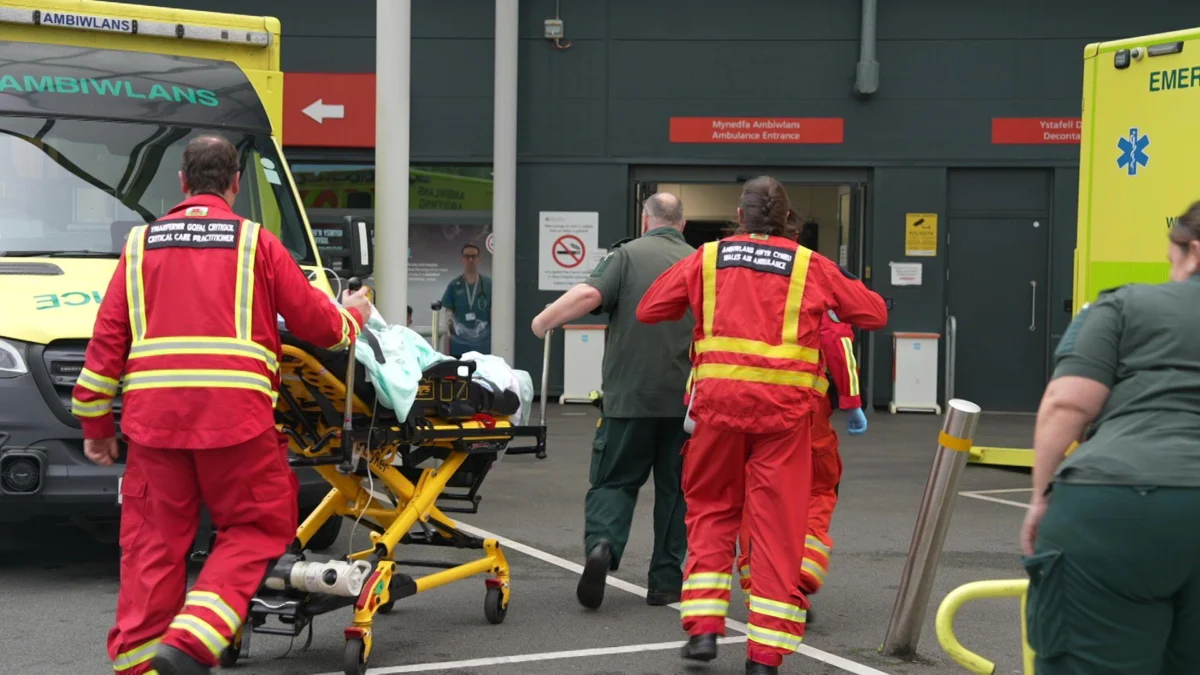
 Roy Suryo