Nana Banana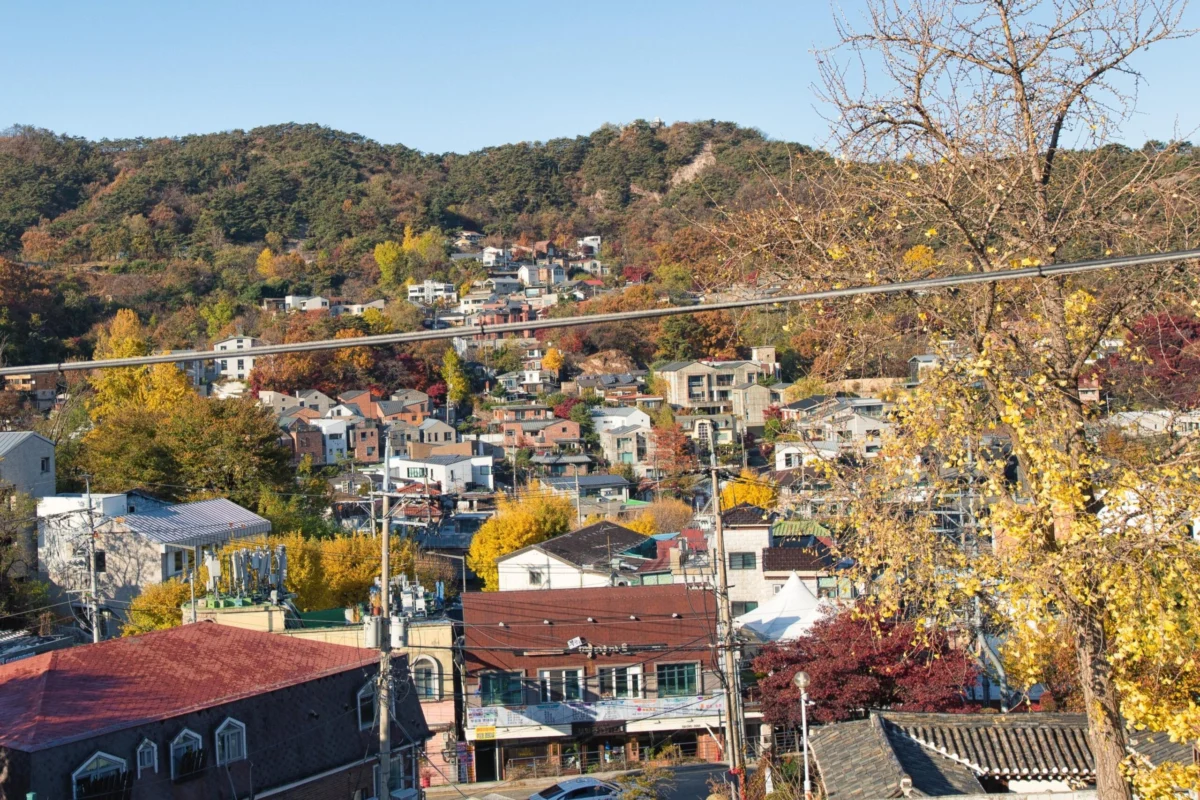
As the relentless Korean summer sun bathes the sprawling metropolis of Seoul, the urban landscape undergoes a profound transformation, blossoming into a vibrant, almost ethereal canopy of deep, luxuriant green. Under humid skies, the city’s countless trees and parks swell with life, offering pockets of verdant serenity amidst the ceaseless energy of city life. This annual embrace of nature is a cherished spectacle, a rhythmic reassurance of the seasons’ flow. However, in the heart of Buam-dong, a picturesque and historic neighborhood nestled against the city’s northern mountains, one particularly venerable resident failed to join this verdant symphony, instead displaying alarming signs of distress.
"Green leaves were falling to the ground, which shouldn’t happen at that time of year," recalls Jung, a concerned resident who lives near the majestic streetside ginkgo. Her voice, tinged with a blend of sorrow and resolve, painted a vivid picture of the early warning signs. This ginkgo, a silent sentinel, is not merely a tree; it is a living monument, deeply beloved by the locals who believe it has graced its spot for over a century, its roots deeply intertwined with the very history and soul of Buam-dong. For Jung, who had adopted the tree as a personal confidante, the sight of its premature decline was impossible to ignore. With each passing day, her initial curiosity about the tree’s ailment rapidly morphed into a profound and growing concern.

A rotting carpet of familiar fan-shaped leaves, prematurely shed and signaling a grave illness, soon surrounded the ancient ginkgo. This sight was so profoundly alarming that Jung and her neighbours, driven by a shared sense of guardianship, instinctively coalesced into an impromptu crew of amateur detectives. Their mission, fueled by affection and a burgeoning suspicion of foul play, was clear: to unravel the mystery of what was so gravely afflicting their hardy ginkgo. The unfolding whodunnit, a poignant drama playing out on a quiet Seoul street, not only engrossed the close-knit community of Buam-dong but quickly piqued the country’s interest, making national headlines and drawing widespread attention to their plight. However, this sudden surge of public scrutiny, while helpful, also unsettled Jung, who had spearheaded the campaign but has since requested anonymity, expressing a desire to shield herself from the intensity of the media glare. The BBC is respecting her request by using a pseudonym.
"Imagine a grandfather who silently embraces you every day, listens to you, and has always been strong and full of life," she muses, her voice heavy with emotion. "Suddenly, he begins to die. How heartbreaking would that be?" Her analogy resonated deeply, encapsulating the collective grief and fierce protectiveness the community felt.
Thus began one community’s desperate fight to preserve a cherished symbol of their neighbourhood, a struggle that brought them face-to-face with an unlikely and unsettling adversary. Their suspicions pointed towards a surreptitious attack, allegedly plotted by a museum built to honour a pioneering, nature-loving Korean artist, an irony not lost on the indignant residents.

Buam-dong itself is a gem, a tranquil enclave artfully tucked between two majestic mountains. It is a place frequently recommended by both discerning travellers and savvy locals for its breathtakingly picturesque views, its charming array of art galleries, and its numerous cosy cafes, collectively offering a much-needed escape from the relentless, often overwhelming bustle of central Seoul. Its unique character is further preserved by its proximity to the Blue House, the president’s official residence, an administrative restriction that has serendipitously limited urban development, allowing the neighbourhood to gracefully retain its quaint, timeless charm and verdant beauty.
Within this idyllic setting, where ginkgo trees are typically found nestled within private gardens or flourishing in untamed forests, this particular ginkgo holds a profoundly special place. It stands prominently on the side of the road, a public and accessible beacon of nature, a characteristic that Jung believes makes it truly unique. To her, it is not just a tree; it is "Grandpa Ginkgo," a venerable patriarch watching over their lives. "I pass this tree whenever I come home. I would say, ‘Grandpa, I’m home.’ Or ‘Grandpa, I’m heading out now’," she explains, her words painting a picture of a daily ritual, a bond forged through quiet recognition. Though Jung only moved to Buam-dong four years prior, the grand old tree was the very first landmark she noticed, and her affection for it grew quickly and deeply. "It was the only tree in the neighbourhood that belongs to everyone," she states, emphasizing its communal significance.
This sentiment is echoed by Park Jeon-hee, a dignified 74-year-old who has called Buam-dong home for nearly his entire life. To him, the ginkgo is nothing short of his "oldest friend," a steadfast companion through the decades. The profound connection extends even to the youngest generation, exemplified by 10-year-old Kim On, who passes the tree daily on his way to school. He speaks with a child’s earnestness, noting its longevity and expressing his fear: "It has stood since before he was born," Kim says, and "thinking it might fall down makes me sad."

Given this deeply ingrained affection, it was hardly surprising that Jung found ready allies within the community, many of whom had also independently noticed the ginkgo’s alarming withering. Their collective suspicions were soon galvanized by a puzzling discovery: ten white plastic funnels, discreetly peeping out from behind the tree’s massive trunk. Jung had initially, and optimistically, assumed these were benign devices, perhaps delivering vital nutrients to the ailing tree. But as the ginkgo’s condition worsened, a more sinister possibility began to take root in her mind. Could something more nefarious be at play?
Jung and her neighbours, now fully committed to their amateur investigation, meticulously sieved through security camera footage from a nearby house. Their persistence paid off when they stumbled upon a crucial piece of evidence: one early morning in late April, the camera had captured two men, conspicuously clad in white gloves, crouching suspiciously over the base of the tree, armed with a drill. While the grainy footage didn’t definitively confirm the men were installing the funnels, the timing and actions were undeniably suspicious. Then, a memory surfaced, a detail shared by the local council: a museum in the area had previously sought permission from landowners to remove the very ginkgo tree now in distress.
The Whanki Museum, dedicated to the renowned artist Kim Whanki, had reportedly claimed that its outer brick wall, situated mere inches from the ginkgo’s massive trunk, was under severe structural strain from the tree’s expansive root system. This revelation solidified the residents’ burgeoning theory: the funnels, they now strongly suspected, contained some form of herbicide, slowly but deliberately poisoning their beloved tree. This suspicion was independently corroborated by arborists who, after examining the ginkgo, shared similar concerns about the nature of its decline. The community’s finger of accusation pointed squarely at the Whanki Museum.

On the very day they reviewed the incriminating footage, a determined group of Buam-dong residents, accompanied by four police officers, marched directly into the museum. When confronted with the evidence and their accusations, an employee "basically admitted" the museum had taken some action regarding the tree, Jung and her neighbour alleged. "Once they had said it, there was really no taking it back," the neighbour confided to the BBC, highlighting the perceived significance of the admission.
While the Whanki Museum has neither publicly confirmed nor denied the specific act of injecting herbicide into the tree, and has not responded to the BBC’s direct inquiries, it did issue a public statement in May. In this statement, the museum reiterated its claim that the wall of its compound was "collapsing because of the ginkgo’s roots." It further stated that it had dispatched letters to more than 40 property owners in the vicinity, "requesting a solution" to the perceived structural issues. The museum lamented that there had been "no response," leading its staff to "attempt to resolve the situation." Crucially, the statement conspicuously omitted any explicit explanation of what "attempted to resolve the situation" entailed, leaving a void that the residents filled with their suspicions.
In stark contrast to the museum’s claims, a local council representative informed the BBC that an independent inspection conducted the previous year found "no meaningful connection" between the ginkgo tree and any reported damage to the museum wall. The official further added, with clear emphasis, that if a legitimate issue had existed, "we would have taken appropriate action and informed the relevant parties." Undeterred and convinced of the museum’s culpability, the residents, still firmly believing the Whanki Museum orchestrated the funnel installation and subsequent poisoning, are demanding full disclosure of the substances used. Their urgent plea is driven by the hope that this information will enable experts to administer the correct treatment to save the ginkgo. They have formally filed a police report against the museum’s director, and officials confirm that police are actively investigating the case, though they declined to share further details with the BBC.

Opened in 1992, the Whanki Museum stands as a tribute to the late Kim Whanki, a profoundly celebrated painter and abstract artist, widely revered by many as the "Picasso of Korea." On the museum’s official website, architect Woo Kyusung eloquently articulates his vision: to create a contemplative space for Kim’s works, a sanctuary that would "complement the elements of nature – the moon, mountains, clouds, rocks and trees – that were so important to his art." Indeed, Kim himself penned numerous essays under the evocative pen name Su-wha, a name that beautifully translates to "conversation with trees," underscoring his deep philosophical connection to the natural world.
The poignant irony of this situation is certainly not lost on Buam-dong’s indignant residents. Decades after Kim Whanki’s death, the very institution built in his honour, intended to celebrate his profound reverence for nature, stands accused of attempting to extinguish the life of a venerable tree. And not just any tree, but a ginkgo – a species held in particular esteem in Korea, where it profoundly symbolises longevity, resilience, and enduring strength. "Treating life that way is ignorance and there was never any apology," Jung asserts, her voice reflecting the community’s outrage at the perceived disregard for both the tree’s life and their collective sentiment.
If there is a nascent silver lining to be found amidst the ginkgo’s profound troubles, it lies in the remarkable way the campaign to keep it alive has undeniably brought the people of Buam-dong closer together. In her tireless days spent garnering support and rallying the community, Jung would frequently return home to find thoughtful, home-cooked meals from her neighbours left discreetly by her door. In turn, she found herself making nourishing vegetable soup for neighbours she had never even had the pleasure of meeting before, fostering an unexpected but deeply cherished camaraderie.

As the Korean summer inexorably ceded its humid reign to the crisp embrace of autumn, they all watched with heavy hearts as the ginkgo’s branches increasingly went bare and brown, its once-vibrant canopy succumbing to the mysterious affliction. An arborist who meticulously inspected the tree delivered a grim prognosis, stating it was "90% of the way toward death," according to activist Choi Jin-woo. The fate of the beloved tree, Jung now concedes with a resigned sigh, is "in the hands of heaven." "Perhaps all I can do is stay beside it and pray," she whispers, her words a testament to both despair and unwavering devotion.
For weeks, a dedicated group of around 20 residents gathered regularly in front of the ailing tree, their collective prayers rising like incense for its recovery. Some found solace in reciting Kim Whanki’s poignant essays, their words echoing the artist’s own love for nature, while a local shaman performed a solemn "healing ritual," seeking spiritual intervention for the ginkgo. Notes adorned with heartfelt well wishes fluttered gently against the trunk, while music resonated through the quiet lane. The group joined hands, swaying in rhythmic unison for an "elm dance," a practice that some nature lovers and activists fervently believe helps trees heal by channeling positive energy and collective intention.
"If someone had truly understood this tree was deeply loved, they probably would not have made the decision to inject herbicide," reflects Kim Min-joo, who has been a resident of Buam-dong for more than a decade, her voice tinged with both sorrow and a hint of accusation.

It was a profound personal revelation for Jung: all the days she had spent scrambling, advocating, and fighting to save the ginkgo were, ironically, the most active she had been since falling gravely ill last winter. She had struggled immensely with her mobility, often observing the tree’s daily changes from the confines of her home. On better days, she would manage a slow stroll up to it, even embracing its jagged trunk and inhaling its rich, earthy scent, finding a strange solace that lifted her spirits. "I felt so depressed and hopeless but those feelings disappeared. I entered a tree-like state," she describes, connecting her own healing to the tree’s struggle. She still can’t walk very much, she adds, but "the tree helped bring me back out into life again. Ironically, it was because the tree became sick."
"Although it has been heartbreaking, there were also incredibly moving moments," Jung reflects, a flicker of hope in her eyes. "The neighbourhood came together, cared for one another, looked after each other."
As Seoul transforms into its myriad shades of golden yellow with the undeniable arrival of autumn, the leaves on Buam-dong’s once-prized ginkgo are now a brittle, crispy brown, a stark and somber contrast to the vibrant spectacle unfolding across the rest of the city. Yet, despite the grim reality, the resilient neighbourhood is still clinging to the fragile thread of a miracle. For they cannot, and will not, imagine an autumn in which they do not pause, their hearts swelling with admiration, to behold their beloved ginkgo at its absolute finest, majestically swathed in a feathery, incandescent coat of pure gold.



 George Anjay
 Nakalama John
 atisusanti