
 George Anjay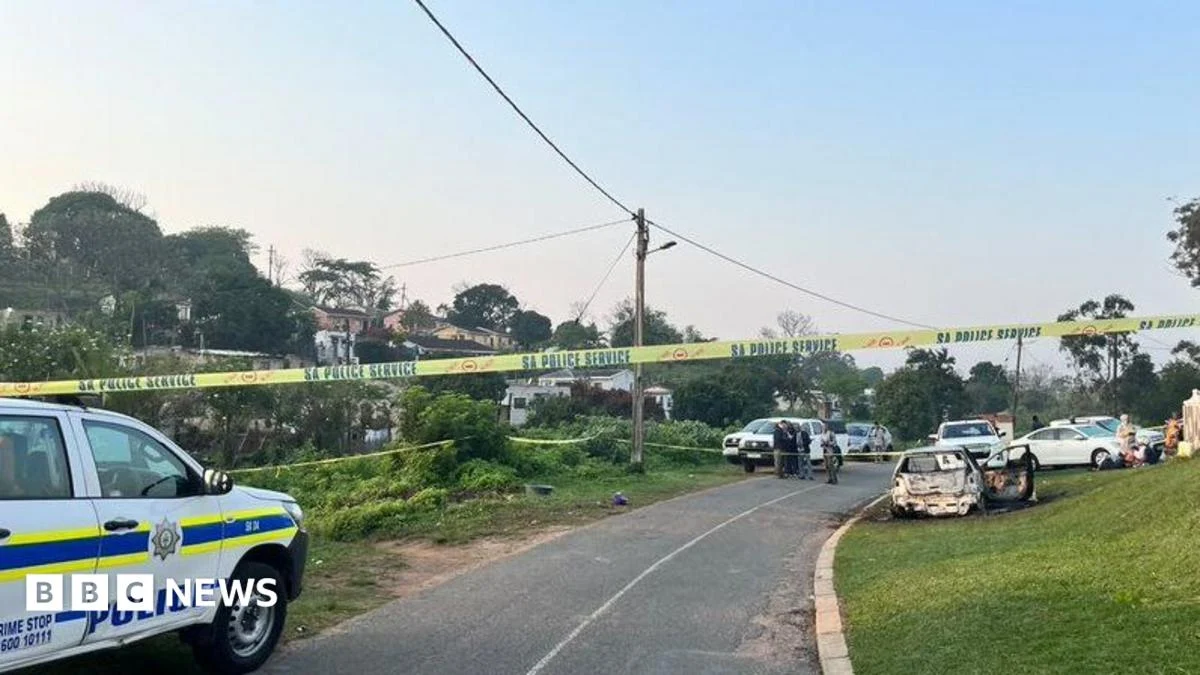
At least eleven people were brutally gunned down in a horrific mass shooting that unfolded at a residential property in the KwaMakhutha township, located near the bustling South African city of Durban. The shocking incident, which occurred late on Tuesday, has sent waves of fear and outrage through a nation already grappling with alarmingly high levels of violent crime. Gunmen, whose identities remain unknown, forcefully entered a house and unleashed a hail of bullets upon fourteen individuals who were reportedly gathered inside. The immediate aftermath of the attack saw ten people perish at the scene, their lives brutally extinguished in a matter of moments. A further four individuals, critically wounded, were rushed to medical facilities, but tragically, one succumbed to their injuries while receiving treatment, bringing the total death toll to eleven.
The South African Police Service (SAPS) has launched a comprehensive investigation into the massacre, with initial findings pointing towards a grim and complex scenario. Police spokesperson Brigadier Jay Naicker stated that preliminary information suggests some of the victims were allegedly involved in illicit activities, a detail that authorities are currently withholding from public disclosure to safeguard the integrity of the ongoing investigations. "We cannot divulge specific details at the moment to protect investigations which have been launched," Brigadier Naicker emphasized, underscoring the sensitive nature of the inquiry. While the precise motive behind the senseless violence remains unconfirmed, the police have not ruled out the possibility of a "feud between rival groupings," a chilling indication of the pervasive gang-related violence that plagues many South African communities.
Further details emerging from the police statement painted a harrowing picture of the events leading up to the massacre. It is believed that thirteen men and one woman, who is tragically reported to have been pregnant, were engaged in a social gathering within the confines of the house when three assailants arrived. Without any apparent provocation, the gunmen proceeded to open fire on the unsuspecting group. The pregnant woman was among those who tragically lost their lives, adding another layer of profound sorrow to an already devastating incident.
The violence did not end with the gunfire. A local TV reporter from the eNCA channel, who was present at the scene, provided a chilling eyewitness account, reporting that the gunmen had set fire to a vehicle belonging to one of the victims before making their escape. Subsequent footage from the scene vividly captured the charred remains of the burnt-out car, a stark visual testament to the perpetrators’ ruthlessness and the destructive nature of their escape. The SAPS has now initiated a widespread manhunt for the suspects, deploying significant resources in an effort to apprehend those responsible for this heinous act.
This latest atrocity occurs against a backdrop of deeply concerning crime statistics in South Africa. The nation consistently ranks among those with the highest murder rates globally. Official police data paints a grim picture, indicating a murder rate equivalent to more than sixty deaths occurring on a daily basis. This relentless tide of violence has fostered a pervasive sense of insecurity and fear among the populace.
The KwaMakhutha mass shooting is not an isolated incident, but rather a stark reminder of the escalating violence that has gripped South Africa. In recent weeks, the country has been deeply disturbed by the gruesome discovery of at least nine murdered women, with some of their bodies callously dumped by the roadside. These horrific findings have further amplified public fears and intensified calls for more effective policing and crime prevention strategies.
Last year, a similar mass shooting incident at a tavern in Johannesburg resulted in the deaths of nine people, highlighting a pattern of indiscriminate violence that targets public spaces and gatherings. These events underscore a disturbing trend where communities are increasingly becoming the battlegrounds for violent criminal elements.
The underlying causes of this pervasive violence are complex and multifaceted. Rivalry among criminal gangs, often fueled by territorial disputes over lucrative illicit activities such as drug trafficking and illegal mining, is a significant driver of violence within communities. These turf wars frequently erupt into deadly confrontations, leaving a trail of destruction and loss of life. The porous borders and vast, often unmonitored, landscapes of South Africa provide fertile ground for these criminal enterprises to flourish, making their control an immense challenge for law enforcement agencies.
In recognition of the gravity of the situation, President Cyril Ramaphosa has repeatedly acknowledged the profound threat posed by organized crime. In February, he declared that organized crime was "the most immediate threat to our democracy, our society and our economic development." In response to this escalating crisis, the President announced a significant deployment of the army to bolster the efforts of the police in combating the scourge of violent crime and organized criminal syndicates. This decision underscores the severity of the challenges faced by the South African authorities in their fight against the relentless wave of lawlessness.
The KwaMakhutha massacre is a stark and tragic illustration of the deep-seated problems that continue to plague South Africa. The investigation into this particular incident is expected to delve into the intricate web of criminal networks and rivalries that may have led to such a devastating outcome. The hope is that the perpetrators will be brought to justice, offering some measure of closure to the grieving families and a small step towards restoring a sense of safety and security in a nation grappling with an epidemic of violence. The international community will undoubtedly be watching closely as South Africa continues its arduous struggle to confront and overcome the challenges of crime and violence that threaten its very fabric. The incident serves as a grim reminder of the human cost of unchecked criminal activity and the urgent need for comprehensive and sustained efforts to address the root causes of this societal malaise. The ongoing efforts by the SAPS and other security forces to dismantle criminal networks and bring offenders to book are crucial, but the long-term solution will likely involve a broader societal approach, addressing issues of poverty, inequality, and lack of opportunity that can often push individuals towards criminal pathways. The path to a safer South Africa remains a long and arduous one, marked by such tragic incidents that underscore the persistent and devastating impact of violent crime.



 Nana Banana
 Roy Suryo
 Nakalama John
 Ramos Leo