
 Ramos Leo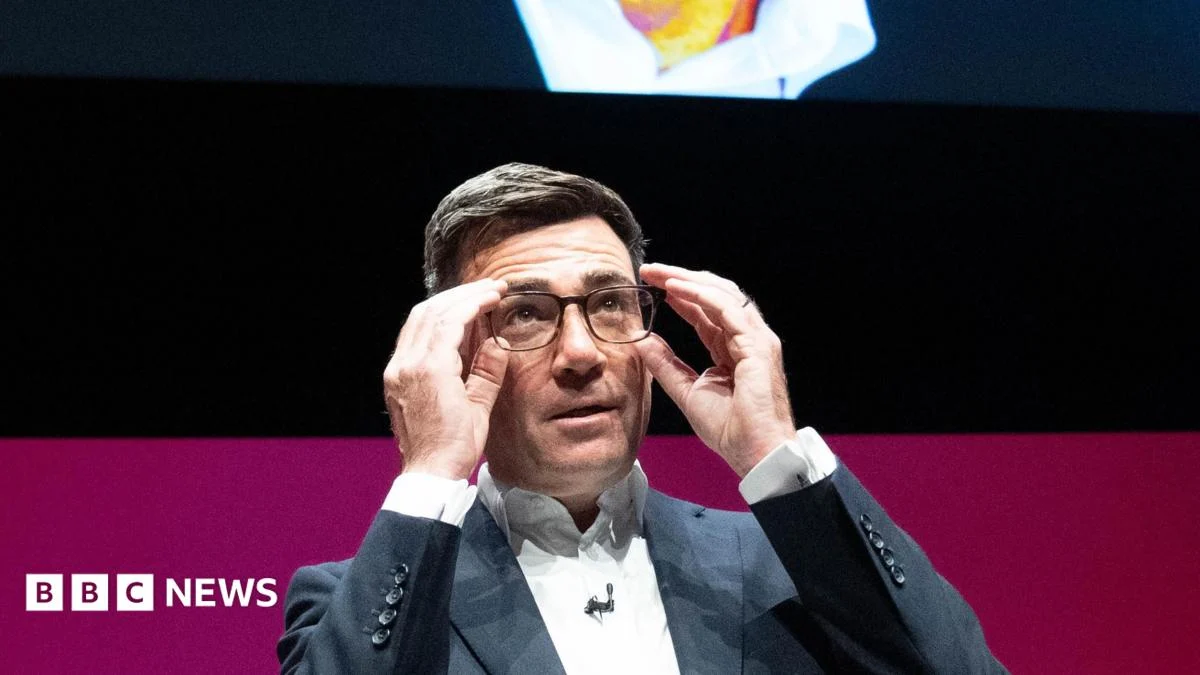
Conference speech day is always a momentous occasion for a prime minister, but for Andy Burnham, delivering his inaugural address in the role, the stakes were perhaps higher than for any predecessor. This wasn’t merely an opportunity to set a tone or outline a vision; it was a critical test of his leadership, his candour, and his willingness to grapple with the most intractable challenges facing the nation, particularly the looming crisis in social care.
Burnham’s core pitch, articulated repeatedly, hinges on the belief that "hope comes from honesty." This mantra implies a deliberate departure from what he perceives as a political culture of evasion and short-termism. He advocates for "less drift and more direction," a clear call for decisive leadership after years of perceived indecision and incremental policy adjustments. Crucially, he promises a willingness to "say the things politicians usually avoid," a pledge that immediately raised expectations that he would address the funding quagmire of social care and the politically sensitive future of the state pension triple lock.
The stage for this high-stakes performance was set the previous Sunday, when Burnham, in an interview with the BBC, explicitly stated his ambition to fundamentally shake up social care in England. However, he immediately qualified this, acknowledging that any radical reform would only be feasible after a general election, given his commitment to the tax promises Sir Keir Starmer had made at the last election. This distinction was vital; it signaled a long-term vision but also highlighted the immediate fiscal constraints. Social care in England is a system teetering on the brink, characterised by chronic underfunding, a struggling workforce, and a postcode lottery of provision. Millions of families face the heartbreaking reality of elderly or disabled relatives receiving inadequate support, or worse, being forced to deplete their life savings to pay for care. The demographic time bomb of an aging population only intensifies the pressure, making a sustainable funding model an urgent, national priority. Previous attempts at reform, from the Dilnot Commission’s recommendations to Boris Johnson’s ill-fated cap on care costs, have either been watered down or abandoned, underscoring the political and economic complexities involved.
Burnham’s Sunday remarks instantly ignited a flurry of speculation regarding how such an ambitious social care plan could possibly be funded. The immediate focal point of this discussion became the future of the state pension triple lock. This policy, introduced in 2010 by the Conservative-Liberal Democrat coalition government, was designed with the commendable goal of addressing pensioner poverty. It guarantees that the state pension increases each year by the highest of three metrics: average earnings growth, inflation (as measured by the Consumer Price Index), or 2.5%. For over a decade, it has largely succeeded in its aim, protecting pensioners’ incomes from erosion.
However, its very success and the economic volatility of recent years have also made it a significant fiscal challenge. The cost of the triple lock has been ballooning, creating an ever-larger burden on the public purse and raising serious questions about intergenerational fairness. While older generations have seen their pensions protected, younger generations face rising taxes, precarious employment, and an uncertain economic future. Many politicians, across the political spectrum, have privately expressed their deep-seated concerns about the escalating costs and the long-term sustainability of the policy. Yet, the perceived political difficulty of dropping or even modifying it has historically led to a collective reluctance to confront the issue head-on. The pensioner lobby is powerful and highly engaged, and any perceived threat to their financial security can trigger significant electoral backlash.
This brings into sharp focus the precarious tightrope the prime minister now finds himself walking. On one side, he faces fierce opposition from influential figures such as Sharon Graham, the leader of the Unite union, who publicly declared that ditching the triple lock would be "electoral suicide." Graham’s intervention carries considerable weight, not only due to Unite’s significant membership and financial influence within the Labour Party but also because her comments reflect a broader concern about protecting the welfare of working-class and retired individuals. Her stark warning underscores the deep political sensitivities surrounding pension policy and the potential for a popular backlash if the government is seen to be targeting pensioners.
On the other side, the financial markets are watching Burnham’s every move with a keen eye. The markets, which ultimately determine the cost of government borrowing, demand fiscal credibility. Any major spending commitment, such as a comprehensive social care reform, must be accompanied by a clear, plausible plan for how it will be funded. Without this, investor confidence can falter, leading to higher borrowing costs for the government, which in turn squeezes other public services and impacts the wider economy. In essence, Burnham faces the unenviable task of being able to point to credible areas where money won’t be spent, or where revenue will be generated, as well as where it will be invested. This delicate balance is central to his promise of "honesty" and "candour."
Amidst this fervent debate, No10 maintained a conspicuously coy stance regarding the precise details of what Andy Burnham would or would not say in his speech. Their strategy appeared to be one of cautious anticipation, deliberately avoiding "overcooking it or overdoing it," instead suggesting that it was others – the media and political commentators – who were getting carried away with speculation. However, ministers were acutely aware that "a hare is running" – that the issue of social care funding and the triple lock had burst into the national conversation with undeniable force. Given Burnham’s explicit promise of "honesty," candour, and a willingness to discuss difficult trade-offs, it would have been extraordinary, and indeed politically damaging, if there had been no mention of these critical issues. Such an omission would have been seized upon by his critics as a precise lack of the very transparency he was championing.
Indeed, whispers from those close to the prime minister on the morning of the speech suggested that "people will be surprised on the upside" about the extent to which Burnham would be willing to "lean into the options" that could be explored as part of Labour’s broader offer at the next general election. While he would be explicit that the triple lock, as promised, would be retained until the election – a crucial reassurance to an anxious electorate – it became clear that Burnham would seek to "seed a conversation" about the broader challenges without nailing down every intricate detail.
This approach, according to his allies, represents a fundamentally different way of doing politics. It’s about being open and transparent about potential options, initiating a national debate, rather than crudely or abruptly shifting policy without prior discussion. This strategy draws an implicit comparison with Sir Keir Starmer’s previous decision to ditch the Winter Fuel Payment, a move that appeared to come from nowhere and had an almost immediate and jarring impact on public perception. Burnham’s camp sees their leader’s method as more considered, more democratic, and ultimately more respectful of the electorate. However, this distinction did not prevent Sharon Graham from drawing parallels, claiming that the "danger of doing it" (referring to the debate over the triple lock) was that Labour could "waste" a second hearing, a precious opportunity now presented under Andy Burnham’s leadership.
And so, the debate truly began. This speech was not merely about policy announcements; it was about initiating a long-overdue national conversation about the sustainability of the welfare state, intergenerational fairness, and the funding of essential public services in an aging society. In the round, ministers I spoke to expressed a genuine relish for what they perceived as a return to "big arguments" – fundamental discussions about generational issues with a prime minister willing to wrestle with them in public. This afternoon, the nation would gain a fuller sense of the scope and scale of that ambition – not just on social care and pensions, but on the very future direction of the country. Burnham’s first conference speech was not the end of a policy discussion, but rather the very beginning of a profound national reckoning.


 George Anjay

 Nakalama John
 Nana Banana
 atisusanti