
 Ramos Leo
Adult social care in England currently provides crucial state support, assisting individuals in maintaining independence in their daily lives, often within their own homes. However, unlike the National Health Service, which offers healthcare free at the point of use, social care services are subject to means-testing. This critical distinction often leaves individuals and families facing exorbitant bills, leading to significant financial hardship and the depletion of life savings or assets, including their homes. The disparity has long been a source of public frustration and a central argument for advocates of reform, who argue for parity with the NHS model.
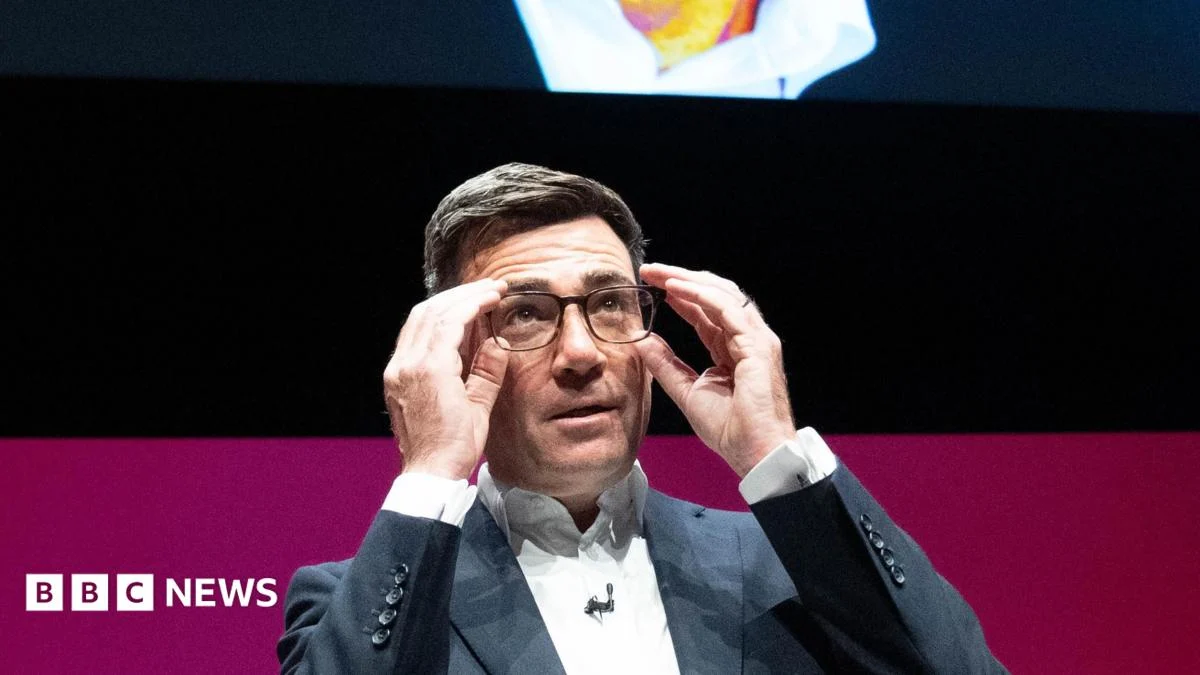
Prime Minister Andy Burnham, in an interview with the BBC’s Sunday with Laura Kuenssberg, articulated his vision for a future social care system where "everyone contributes, everyone is covered." While he refused to explicitly rule out tax rises to fund such a transformative system, he also acknowledged the political sensitivities involved. Crucially, Burnham indicated that any comprehensive proposals would not be implemented before the next general election, which is not due until August 2029, though he could call one earlier. This timeline is constrained by Labour’s 2024 election manifesto commitments, which notably included pledges not to increase national insurance, income tax, or VAT. This creates an immediate tension between the aspiration for a universal, free system and the financial constraints of current political promises.
Sir Andrew Dilnot highlighted the irony and challenge of this extended timeline. If proposals are indeed slated for inclusion in Labour’s 2029 election manifesto, it would mark three decades since Sir Tony Blair launched a royal commission on social care and more than 15 years since Sir Andrew’s own commission submitted its recommendations. This long history of commissions, reports, and political promises without substantive action underscores the deep-seated difficulties in addressing the social care crisis. Dilnot noted that Burnham’s earlier suggestion in July, shortly after becoming Prime Minister, of a new national care service for England had implied a quicker path to reform. The current deferral to a post-2029 implementation horizon suggests a recognition of the immense scale and cost involved, pushing the ambition further into the future.
The precise cost of an "NHS-style" social care system remains a contentious point. Sir Andrew interpreted the Prime Minister’s rhetoric as implying a system that would be "entirely free," mirroring the NHS. Under the current system in England and Northern Ireland, individuals with assets exceeding £23,250 – a figure that includes the value of their home – are typically ineligible for council assistance with care costs. Wales also operates a means-tested system. Scotland, while offering state-funded personal care to all adults assessed as needing help with tasks such as eating and bathing, still means-tests for accommodation, food, and everyday living costs. Sir Andrew cautioned that even a Scottish-style model, while more generous than England’s, would still leave individuals in residential care facing "very substantial bills," a scenario Burnham has explicitly stated he wants to avoid.
Estimates for the cost of such a universal system vary significantly. The Health Foundation has projected that a fully government-funded universal social care system in England could cost approximately £18.5 billion per year. Sir Andrew Dilnot, however, believes an entirely free, NHS-style system could costs "well in excess of £18 billion" annually. He suggested that a Scottish-style model, covering personal care but not accommodation, might cost closer to half that figure. Burnham, while suggesting the costs would be lower than the Health Foundation’s estimate, has yet to outline a concrete funding plan, adding to the uncertainty surrounding his proposals.
Finding the funds for such an ambitious reform is arguably the biggest hurdle. Labour MP and former minister Darren Jones floated the idea of scrapping the pensions triple lock as a potential funding mechanism. The triple lock policy, which guarantees the state pension increases by either average wage growth, inflation, or 2.5% (whichever is highest), is itself a Labour manifesto pledge. This highlights the difficult choices and potential trade-offs that would be required to finance universal social care, pitting one cherished social provision against another. The political capital required to dismantle a popular policy like the triple lock, or to introduce significant new taxes, would be enormous.
The history of social care reform in the UK is littered with well-intentioned but ultimately failed attempts. Sir Andrew Dilnot’s own commission, established in 2010, proposed a lifetime cap of £35,000 on care costs, a measure designed to protect individuals from catastrophic financial losses. These recommendations were initially accepted by the Conservative-Liberal Democrat coalition government, led by David Cameron. However, implementation of the cap was repeatedly delayed, first to 2020 due to "pressure on the public finances," and eventually dropped entirely by successive Conservative governments. This demonstrates the persistent challenge of political will and economic headwinds in delivering promised reforms.
Further back, Theresa May’s Conservative government faced a strong backlash in 2017 when it proposed a system that would have made people receiving care at home pay the full costs if their assets were worth at least £100,000. This controversial proposal was swiftly branded a "dementia tax" by opponents and was subsequently scrapped. Even Prime Minister Burnham himself has a history with difficult social care funding proposals. As health secretary in Gordon Brown’s government, his plan for a national care service suggested funding through a compulsory contribution from people’s estates after they die. This idea was lambasted as a "death tax" by Labour’s opponents and never progressed after the party lost the 2010 general election.
These repeated failures underscore the profound political and economic complexities of social care reform. Any proposed solution inevitably touches upon highly sensitive issues: personal wealth, inheritance, taxation, and the perceived fairness of intergenerational burdens. The "third rail" nature of social care funding means that politicians often shy away from truly transformative, and therefore costly, solutions.
Sir Andrew Dilnot concluded his remarks by expressing his personal desire to see a government-funded social care scheme, acknowledging its potential to provide dignity and security to millions. However, he reiterated that "the cost would become very, very large," making it a monumental undertaking. He suggested that a less ambitious, capped system, such as his own commission had proposed, "could still work well for elderly people" by protecting them from the most extreme costs, even if it falls short of a fully "free" NHS-style model. The current political landscape, with Prime Minister Burnham delaying detailed proposals and implementation until after the next general election, reinforces Dilnot’s view that such a fundamental shift in social care provision is a decades-long aspiration rather than an imminent reality, subject to significant political will and economic stability over a prolonged period.

 George Anjay

 Nakalama John
 Nana Banana
 atisusanti