
 Nana Banana
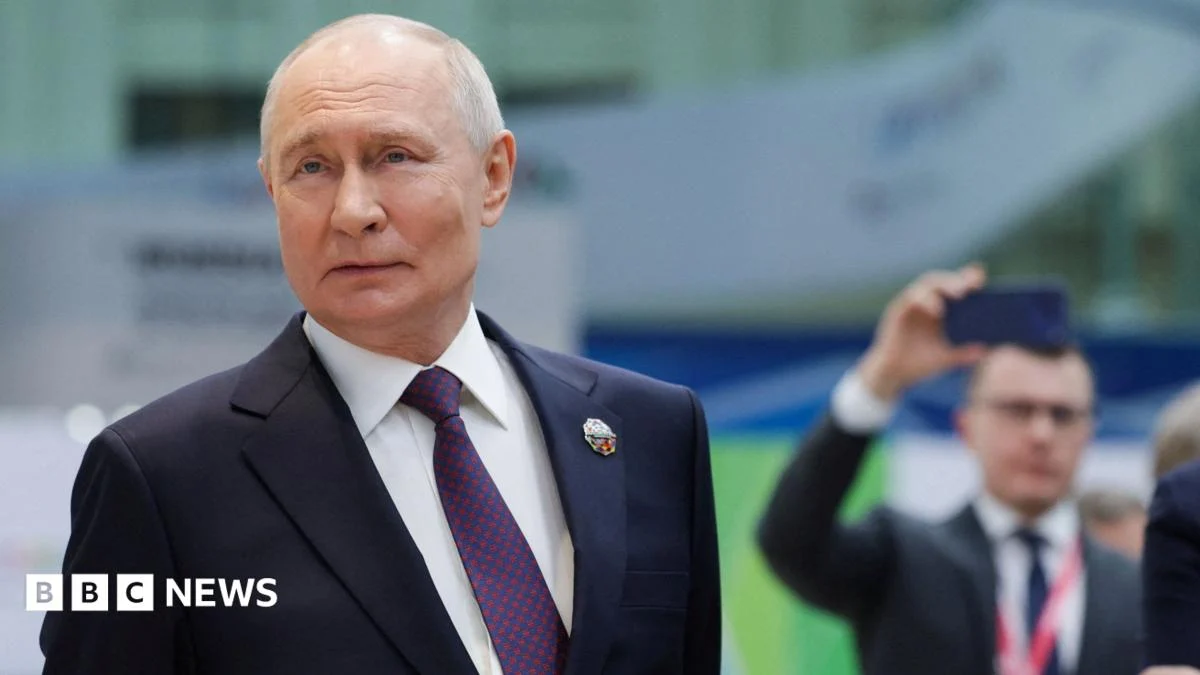
"He’s a genius, a real genius," Putin asserted, according to a translation of his comments by the BBC, underscoring his profound admiration for Musk’s innovative prowess. Putin further elaborated on the nature of their dialogue, stating, "We are in close contact with our American partners, including Mr. Musk." This admission of direct, high-level communication between the leader of Russia and one of America’s most influential private citizens, especially concerning sensitive space technology, sent ripples through diplomatic and tech circles. SpaceX, the aerospace company founded by Musk that operates the Starlink satellite constellation, did not issue an immediate response to requests for comment, maintaining its characteristic silence on such politically charged discussions.
A primary motivation behind this unusual channel of communication, Putin explained, was the imperative to prevent orbital interference between Rassvet and Starlink satellites. With thousands of satellites already launched by Starlink and Russia’s own constellation beginning to take shape, the risk of collisions or signal disruption in an increasingly crowded low-Earth orbit (LEO) is a growing concern for all spacefaring entities. "It is important for Russia to be in contact with Musk so Rassvet and Starlink satellites do not interfere with each other in orbit," Putin clarified, highlighting the pragmatic need for technical coordination despite broader geopolitical tensions. He stressed the mutual value of this cooperation, adding, "We and our American partners value this mutually, and despite all the political questions, we are working hard." This statement suggests a pragmatic approach to space governance, prioritizing shared interests in orbital safety and efficiency over political disagreements.
The sheer scale of Starlink’s deployment dwarfs Russia’s nascent Rassvet system. Starlink has already launched approximately 13,000 satellites into LEO, according to company figures, rapidly building a global network designed to provide high-speed, low-latency internet access from virtually anywhere on Earth. In stark contrast, online satellite trackers indicate that Rassvet currently has only a couple of dozen satellites in orbit, marking it as a far smaller and less developed constellation. The Russian Embassy in South Africa, in a statement issued on Wednesday, openly acknowledged Rassvet as "Russia’s Starlink alternative" and emphasized that it "marks only the country’s first steps in this field." The embassy reiterated Putin’s message, stating, "Russia maintains close contacts with the US on space, including with Elon Musk," underscoring the strategic importance Russia places on this collaboration. This acknowledgment hints at Russia’s ambitious long-term plans to expand its LEO constellation, making coordination with established players like Starlink even more critical.
Putin’s comments about the necessity of technical coordination with Musk and the US come at a particularly sensitive juncture in international relations, hinting at a potential, albeit cautious, thawing of relations between Washington and Moscow, even as the full-scale invasion of Ukraine approaches its fifth year. The war in Ukraine has dramatically reshaped global alliances and highlighted the critical role of satellite communication in modern conflict. Ukraine, in its valiant efforts to repel Russia’s invading forces, became heavily reliant on Starlink internet for battlefield communications, drone operations, and maintaining critical infrastructure connectivity when traditional networks were destroyed or compromised.
However, this reliance also exposed a significant vulnerability. Just last week, Ukrainian military units reportedly suffered sudden and widespread Starlink connectivity problems, a disruption that Musk subsequently admitted SpaceX had intentionally caused. This admission sparked intense debate about the immense power wielded by a private individual over critical military infrastructure during an active conflict, raising profound ethical and geopolitical questions about accountability, neutrality, and the weaponization of commercial technology. Musk’s decision to restrict Starlink’s use for certain offensive operations by Ukraine, citing concerns about escalating the conflict to a "World War 3," underscored the complex interplay between private enterprise, national security, and international diplomacy.
The perceived shift towards closer US-Russia engagement is not isolated to space matters. Earlier this month, former US President Donald Trump, a significant political ally and financier of Elon Musk, reportedly struck a deal with Russia to import diesel. While the details remain somewhat opaque, the stated aim was to lower gas prices in the US amid fluctuating global energy markets and geopolitical tensions. Following this, Trump reportedly waived certain sanctions against Russia that were poised to take effect, signaling a potential softening of punitive measures. Not long after these developments, a US citizen was released from Russian custody, a gesture that saw US envoy Steve Witkoff publicly refer to Putin as a "humanitarian," further fueling speculation about a strategic realignment in US-Russia relations. These actions, coming from a prominent American political figure with close ties to Musk, paint a picture of complex and sometimes contradictory foreign policy maneuvers.
Elon Musk’s personal trajectory and political leanings add another layer of complexity to these interactions. Born in South Africa, Musk later immigrated to Canada before eventually settling in the United States. All of his major business ventures, including the electric vehicle giant Tesla, the aerospace innovator SpaceX, and the satellite internet service Starlink, are headquartered in America, primarily operating out of California and Texas. The billionaire, whose net worth has at times pushed him into the "trillionaire" realm, has been one of the most vocal and substantial political allies and financiers of Trump and other Republican US politicians. This alignment means that a key figure in American technological and economic power, with significant influence on national security infrastructure, also shares a political affinity with a former president known for his desire to improve relations with Russia.
The implications of such "close contact" between a highly influential American technology magnate and the Russian President extend far beyond mere orbital traffic management. It blurs the lines between private enterprise, national security, and international diplomacy, granting an unprecedented level of individual power in shaping geopolitical outcomes. Musk’s control over Starlink, a dual-use technology with significant military applications, effectively places him in a unique position to influence the course of conflicts and the strategic interests of nations. The ongoing dialogue concerning satellite technology, while ostensibly technical, reflects a broader and more intricate dance of power, pragmatism, and potentially, a quiet effort to navigate shared challenges in an increasingly multipolar world, even amidst profound political divisions. The future of global satellite internet, and the strategic importance of preventing orbital chaos, seems to be a rare area where even the most disparate geopolitical rivals find common ground for dialogue, orchestrated by a "real genius" whose influence transcends national borders.



 George Anjay
 Nakalama John
 atisusanti
 Ramos Leo
