
 George Anjay
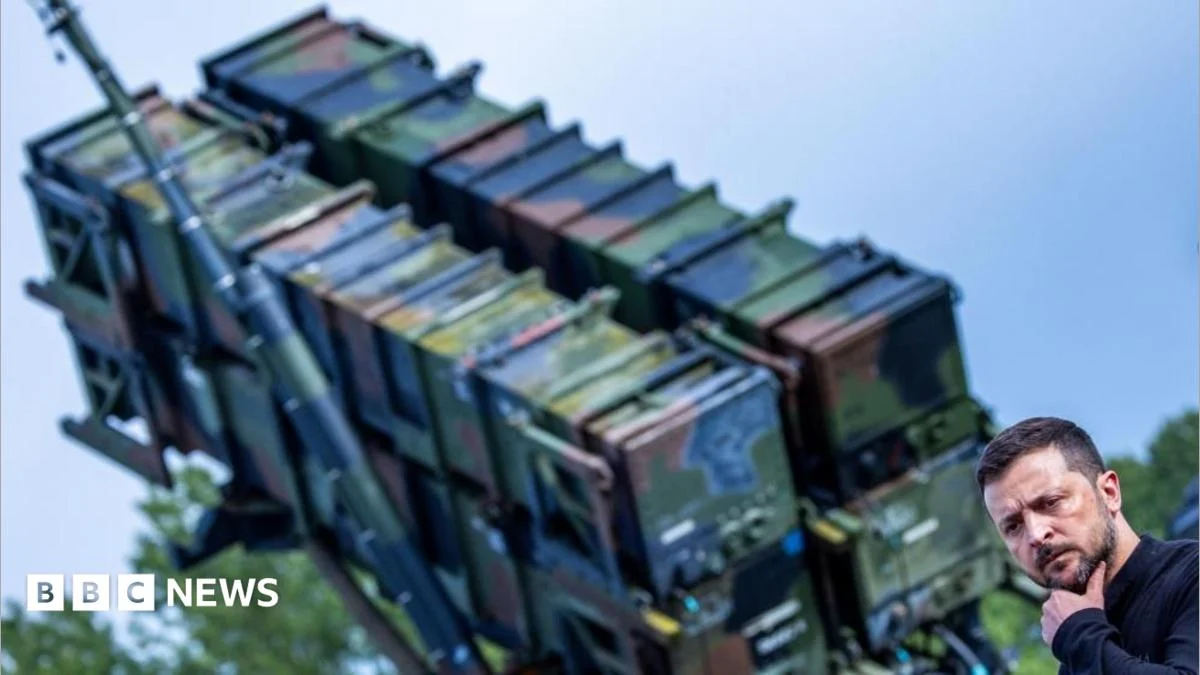
In a significant development for Ukraine’s ongoing defense against relentless Russian aggression, the United States has officially approved the sale of 500 advanced Patriot missiles to Kyiv. This critical munition is a cornerstone of Ukraine’s air defense strategy, particularly vital in countering the escalating and increasingly sophisticated aerial attacks launched by Russia. The approval comes at a crucial juncture, following months of urgent appeals from Ukraine regarding delayed deliveries of these essential interceptors.
The U.S. State Department confirmed the proposed sale, outlining that the cutting-edge PAC-3 interceptor missiles will carry a price tag of $2.1 billion, approximately £1.6 billion. Crucially, the entirety of this substantial cost will be borne by Ukraine’s international allies in Europe and Canada, underscoring a unified commitment to bolstering Kyiv’s defensive capabilities. This financial arrangement ensures that no U.S. taxpayer funds are directly involved in this particular transaction, a point frequently emphasized by American officials.
Ukrainian President Volodymyr Zelensky has been a vocal and persistent advocate for accelerated Patriot missile deliveries. He has repeatedly urged the U.S. administration to expedite the transfer of these systems, which are currently recognized as the most effective weapon in Ukraine’s arsenal capable of intercepting and downing Russia’s highly destructive ballistic missiles. The limited availability and the strategic importance of these missiles have made them a central point of discussion in international military aid discussions.
This latest approval arrives on the heels of a notable public exchange between President Zelensky and former U.S. President Donald Trump. Trump, a prominent figure in American politics, had recently suggested that it was time for Ukraine to consider a change in leadership to facilitate peace negotiations with Russia. While the political discourse surrounding the war continues to evolve, the U.S. administration’s decision to proceed with the Patriot missile sale demonstrates a continued commitment to supporting Ukraine’s immediate defense needs, irrespective of internal political considerations.
In its official statement, the State Department articulated the strategic rationale behind the proposed sale. It asserted that "this proposed sale will support the foreign policy and national security objectives of the United States by improving the security of a partner country that is a force for political and economic stability in Europe." This framing highlights the broader geopolitical implications of Ukraine’s defense, positioning its security as intrinsically linked to European stability and U.S. foreign policy interests.
The funding mechanism for this significant arms deal further illustrates the collaborative nature of international support for Ukraine. The State Department detailed that "Ukraine will pay for this purchase with donations from Canada, Germany, and Norway via the JUMPSTART program and national funds, financed by the European Union’s Ukraine Support Loan." This multi-pronged financial approach showcases a coordinated effort among key allies to ensure Ukraine has access to the necessary resources for its defense, even as its own economic resources are strained by the ongoing conflict.
The principal contractor for the production of these advanced Patriot missiles will be the renowned American defense giant, Lockheed Martin. This designation ensures that the missiles will be manufactured to the highest U.S. military specifications, guaranteeing their effectiveness and reliability. The emphasis on the absence of direct U.S. funding for this specific sale is a recurring theme, aimed at managing American defense budgets and highlighting the shared responsibility of the international community in supporting Ukraine.
President Zelensky had previously voiced concerns about the pace of crucial missile supplies, stating earlier in the week that his country had been awaiting U.S. authorization for critical missile shipments for nearly a month. This period of anticipation underscored the urgency with which Ukraine views its air defense needs. The subsequent approval of the Patriot missile sale is therefore a welcome development, albeit one that still faces the logistical challenges of production and delivery.
Adding to the grim reality of the ongoing conflict, President Zelensky reported in a late Friday Telegram post that Russian ballistic missiles had targeted two of Ukraine’s regions earlier that day. He lamented the persistent nature of these attacks, stating, "They continue to carry out terrorist strikes against our cities." These strikes serve as a stark reminder of the daily threats Ukraine faces and the critical importance of robust air defense systems like the Patriot.
The Ukrainian President has been candid about the nation’s dwindling stockpile of Patriot missiles. He recently admitted that Ukraine was facing a critical shortage of these interceptors, a situation exacerbated by Russia’s intensified aerial bombardment of key energy infrastructure as winter approaches. The need for these missiles is not merely strategic; it is a matter of protecting civilian lives and essential infrastructure from devastating attacks.
The global demand for Patriot missiles has significantly outstripped supply in recent years. This scarcity is partly attributed to their extensive use by the United States in its military operations, including its involvement in conflicts and deployments abroad. Ukraine’s desperate need for these interceptors is further compounded by this worldwide shortage, creating a complex supply chain challenge for all nations relying on this advanced defense technology.
The production schedule for these newly approved Patriot missiles remains a critical question mark, and the implications for rapid delivery are uncertain. It is understood that this order is for newly manufactured missiles, rather than drawing from existing U.S. stockpiles. This distinction means that the delivery timeline will be dictated by Lockheed Martin’s production capacity, and therefore, a swift influx of these missiles to Ukraine is unlikely.
The inherent production times for Patriot missiles are notably lengthy. According to figures from the U.S. Department of Defense, the annual production capacity for these missiles is approximately 600 units. This limited output underscores the challenge of rapidly replenishing Ukraine’s defenses and meeting the high demand from multiple allied nations. The strategic importance of these missiles means that production lines are likely to be carefully managed and allocated.
Adding another layer of complexity to the narrative, a report from July detailed a prior statement by former President Trump regarding Ukraine’s potential to produce Patriot missiles. At that time, Trump reportedly stated that Washington had "not agreed" to license Ukraine for domestic production of Patriots, a statement that emerged just three weeks after he had apparently offered the country such a right. This past communication highlights the sometimes-conflicting signals and evolving policies that have characterized U.S. support for Ukraine’s defense industrial base. The current approval for the sale of 500 missiles, however, signals a clear and immediate commitment to bolstering Ukraine’s existing air defense capabilities through direct provision of advanced weaponry.




 atisusanti
 Ramos Leo

 Nana Banana

 Nakalama John
