
 Roy Suryo
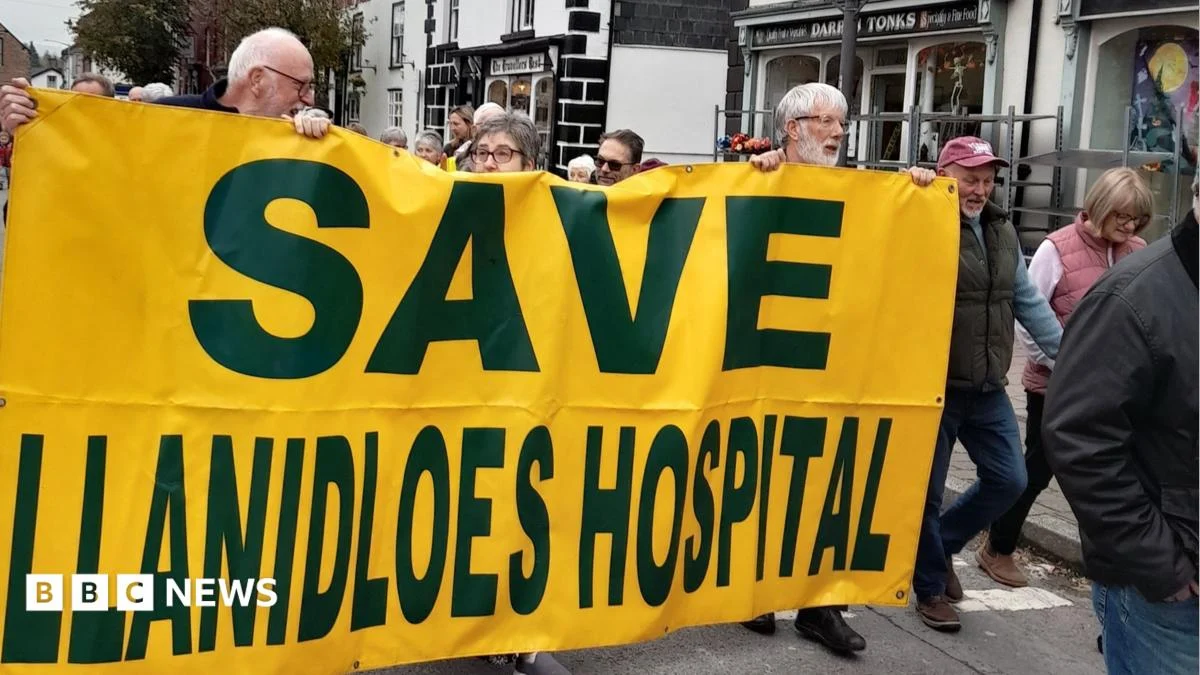
Proposals to drastically cut community hospital beds in Powys, one of Wales’ most rural and geographically expansive counties, have ignited fierce opposition from residents, healthcare professionals, and elected officials. The controversial plans, spearheaded by Powys Teaching Health Board (PTHB) under its "Better Together" programme, aim to reduce the number of inpatient beds from the current 146 to either 90 or a starkly reduced 60. This significant reduction would necessitate the consolidation of services, potentially leading to the closure of inpatient wards in Welshpool, Machynlleth, Ystradgynlais, and Llanidloes. In a more extreme scenario, Llandrindod Wells could also see its hospital beds disappear entirely, leaving vast swathes of the county with significantly diminished local healthcare provision.
The PTHB argues that these sweeping changes are essential for ensuring the safety and sustainability of healthcare services across Powys. The board contends that the current model, with its dispersed network of eight community hospitals, is becoming increasingly challenging to staff effectively and deliver consistently, particularly given the county’s vast distances and ageing population. A comprehensive 14-week public consultation is now underway to gather feedback on the future of health services, but the proposals have already faced a wall of resistance, with local GPs, Members of the Senedd, and community groups raising grave concerns about the potential impact on vulnerable residents.
The scale of local opposition was vividly demonstrated in August when over 400 concerned individuals packed a public meeting in Llanidloes to voice their vehement opposition to the proposed closure of community hospital beds in their town. This was followed by a drop-in meeting in Llanidloes on Tuesday, part of a series of community gatherings held across Powys to allow residents to directly question and challenge the health board’s ambitious plans.
The "Better Together" programme encompasses a broad range of proposed service changes, affecting adult physical health, adult mental health, urgent care, and certain diagnostic services. While the overall reform aims to modernise and streamline healthcare delivery, the most contentious element revolves around the future of inpatient beds in the majority of Powys’ community hospitals. These facilities, which typically experience high occupancy rates of 85% to 90%, are a vital lifeline for many in the scattered rural communities.
Powys, notably, does not possess a general hospital, relying instead on its network of eight community hospitals for inpatient care. A report presented to the health board acknowledges the "valued local services" provided by the current model but highlights that its "dispersed configuration makes it increasingly difficult to meet needs consistently." This statement underscores the core of the health board’s rationale: that a more centralised approach is necessary for efficient and effective healthcare delivery in the face of staffing and logistical challenges.
The health board is presenting two distinct options for the reconfiguration of inpatient services. The first option proposes reducing the total number of beds to 90, while the second, more drastic option, would see this number slashed to just 60. Both options would involve concentrating services at fewer sites, inevitably leading to the closure of wards in several existing community hospitals. The implementation of any significant changes is anticipated to occur over a period of several years, allowing for a phased transition, but the uncertainty and potential loss of local access are already causing considerable anxiety.
Compounding the concerns over bed reductions, a significant portion of the health board’s budget is currently allocated to services commissioned from outside Powys. A recent report revealed that approximately 40% of its total budget, equating to around £198 million in the last financial year, is spent on external healthcare providers. This figure suggests a potential financial incentive behind the drive to centralise services within the health board’s own facilities, though critics argue that this should not come at the expense of local access and community care.
Beyond inpatient beds, the proposed shake-up also includes significant changes to Powys’ minor injuries units and the overall delivery of urgent care. Currently, urgent care is provided through a fragmented system involving GPs, an out-of-hours service, pharmacies, and the health board’s own minor injuries units. The PTHB asserts that this current model "does not provide consistent or equitable access across the county," and is struggling to cope with increasing demand.
To address this, two distinct options are on the table for the future of urgent care and diagnostic services. The first option envisions the establishment of three key sites for urgent care provision. This would involve the creation of Urgent Care Centres (UCCs) in Newtown and Brecon, alongside a minor injuries unit in Llandrindod Wells. These facilities would operate seven days a week, from 8 am to 8 pm. Under this proposal, the minor injury unit in Welshpool would remain operational until the new UCC in Newtown is fully established, at which point the Welshpool unit would close.
The second option for urgent care is more streamlined, proposing the establishment of just two UCCs, located in Newtown and Brecon. This would mean the complete cessation of dedicated minor injuries units in other locations, potentially forcing residents to travel further for treatment of less severe injuries.
In the realm of mental health services, a single overarching option is proposed: the consolidation of all adult and older adult mental health services at one central site. This site would either be located at the existing Bronllys Hospital or a new purpose-built facility in the Bronllys/Brecon area. This centralisation is intended to be complemented by an expansion of community-based mental health services, aiming to provide more accessible support within local communities. However, the prospect of consolidating inpatient mental health services, much like the cuts to physical health beds, raises concerns about access and the potential disruption to established care pathways for vulnerable individuals.
The intensity of local feeling is palpable. Residents in towns like Llanidloes, Machynlleth, and Welshpool are deeply invested in their local community hospitals, viewing them as cornerstones of their rural way of life and essential for timely access to care, particularly for an ageing population who may have mobility issues or limited access to private transport. The health board’s rationale, while focused on efficiency and safety, is perceived by many as a top-down approach that fails to adequately appreciate the unique challenges and needs of a dispersed rural population. The fight to preserve these vital local services is clearly far from over, with communities mobilising to ensure their voices are heard in this critical debate about the future of healthcare in Powys.

 George Anjay
 Nakalama John

 atisusanti

 Ramos Leo
