
 Ramos Leo
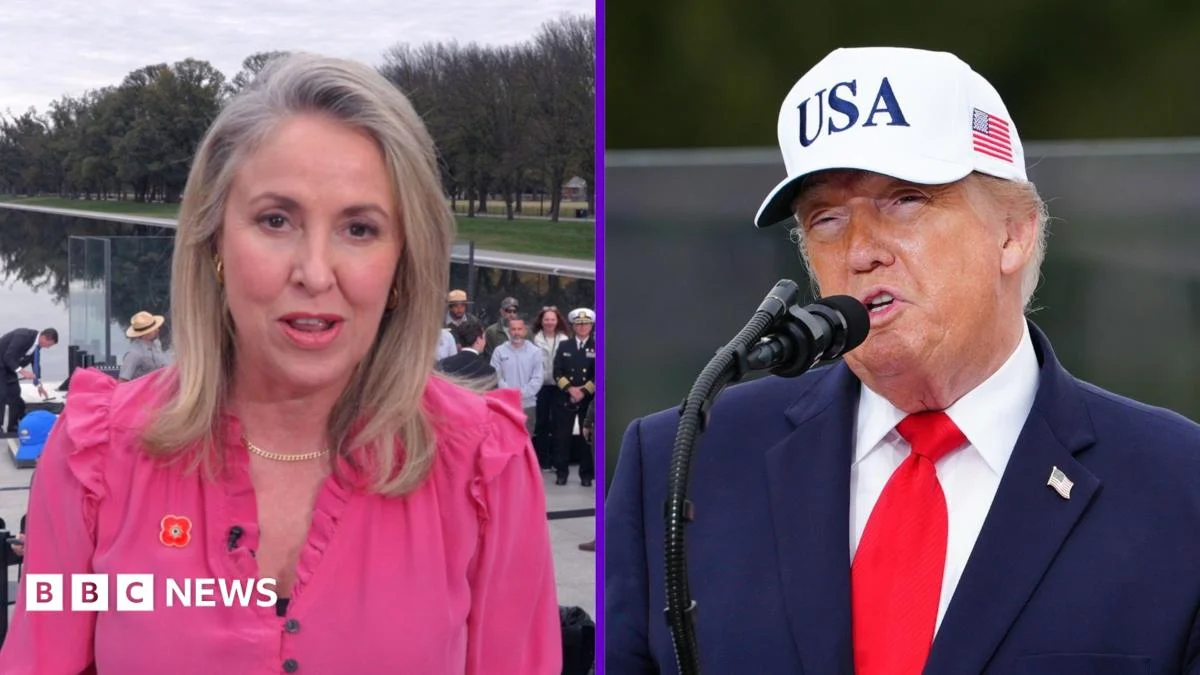
The decision to hold such a pivotal pre-election rally at the Reflecting Pool, rather than a traditional stadium or convention center, immediately raised eyebrows among political strategists and media observers alike. Historically, the Lincoln Memorial Reflecting Pool has been the stage for solemn vigils, monumental protests, and profound calls for change, most famously Dr. Martin Luther King Jr.’s "I Have a Dream" speech. It embodies a sense of gravitas and national purpose, a far cry from the boisterous, often combative atmosphere of typical Trump rallies. This departure from his usual campaign playbook hinted at a deliberate, if enigmatic, strategic calculation. Was it an attempt to project an image of presidential calm and competence, or perhaps to leverage the site’s recent transformation as a tangible, if localized, achievement of his administration?
Indeed, the first 20 minutes of his speech were largely dedicated to the renovation project that had recently concluded at the Reflecting Pool. This was a striking choice, given the looming electoral battles that would determine the balance of power in Congress and profoundly shape the remainder of his presidency. While the nation braced for a verdict on his first two years in office, Trump opted to focus on what many might consider a relatively minor, albeit symbolically significant, infrastructure update. He lauded the project as a testament to his administration’s commitment to restoring America’s national treasures and efficiently managing public works. He spoke of the painstaking efforts to modernize the pool’s aging infrastructure, improve water quality, and enhance accessibility for the millions of visitors who flock to the National Mall annually.
However, the renovation project itself had been anything but smooth. It had been plagued by delays, cost overruns, and a degree of public criticism, particularly regarding its impact on the surrounding environment and the temporary disruption to a beloved public space. Critics had pointed to initial miscalculations in engineering, unexpected material costs, and logistical challenges that pushed the completion timeline beyond initial estimates. Environmental groups had raised concerns about the ecological footprint of the extensive work, while historical preservationists debated the extent of modernization versus maintaining historical authenticity. For the President to spotlight this specific project, framing it as an unmitigated success, demonstrated a characteristic blend of optimism and selective narrative control. He spun the challenges as overcome obstacles, the delays as necessary diligence, and the costs as a worthy investment in national heritage, implicitly contrasting his administration’s purported efficiency with the perceived inertia of previous governments.
The BBC’s North America editor, Sarah Smith, who was present at the speech, provided incisive commentary on the president’s pitch to voters and the peculiar choice of venue. Smith highlighted the incongruity of dedicating significant airtime, in a critical election lead-up, to what many perceived as a local beautification project. She noted that while the President framed the renovation as a symbol of "rebuilding America" and "getting things done," connecting it to his broader campaign themes of national renewal and economic revitalization, the immediate audience’s reaction seemed somewhat muted during this segment. The typical fervor and chants that accompany his discussions of immigration, trade, or political opponents were noticeably subdued as he delved into the specifics of drainage systems and improved filtration.
Smith’s analysis underscored the "bizarre" nature of the venue choice. She posited that it might have been an attempt to pivot from the more aggressive, often divisive, rhetoric of his typical rallies, offering a backdrop that conveyed stability and a return to traditional American values. Yet, the relative difficulty in staging a large-scale, boisterous campaign event at the Reflecting Pool, with its open-air setting and security considerations, meant that the crowd size was more contained than his usual stadium gatherings. This could have inadvertently diluted the energy that often fuels his political momentum. It presented a paradox: a powerful symbolic location used for a surprisingly granular discussion, followed by a broader political message that struggled to fully harness the gravitas of the setting.
Beyond the renovation, Trump’s speech eventually transitioned into his more familiar campaign themes, albeit filtered through the lens of a final appeal before the midterms. He reiterated his administration’s economic achievements, citing robust job growth, historically low unemployment rates, and the impact of tax cuts. He painted a picture of a nation revitalized, contrasting it sharply with what he characterized as the "doom and gloom" predictions of his political adversaries. The "Make America Great Again" mantra resonated, intertwined with promises of continued prosperity and a rejection of what he termed "radical" policies.
Immigration remained a potent talking point, particularly in the wake of heightened rhetoric surrounding migrant caravans approaching the southern border. Trump emphasized his commitment to border security, portraying it as a matter of national sovereignty and public safety. He attacked Democratic policies on immigration, framing them as weak and dangerous, and asserted his administration’s resolve to enforce existing laws. Judicial appointments, a cornerstone of his conservative appeal, were also highlighted, with the President touting the confirmation of numerous federal judges and two Supreme Court justices as a lasting legacy and a fulfillment of campaign promises to reshape the judiciary.
He touched upon healthcare, promising to dismantle the Affordable Care Act and replace it with a system that would offer "better care at lower costs," though specific details remained largely elusive. As always, he took aim at the mainstream media, accusing outlets of bias and purveying "fake news," a familiar tactic aimed at galvanizing his base and discrediting critical reporting. The underlying message was clear: a vote for Republican candidates in the midterms was a vote to continue the progress made under his leadership, to safeguard national security, and to prevent the country from veering off course under Democratic control.
The atmosphere at the Reflecting Pool, while less raucous than a typical rally, still carried a palpable sense of anticipation and partisan loyalty. Supporters waved "Make America Great Again" flags and donned red hats, their cheers punctuating the President’s more forceful pronouncements. Security was tight, and the iconic monuments of the National Mall provided a solemn, yet undeniably American, backdrop to the political spectacle. The weather was crisp, adding to the almost theatrical sense of the occasion, as the President delivered his closing arguments under the watchful gaze of the Lincoln Memorial.
Ultimately, the choice of the Reflecting Pool and the surprising focus on its renovation offered a microcosm of Trump’s unique political style. It showcased his penchant for highlighting tangible, albeit localized, achievements, his ability to control and shape narratives, and his willingness to defy conventional campaign wisdom. For Sarah Smith and other observers, it left lingering questions about the true strategic intent behind such a peculiar platform for a final pre-election push. Was it a calculated risk to project presidential gravitas, or simply another example of the Trump administration’s unconventional approach to politics, leaving pundits and voters alike to decipher the deeper meaning of a speech delivered in such an historically significant, yet campaign-atypical, setting? The answer would, in part, be revealed by the outcome of the impending midterm elections, a national referendum on the very "progress" the President sought to celebrate by the tranquil, newly renovated waters of the Reflecting Pool.


 Roy Suryo
 Nana Banana
 George Anjay

 Nakalama John
 atisusanti
