
 George Anjay
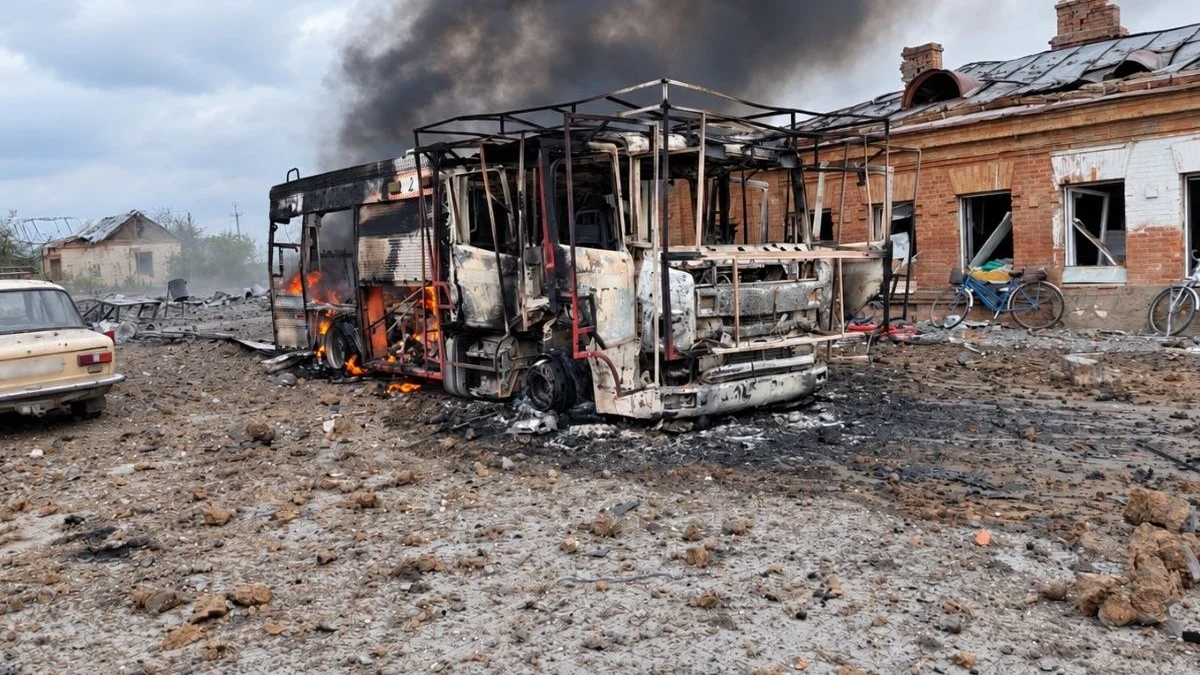
At least 26 individuals have been tragically killed after Russian bombs struck a vital aid distribution centre in the village of Komyshuvakha, located in Ukraine’s southern Zaporizhzhia region. The devastating attack, which Ukrainian President Volodymyr Zelensky described as "utterly horrific," also left five people injured and initially 27 reported missing. Regional head Mykhailo Semikin confirmed that at least nine aerial bombs, each weighing approximately 3,000kg, were dropped on the village.
President Zelensky elaborated on the sequence of events, stating that the initial strike targeted a local school that had been repurposed for humanitarian needs. This was followed by a second attack on the location where people were seeking shelter. He shared a video on social media, which depicted a colossal crater left by Monday’s assault, alongside footage of rescue teams diligently sifting through the debris in a desperate search for survivors. The Russian military has, as of this report, not issued any public statement regarding the incident.
The death toll, initially reported by President Zelensky as 18, was later updated by Ukraine’s State Emergency Service (DSNS) to 24 confirmed fatalities. This number included two rescuers and four police officers who were part of the initial response efforts. In a late-night video address on Monday, President Zelensky announced that the grim tally had risen to 26 confirmed deaths.
President Zelensky forcefully argued that the Russian forces could not have been unaware of the humanitarian operations taking place in Komyshuvakha. He emphasized that local residents who remained in the village relied on this centre for essential humanitarian aid distributed weekly. "This is yet another proof that Russia does not want any de-escalation," he stated, highlighting the deliberate nature of the attack.

He further drew a stark contrast between this act of violence and a recent, successful joint Russian-Ukrainian operation to evacuate civilians from the Russian-occupied southern city of Oleshky. This evacuation had taken place during a temporary ceasefire brokered by US First Lady Melania Trump, and at the time, had offered a sliver of hope that peace might be achievable. "With such killings, Russia is sending the exact opposite signal – Russia is counting on further killings," Zelensky declared, underscoring the perceived futility of peace efforts in the face of such brutality.
Mykhailo Semikin, the regional head, characterized the Russian attack as a "terrible tragedy" for the village. He expressed grave concern that the number of casualties might still rise, as a significant number of people remained trapped beneath the rubble. Rescue teams were actively working at the site, but their operations had been repeatedly hampered by Russian drone attacks in the vicinity, forcing temporary halts. In response to the overwhelming loss, a day of mourning has been declared for Tuesday across the entire Zaporizhzhia region.
The full-scale invasion of Ukraine by Russian President Vladimir Putin commenced in February 2022, plunging the nation into a protracted conflict. In the midst of ongoing hostilities, teams from Ukraine, Russia, and the United States were scheduled to resume peace talks in the coming days. These negotiations had been suspended in February amidst escalating Russian attacks, as Kyiv faced a critical shortage of Western-supplied interceptors needed to defend against incoming missiles. However, expectations for any major breakthrough at these talks, anticipated to be held in Abu Dhabi, United Arab Emirates, remain low.
The bombing at the humanitarian aid centre in Komyshuvakha represents a brutal escalation of violence, directly targeting civilians and the infrastructure meant to support them. The use of heavy aerial bombs on a location known to be distributing aid underscores a disturbing pattern of disregard for civilian life and international humanitarian law. The scale of the destruction, evidenced by the massive crater depicted in the provided video and images, speaks to the immense destructive power unleashed upon the unsuspecting population. The presence of rescuers and police officers among the casualties further highlights the indiscriminate nature of the attack and the risks faced by those attempting to provide aid and maintain order in a war-torn region.
The deliberate targeting of a humanitarian aid centre is a grave violation of international humanitarian law, which prohibits attacks on civilian objects, including those used for humanitarian purposes. The statement by President Zelensky, asserting that Russian forces were aware of the aid distribution, suggests a calculated act of aggression rather than an accidental strike. This alleged intentional targeting of civilians and civilian infrastructure raises serious questions about Russia’s adherence to its obligations under international law and could potentially lead to further scrutiny and condemnation from the international community.

The ongoing conflict in Ukraine has resulted in a catastrophic humanitarian crisis, with millions displaced and countless lives lost. The reliance of communities like Komyshuvakha on humanitarian aid underscores the critical need for safe and unimpeded access for aid organizations. Attacks like this not only cause immediate loss of life and injury but also severely disrupt the delivery of essential supplies, exacerbating the suffering of the civilian population. The chilling effect of such attacks can deter individuals from seeking much-needed assistance, further isolating vulnerable communities.
The decision to declare a day of mourning across the Zaporizhzhia region signifies the profound impact of this tragedy on the local population and the broader Ukrainian society. It is a moment of collective grief and remembrance for the lives tragically cut short. The resilience of the Ukrainian people in the face of such relentless aggression is remarkable, yet the emotional and psychological toll of these attacks is immeasurable.
The resumption of peace talks, even with low expectations, signifies a continued, albeit challenging, diplomatic effort to find a resolution to the conflict. However, incidents like the bombing of the aid centre serve as stark reminders of the immense obstacles that lie ahead. The gap between the rhetoric of de-escalation and the reality on the ground, as exemplified by this attack, remains vast. For any genuine peace process to succeed, there must be a demonstrable commitment to upholding international law and protecting civilian lives.
The international community continues to monitor the situation closely, with calls for accountability and an end to the violence. The evidence gathered from such incidents will undoubtedly play a crucial role in future investigations into alleged war crimes. The enduring spirit of the Ukrainian people, coupled with continued international support, remains central to their struggle for sovereignty and peace. The devastating events in Komyshuvakha serve as a tragic testament to the human cost of this conflict and the urgent need for a lasting resolution that prioritizes the safety and well-being of all civilians. The international community’s response to such acts of violence will be critical in shaping the future trajectory of this devastating war and ensuring that perpetrators are held accountable for their actions. The continued reporting and dissemination of information, as exemplified by this news, are vital for maintaining global awareness and fostering a collective will to seek an end to the suffering.


 Nakalama John

 atisusanti
 Ramos Leo

 Roy Suryo
 Nana Banana
