
 George Anjay
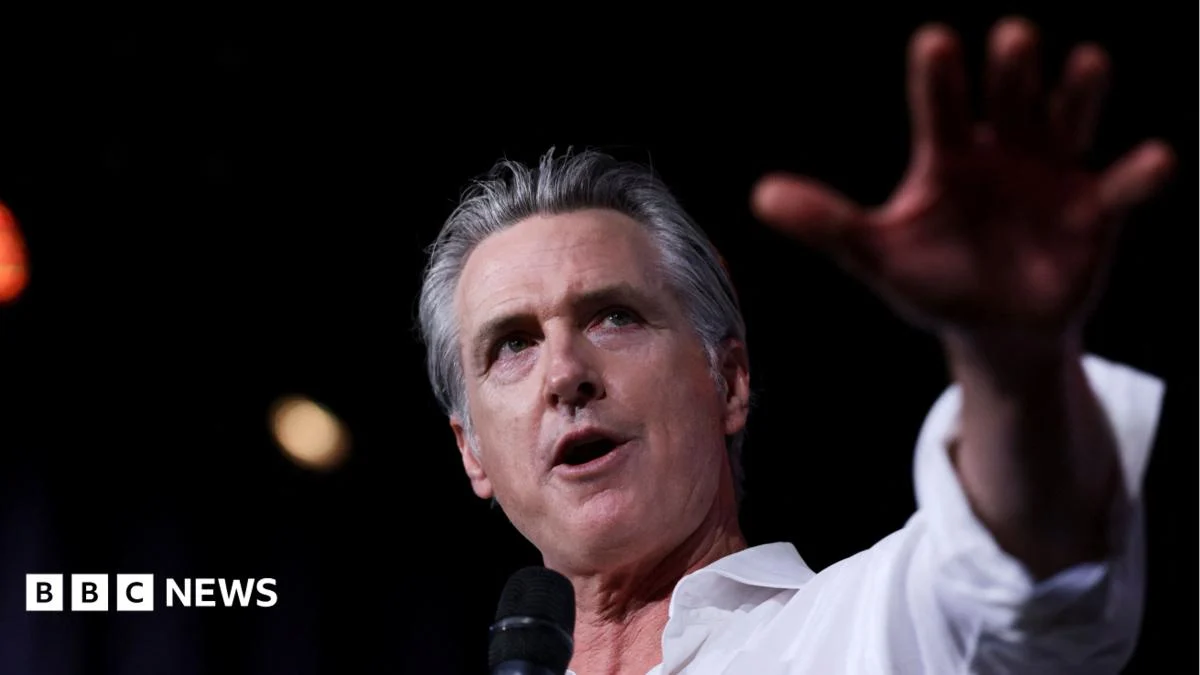
In a landmark decision that reverberated across the nation, California Governor Gavin Newsom has commuted the death sentences of all 548 individuals currently on the state’s death row, converting their sentences to life in prison without the possibility of parole. This sweeping executive action, announced in a deeply personal letter from the governor, effectively halts any potential future executions in California, a state that has not carried out a death sentence since 2006. Newsom stated, "We can now let these offenders die in obscurity while we forever remember and honour the victims."
While the practical impact of the commutation is somewhat limited due to the de facto moratorium already in place, the symbolic weight of the decision is immense. Experts estimate that this move could save California millions of dollars annually in the labyrinthine legal and appellate costs associated with death penalty cases. Since the reinstatement of capital punishment by voters in 1978, only 13 inmates have been executed in the state. This long period of inactivity, coupled with Newsom’s decisive action, signals a profound shift in California’s approach to the ultimate punishment.
The timing of this decision has also fueled speculation about Governor Newsom’s broader political ambitions. As the Democratic leader of the nation’s most populous state and a figure increasingly discussed as a potential contender for the 2028 presidential race, his actions on such a consequential issue are under intense scrutiny. Newsom, who is term-limited and nearing the end of his governorship, is setting a significant policy legacy that could influence national discourse on criminal justice reform. His term is set to conclude, with fellow Democrat Xavier Becerra widely projected to succeed him following the upcoming midterm elections.
In his letter, Newsom explicitly detailed his use of constitutional clemency authority to commute the sentences to life without parole. He articulated a profound evolution in his thinking over his nearly three decades in public service. "After nearly 30 years in public office, I have come to understand the limits of what government can justly accomplish," Newsom wrote. "I take this action because I firmly believe that state-sanctioned killing is incompatible with California’s values, undermines the foundations of our legal system and diminishes each of us." This statement underscores a moral and ethical framework guiding his decision, prioritizing a vision of justice that diverges from retribution.
California has historically held the unenviable distinction of housing the largest death row population in the United States. Newsom’s prior actions, including a statewide halt to executions ordered in 2019, foreshadowed this more comprehensive commutation. Describing his current decision as a difficult but "righteous action," Newsom acknowledged the emotional complexity surrounding the death penalty. He recognized that for many Californians, the desire for capital punishment is rooted in a visceral reaction to heinous crimes. However, he concluded, "the state cannot morally kill them."
Newsom’s critique of California’s death penalty system was scathing. He argued that "by every measure, California’s system for administering the death penalty is a failure." He pointed to its inherent flaws, asserting that it has not been, and cannot be, applied fairly, leading to the tragic possibility of convicting innocent individuals. The governor firmly believes that life without the possibility of parole represents the most severe punishment that the state can lawfully impose and ethically enforce, thereby upholding the integrity of the justice system without resorting to state-sanctioned killing.
He was candid about the potential backlash his decision would engender. Newsom acknowledged that his clemency action would "anger and hurt some Californians" and admitted that it would "always weigh heavily on me." He took full responsibility for the consequences, stating, "As Governor, I alone bear responsibility for this decision and its impact, just as I alone would bear responsibility for each execution." This profound sense of accountability, coupled with a commitment to his conscience, compelled him to act. "For this reason I am compelled to follow my conscience and, as authorized by our Constitution, take this action for the welfare of the State of California."
The power to order executions, and by extension, to commute death sentences, largely rests with state governors, given the decentralized nature of the U.S. justice system where individual states hold significant authority over criminal prosecution and sentencing. This contrasts with the federal level, where the executive branch also plays a role.
In a stark counterpoint to Newsom’s decision, former President Donald Trump, a vocal proponent of capital punishment, has consistently championed the death penalty as a vital instrument for deterrence and punishment of the most egregious offenses. During his presidency, Trump ended a nearly two-decade moratorium on federal executions in 2020, overseeing 13 executions within a six-month period. While President Biden reinstated a moratorium upon taking office, Trump, in a hypothetical second term scenario as described in the original text, had signed an executive order to reinstate the death penalty on the first day of his term. However, no federal executions have been carried out under this order. The complex interplay between federal and state authority means that both levels of government can, in principle, pursue capital punishment.
This developing story highlights a significant divergence in the national conversation around capital punishment, with California under Governor Newsom taking a definitive stance against state-sanctioned killing, while other voices, particularly at the federal level, continue to advocate for its retention. The long-term implications of this commutation will undoubtedly be debated for years to come, shaping discussions on justice, morality, and the role of government in the lives of its citizens.
This breaking news story is being updated and more details will be published shortly. Please refresh the page for the fullest version.
You can receive Breaking News on a smartphone or tablet via the BBC News App. You can also follow @BBCBreaking on X, external, to get the latest alerts.



 Nakalama John
 atisusanti
 Ramos Leo

 Roy Suryo
