
 George Anjay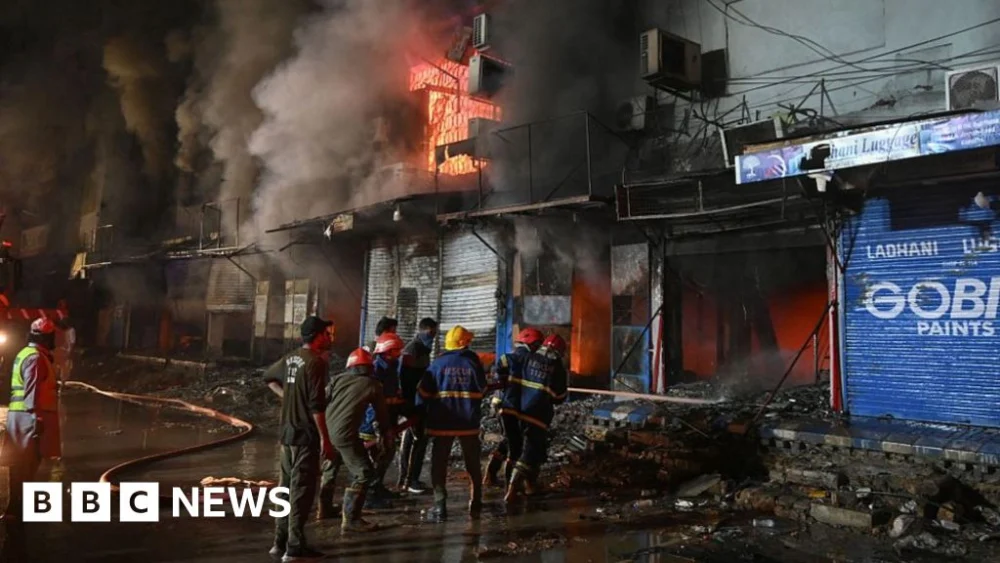
A devastating inferno ripped through Karachi’s Gul Plaza, a sprawling commercial hub housing approximately 1,200 individual stores spread across an immense 8,000 square meters (86,111 square feet), claiming the lives of six individuals, including a brave firefighter, as the relentless blaze continued to rage. The catastrophic event, which began on Saturday, has left over 20 people injured, with fears mounting that an unknown number of shoppers and staff remain trapped within the smoldering ruins of the multi-storey edifice. The sheer scale of the conflagration and the subsequent structural damage have severely hampered rescue operations, with significant portions of the building succumbing to the flames and collapsing, creating a perilous environment for emergency responders.
According to local emergency services, the fire, which appears to have originated on the ground floor, rapidly ascended to the upper levels, engulfing nearly the entire building in a terrifying spectacle of smoke and fire. A senior police official, speaking to the BBC, confirmed that the ongoing intensity of the fire has rendered it impossible for authorities to conduct a thorough search for bodies or potential survivors within the structure. The grim reality of the situation is underscored by the anxious crowds of families who have gathered outside the ravaged remains of the Gul Plaza, desperately seeking any news of their loved ones who have been reported missing. In response to the growing number of disappearances, city administrators have established a dedicated desk to meticulously register the names and details of those unaccounted for, a somber testament to the human toll of this tragedy.
As of Sunday morning, thick plumes of smoke continued to billow from the skeletal remains of the Gul Plaza, a stark visual reminder of the destruction. The structural integrity of the remaining sections is a significant concern, with the possibility of further collapses looming, adding another layer of danger to the already fraught rescue efforts. Hassan Khan, a spokesperson for Rescue 1122 in Karachi, provided crucial insight into the combustible nature of the materials housed within the shopping center, highlighting the presence of flammable items such as plastic foam, vast quantities of cloth and carpets, and a significant stock of perfumes, all of which likely contributed to the rapid and ferocious spread of the fire.
The gravity of the incident was further emphasized by Summaiya Syed, Karachi’s police surgeon, who confirmed that six bodies had been transferred to the city’s Civil Hospital, along with some of the injured casualties. In response to the overwhelming scale of the disaster, police have officially invoked mass disaster protocols, a measure typically reserved for incidents of extreme severity, signaling the catastrophic nature of the Gul Plaza fire.
In the wake of this tragedy, Pakistan President Asif Ali Zardari has extended his deepest condolences to the families of the victims. He has also directed the government of Sindh province, of which Karachi is the capital, to undertake a comprehensive and urgent review of safety arrangements across all commercial and residential buildings in the region. This directive aims to prevent similar catastrophic events from occurring in the future and to ensure the safety and security of the populace. The fire at Gul Plaza serves as a stark and tragic reminder of the critical importance of robust fire safety measures and emergency preparedness in densely populated urban centers.
The initial response to the inferno was swift, with fire brigades from across Karachi mobilizing their resources to combat the blaze. However, the sheer magnitude of the fire and the building’s internal layout presented formidable challenges. Reports from eyewitnesses described scenes of chaos and desperation as shoppers and traders attempted to flee the rapidly escalating flames. The narrow passageways and the sheer density of the retail units within Gul Plaza likely contributed to the rapid spread of the fire and the difficulty in evacuation. The collapse of internal structures further complicated the efforts of firefighters, forcing them to adapt their strategies in real-time and contend with falling debris and unstable foundations.
The economic impact of the fire is also significant. Gul Plaza was a vital commercial artery for Karachi, providing livelihoods for thousands of individuals who operated small businesses within its walls. The destruction of so many shops represents not only a personal tragedy for the affected business owners and their employees but also a blow to the local economy. The loss of inventory and the inability to conduct business for an extended period will undoubtedly have long-lasting financial repercussions for many.
Questions are inevitably being raised about the fire safety standards at Gul Plaza and whether adequate precautions were in place. Investigations into the cause of the fire are expected to be launched, examining potential factors such as electrical faults, arson, or negligence. The presence of flammable materials, as highlighted by the Rescue 1122 spokesperson, suggests a potential systemic issue regarding the storage and handling of such goods within commercial establishments. The collapsed sections of the building will need to be carefully examined by structural engineers to determine the extent of the damage and the feasibility of any future reconstruction.
The psychological toll on the survivors and the families of the victims is immense. The trauma of witnessing such destruction and the uncertainty surrounding the fate of loved ones will leave lasting scars. Counseling and support services will be crucial in helping the affected community come to terms with this devastating event. The collective grief and the shared experience of loss will undoubtedly foster a sense of solidarity, but the road to recovery will be long and arduous.
The international community has also begun to express its solidarity with Pakistan. Messages of sympathy and offers of assistance have been extended by various nations and international organizations. The shared human experience of such tragedies transcends borders, and the global response underscores the interconnectedness of humanity in times of crisis. The rebuilding of Gul Plaza, if it is to occur, will likely require significant investment and a commitment to implementing the highest standards of modern fire safety and building regulations. This tragedy serves as a potent reminder that vigilance and proactive measures are paramount in safeguarding lives and livelihoods against the destructive power of fire. The scars left by the Gul Plaza inferno will serve as a somber monument to the lives lost and a catalyst for change in fire safety protocols across Pakistan. The ongoing efforts to identify the missing and to provide support to the bereaved families are a testament to the resilience of the human spirit in the face of overwhelming adversity. The nation mourns its losses and looks towards a future where such preventable disasters are relegated to the past.




 Roy Suryo

 Nakalama John
 atisusanti
 Ramos Leo
