
 atisusanti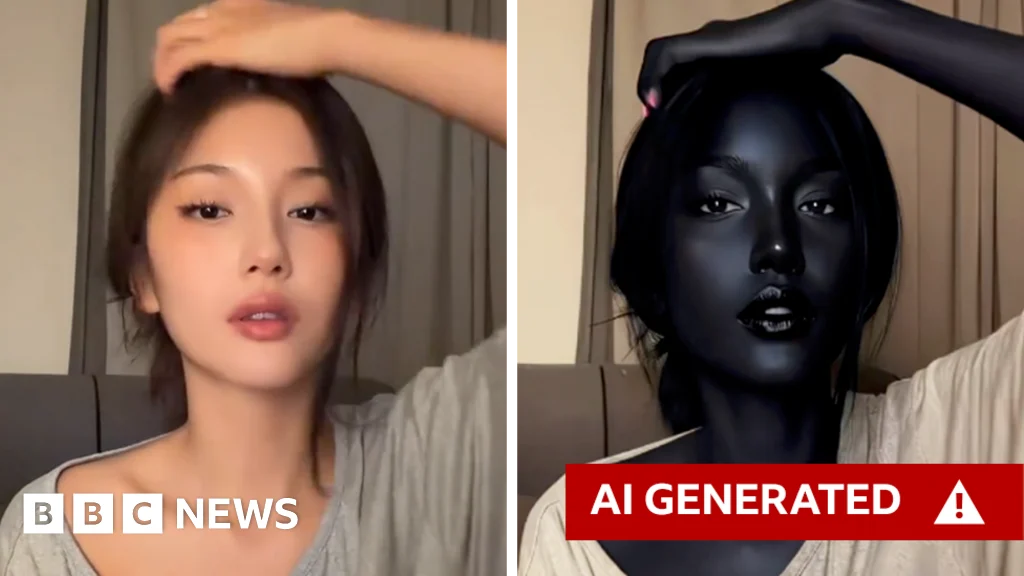
TikTok has taken decisive action, banning 20 accounts following a comprehensive BBC investigation that exposed the widespread use of AI-generated black female influencers to funnel users towards sexually explicit content. This emerging trend, predominantly flourishing on Instagram and TikTok, has drawn sharp criticism for its alleged racist undertones, exploitative nature, and deliberately misleading presentation, leveraging harmful racial tropes and language. In collaboration with researchers from the independent AI publication Riddance, the BBC uncovered a disturbing landscape of dozens of accounts on both platforms, featuring highly sexualised digital characters and avatars of black women. These compelling, yet artificial, images and videos were meticulously generated by AI but conspicuously lacked any disclosure, a clear violation of platform guidelines.
While the majority of these accounts were hosted on Instagram, a significant third also maintained a presence on TikTok. Meta, Instagram’s parent company, acknowledged the BBC’s findings and stated it was conducting an investigation, though no immediate action was publicly disclosed. The AI-generated avatars are frequently depicted in revealing attire, such as skimpy swimwear, and are often presented with exaggerated physical features. A particularly concerning aspect is the manipulation of their skin tones, which are sometimes rendered in exceptionally dark hues, imbuing them with an artificial and unrealistic appearance.
The nomenclature employed by these accounts often includes terms like "black," "noir," "dark," and "ebony," overtly playing on racial signifiers. Furthermore, many posts contain suggestive comments concerning relationships with white men, explicitly stating sentiments such as "loves white men" and "why I need a white guy in my life." A pattern of mutual engagement is evident, with numerous accounts following and interacting with each other. The BBC, working alongside AI analysts Jeremy Carrasco and Angel Nulani from Riddance, has meticulously identified 60 such accounts, predominantly on Instagram, that directly or indirectly link to paid sexually explicit content hosted on third-party websites. While these external sites clearly labelled the imagery as AI-generated, the Instagram accounts themselves made no such disclosure. The research also brought to light a considerably larger number of accounts across both Instagram and TikTok featuring similar AI-generated avatars that, while not directly linking to paid content, contributed to the proliferation of this trend.
One of the accounts that TikTok has now banned, though it remained active on Instagram at the time of publication, has sparked further outrage due to its practice of appropriating videos from real individuals. This account, presented as the persona of a striking AI-generated character, had rapidly amassed an astonishing three million followers within mere weeks of its creation in December. However, its success was built on a foundation of deception, as it had modified and re-uploaded videos from Riya Ulan, a genuine content creator and model based in Malaysia. The AI avatar’s face, distinguished by an unnaturally dark and artificially created skin tone, was superimposed onto Riya’s body, meticulously replicating her movements, attire, and background.
"I was angry," Riya confided to the BBC, her voice laced with frustration. "Of course my videos are all out there… It doesn’t mean that you can just take it and steal it and post it as your own." The impact of this digital theft was profound; one of the manipulated videos featuring Riya’s content garnered over 35 million views on TikTok and an astounding 173 million views on Instagram, vastly eclipsing the views on Riya’s original post by a factor of approximately 47. While the specific videos that clearly matched Riya’s original content were not overtly sexual, other videos on the AI-generated account, utilizing the same digitally crafted character, depicted it in revealing clothing and engaging in provocative actions. Crucially, a chain of links originating from this account led directly to paid adult content.
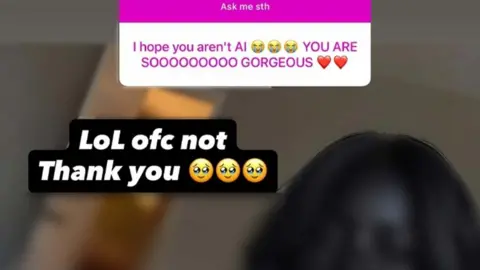
"I’m not sure if I’m more concerned about them taking my video to promote their explicit content or [that] people actually believe in that," Riya expressed, highlighting the unsettling blurring of lines between reality and artificiality. She lamented the increasing difficulty for users to discern authentic content from AI-generated creations, observing that "people keep on falling for these AI models." Many viewers, it appears, readily accept these avatars as real, despite their often unrealistic features. Intriguingly, some of these accounts, including the one that exploited Riya’s content, have actively denied using AI in their posts and Instagram stories. Riya reported the offending account to both platforms multiple times, but her initial reports went unaddressed until the BBC’s intervention prompted TikTok to ban the account.
The issue extends beyond mere deception; researchers are highlighting the deeply problematic and potentially racist implications of this trend. "I believe these accounts are racist because their existence perpetuates a long history of the exploitation of black people," stated Nulani, one of the Riddance researchers. She elaborated, "Their use of caricatures, race-play terminology and unrealistic depictions of black women prove they’re not concerned with our safety or wellbeing, but our ability to be capitalised as part of the online porn machine."
Carrasco, who critically analyzes AI trends and techniques on his social media platforms, identifies "the new thing is the quantity of shameless, racist depictions of extremely black people." He posits that while such "fetishes" may have existed in the past, AI technology has provided them with "new purchase," making it significantly easier to generate unnaturally dark skin tones and create effects that previously would have required sophisticated animation or extensive skin painting. Furthermore, he points out a crucial distinction: "There’s no shame… that’s something AI uniquely exploits," referring to the lack of accountability associated with artificial avatars.
Houda Fonone, a Moroccan model and content creator dedicated to promoting authentic representations of black women, views this trend as a form of "erasure." She criticizes the prevailing aesthetic, which often features "silky hair, extremely thin bodies and impossibly flawless skin… it’s as if black beauty can only be accepted when ‘refined.’" Fonone warns that this risks reinforcing harmful stereotypes while "our stories and real-life experiences are replaced by an artificial image."
In response to the BBC’s findings, both Meta and TikTok were presented with examples of the identified accounts and asked for their official responses. Within two days, a TikTok spokesperson confirmed that the company had "removed content and banned accounts which breach our rules." Subsequently, 20 accounts were labelled as "banned" on the app. The spokesperson emphasized TikTok’s stringent policies: "TikTok prohibits AI generated content of individuals used without their permission, we have zero tolerance for content which promotes off-platform sexual services." The platform further stated its commitment to prohibiting and removing harmful or misleading AI-generated content, mandating the labeling of realistic AI-generated content, and indicated that appropriate labels had been applied to a number of videos.
Meta reiterated its ongoing investigation into the content brought to its attention, expressing its desire for users to be aware of AI-generated posts and confirming the existence of policies for labeling such content. Notably, nine Instagram accounts previously tracked by the BBC appear to have been deactivated. Neither platform provided specific details regarding their response to Riya’s initial reports of content theft.

 George Anjay
 Nakalama John
 Ramos Leo
 Roy Suryo
 Nana Banana