George Anjay
Once a rudimentary stopover for flying boats traversing the vast distances of the British Empire, Dubai has transformed into a global aviation powerhouse. Dubai International Airport (DXB), the beating heart of this transformation, now handles over 92 million passengers annually, making it the world’s busiest airport for international travel. This meteoric rise is mirrored by its Gulf neighbors, Abu Dhabi and Doha, whose airports collectively manage an additional 87 million passengers. Under normal circumstances, these three hubs orchestrate over 3,000 flights daily, predominantly operated by the region’s flagship carriers: Emirates, Etihad, and Qatar Airways. However, the escalating conflict in the Middle East has cast a long shadow over global aviation, triggering widespread flight disruptions and raising critical questions about the future of the region’s dominant airline model.

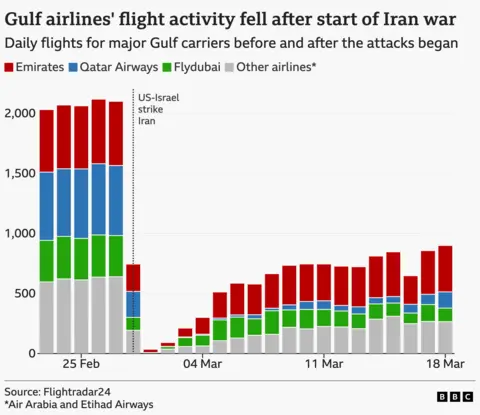
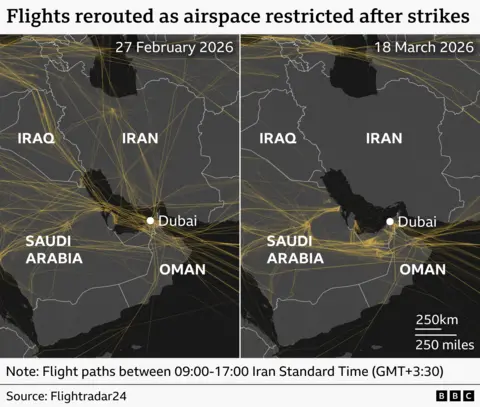
The initial impact of the conflict was immediate and severe, paralyzing air traffic across one of the world’s most crucial aerial arteries. Airspace closures led to grounded aircraft at major hubs and stranded hundreds of thousands of passengers. While air traffic has since seen some recovery, it remains heavily impacted. Compounding these issues is the looming threat to jet fuel supplies. With refineries in the Gulf potentially affected and the Strait of Hormuz under threat, fears of scarcity have already doubled jet fuel prices, prompting some airlines to curtail services. Beyond these immediate challenges, the prolonged conflict raises profound questions about the long-term viability of the "Gulf model" of aviation, a strategy credited with revolutionizing long-distance travel and making it more accessible. The implications are far-reaching, impacting not only airlines and passengers but also the businesses that depend on the region’s extensive air connectivity.
The chaos that ensued in the departure halls of Gulf hubs was unprecedented. Following early retaliatory strikes in late February, airspace across the region was shut down, leading to grounded flights and forced diversions. Tens of thousands of passengers found themselves stranded in Dubai, Abu Dhabi, and Qatar, many merely transiting passengers. The targeting of the United Arab Emirates and Qatar with drone and missile attacks created a climate of fear and uncertainty for those caught in the region. Globally, countless travelers faced canceled or rerouted journeys, scrambling for alternative arrangements. While Emirates, Etihad, and Qatar Airways quickly initiated limited services to repatriate stranded passengers, and governments chartered flights, the disruption was significant. As of recent analyses, over 30,000 flights to the Middle East have been canceled since the conflict began. Ian Scott, a traveler rerouted from Melbourne to Venice via Doha, expressed his disillusionment, stating he would avoid Gulf hubs in the future due to a "lack of faith" in the region’s stability.
The success of the Gulf aviation model hinges on its ability to serve as a critical transit point. While Dubai has evolved into a significant tourist and business destination, a substantial portion of passengers, ranging from 47% in Dubai to a staggering 74% in Doha, are connecting travelers. This model thrives on seamlessly connecting passengers from diverse global origins to a vast array of far-flung destinations with minimal stops. It offers the convenience of point-to-point travel combined with the economies of scale inherent in hub-and-spoke systems, a strategy uniquely enabled by the region’s strategic geographical location. As James Hogan, former CEO of Etihad Airways, explained, "Within three hours flying time of the Gulf, you have the Middle East, the Indian subcontinent, verging on China. It’s a huge market." This advantageous positioning allowed Gulf carriers, with their modern fleets and a "clean sheet of paper" approach, to capitalize on burgeoning markets in China and India, often overlooked by established Western carriers. The introduction of aircraft like the Boeing 777 and the Airbus A380 further enhanced their capacity and reach, allowing for efficient operations even in congested airports.
The current conflict, however, has thrown this meticulously crafted model into disarray. Kristian Coates Ulrichsen, a Middle East expert at the Baker Institute, warns that a protracted conflict could erode traveler confidence, leading to a long-term impact on the region’s airlines. "Of course the business model is going to be called into question the longer it goes on," he stated, emphasizing that the perception of safety is paramount. If travelers fear being stranded or facing airport closures, even due to intercepted threats, it will inflict significant damage.
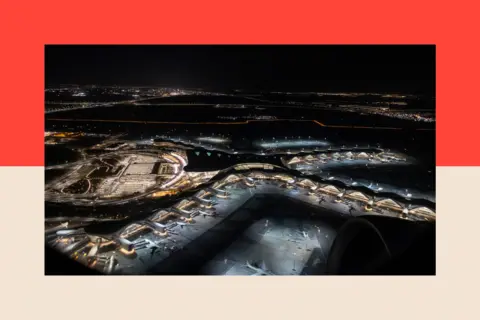
The critical question is the extent to which this conflict has tarnished the Gulf’s reputation as a global aviation nexus and whether its pioneering model has suffered irreparable harm. Andrew Charlton, managing director of Aviation Advocacy, suggests that a swift resolution could allow Gulf carriers to rebound by "flooding the market with cheap airfares." However, a prolonged conflict may force passengers to seek alternative routes through hubs like Singapore, Bangkok, Hong Kong, or Tokyo. The long-term absence of capacity provided by Gulf airlines would inevitably lead to increased airfares globally. As Willie Walsh, Director General of the International Air Transport Association (IATA), pointed out, European carriers lack the capacity to fully replace the significant global share (9.5%) currently held by Gulf airlines. He anticipates a swift recovery for Gulf aviation once the conflict subsides. European airlines have already begun adjusting schedules, adding flights to Asia to circumvent the need for Gulf stopovers.
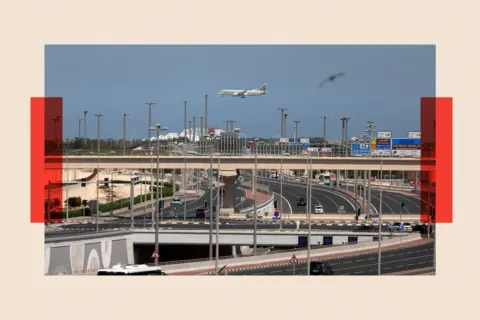
The resilience of the Gulf aviation model has been tested before, notably during the COVID-19 pandemic, when some questioned the agility of carriers heavily reliant on long-haul and transit traffic. Yet, the recovery was remarkably swift, with major Gulf carriers reporting healthy profits in recent years. John Grant, a senior analyst at OAG, notes the industry’s historical ability to rebound from crises like SARS, pandemics, and geopolitical instability. However, the current situation poses a unique challenge, particularly for destinations like Dubai, which have actively diversified their economies beyond oil and gas, leveraging aviation as a key catalyst for growth in tourism, business, and residency.
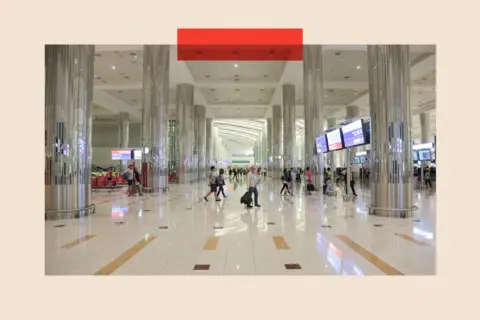
The diversification strategy, heavily reliant on the attractiveness of Dubai, could be jeopardized if air traffic fails to recover promptly, with the tourism sector appearing particularly vulnerable. Johannes Thomas, chief executive of Trivago, anticipates a lasting impact due to the psychological effect of safety concerns, predicting a "maybe two to three years" recovery period for these anxieties to fully dissipate. James Hogan remains more optimistic, believing that while it’s a major crisis, "it will be resolved at a point in time" and that travelers will ultimately return.
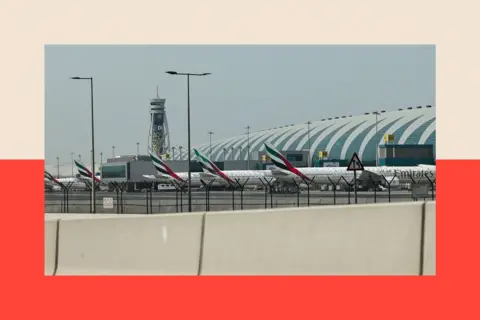
The conflict has undoubtedly dealt a severe blow to the major Gulf carriers and their hub operations, potentially fostering trepidation among future travelers and business visitors. The full extent of the reputational damage and the industry’s ability to adapt will hinge on the duration of the hostilities. Should the Gulf region re-establish its role as a pivotal global transit point, the aviation industry may largely return to its previous operational norms. However, if this is not achievable, the ramifications for long-haul aviation worldwide could be profound, signaling a significant reshaping of global travel patterns and fare structures.




 Nakalama John
 Ramos Leo
 Roy Suryo
 Nana Banana