
 Ramos Leo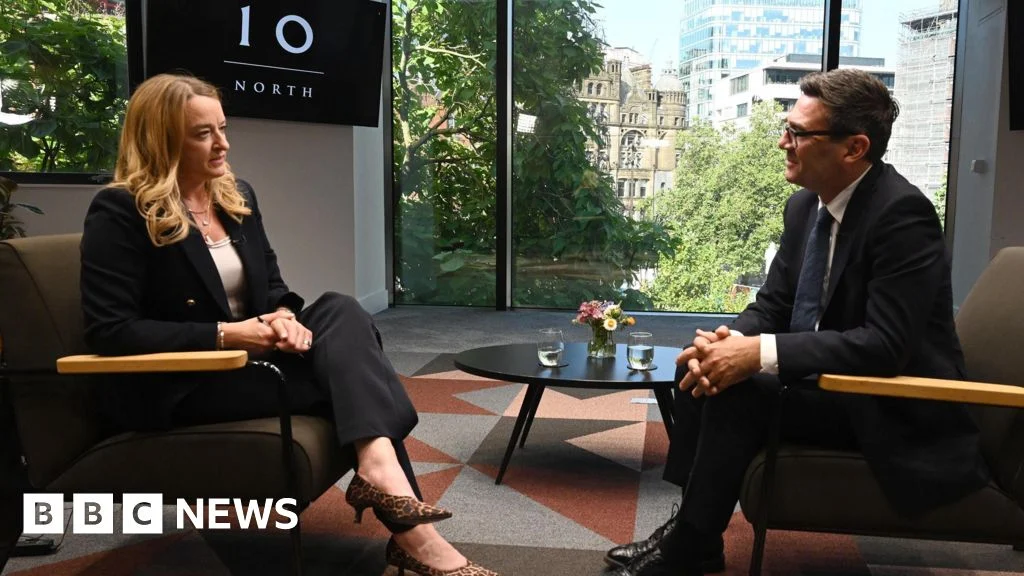
The nation eagerly awaits a pivotal broadcast this Sunday as Prime Minister Andy Burnham sits down with the BBC’s Laura Kuenssberg for his inaugural major interview since taking the helm of government. This highly anticipated encounter comes at the close of Burnham’s whirlwind first week in office, a period marked by a series of audacious policy announcements and the groundbreaking relocation of the Prime Ministerial hub to Manchester, now famously dubbed ‘No 10 North’. The interview, titled "Andy Burnham: The Laura Kuenssberg Interview," promises an exclusive, behind-the-scenes glimpse into this radical new administrative centre and a deep dive into the nascent vision of the Burnham premiership.
The political landscape has been dramatically reshaped by Burnham’s ascension to the top office. His journey from a prominent figure in regional politics to Prime Minister has been swift and, for many, unexpected, signalling a profound shift in the country’s political centre of gravity. His first week has been less about gentle transition and more about immediate, decisive action, setting a tone of urgent reform and a clear departure from previous administrations. Policy decisions have cascaded from the new government, touching upon critical areas such as regional economic rebalancing, an ambitious overhaul of public transport infrastructure, and a renewed focus on community-led social initiatives. These early moves are not merely policy adjustments but represent a fundamental re-evaluation of the relationship between the state and its citizens, particularly those outside the traditional Westminster bubble.
Central to this new era is the symbolic and practical establishment of No 10 North. This bold move sees the Prime Minister’s primary working residence and executive offices situated in Manchester, a deliberate and powerful statement of intent. It is a tangible manifestation of Burnham’s long-standing commitment to decentralisation and the “levelling up” agenda, a promise to rebalance economic and political power away from the historically dominant south-east. The decision has sparked both fervent praise for its visionary courage and some logistical concerns regarding the practicalities of governing from a dual-city arrangement. However, the message is clear: this government intends to be rooted in the diverse realities of the entire United Kingdom, not just the capital.
Laura Kuenssberg’s interview is therefore more than just a standard political Q&A; it is the first comprehensive opportunity for the Prime Minister to articulate his broader philosophy and defend the strategic choices of his nascent administration. Kuenssberg, known for her sharp intellect and probing questions, is expected to delve into the reasoning behind No 10 North, exploring how a geographically split government will function, manage critical national security, and maintain seamless communication with Whitehall departments and Parliament. The "exclusive behind the scenes look" at the new Manchester office will undoubtedly be a fascinating segment, offering the public their first real glimpse inside this unconventional seat of power. One can anticipate shots of a bustling office, perhaps contrasting the modern, industrial aesthetic of Manchester with the centuries-old grandeur of Downing Street, further underscoring the shift in political symbolism.
The policy decisions made in Burnham’s first week have been ambitious, immediately confronting some of the nation’s most pressing challenges. Reports indicate a significant push towards bolstering regional economies through targeted investment zones and enhanced devolved powers for local authorities. Discussions have also emerged around a comprehensive National Transport Plan, aiming to integrate and improve public transport across all regions, tackling long-standing disparities in connectivity and affordability. Furthermore, early signals suggest a focus on social care reform and a renewed commitment to the National Health Service, with pledges to cut waiting lists and improve staff retention through better pay and working conditions. These initial policy directions reflect Burnham’s political DNA, deeply rooted in public service and regional advocacy.
However, the honeymoon period for any new Prime Minister is notoriously short. Kuenssberg is likely to press Burnham on the immense practical challenges inherent in these grand ambitions. How will these policies be funded amidst a delicate economic climate? What will be the immediate impact on the national debt and the taxpayer? Furthermore, the political opposition, still reeling from the recent electoral upheaval, will be scrutinising every word, ready to challenge the feasibility and wisdom of such radical shifts. The interview will be a crucial test of Burnham’s ability to articulate not just his vision, but also a credible roadmap for its implementation.
The establishment of No 10 North also carries significant implications for the Civil Service and the operational dynamics of government. Will senior civil servants be expected to relocate? How will Cabinet meetings be conducted, balancing the need for physical presence with technological solutions? These are not trivial concerns, and the interview is expected to shed light on the Prime Minister’s strategy for ensuring governmental efficiency and cohesion in this new, decentralised model. Burnham will likely frame No 10 North not as a logistical headache, but as an essential step towards a more representative and effective government, one that is closer to the people it serves and more attuned to their everyday realities.
Beyond policy and logistics, Kuenssberg will undoubtedly seek to explore the personal dimension of this monumental transition. What does it feel like to step into the shoes of Prime Minister? How does Burnham, a figure long associated with a particular region, now intend to unite and lead an entire nation? What are his immediate priorities, and what legacy does he hope to build? The interview will be a unique opportunity for the public to gauge his temperament, his leadership style, and his capacity to inspire confidence and national unity during what remains a turbulent global period.
The broadcast is set to be a seminal moment in British politics, marking the true beginning of the "Burnham era." It offers a chance for the Prime Minister to move beyond the initial headlines and present a coherent narrative for his government’s trajectory. For Laura Kuenssberg, it is an opportunity to exercise her considerable journalistic skills in holding the most powerful person in the country to account, dissecting his plans and probing the foundations of his new administration.
"Andy Burnham: The Laura Kuenssberg Interview" will be available across BBC News platforms on Sunday, including BBC One, BBC News Channel, and BBC iPlayer. It is an unmissable event for anyone seeking to understand the profound changes currently underway in the United Kingdom, offering the first deep and comprehensive insight into the mind and mandate of its new Prime Minister. The stage is set for a revealing and potentially historic encounter that will shape perceptions and set the tone for the challenging months and years ahead.



 Roy Suryo

 Nakalama John
 atisusanti
