Ramos Leo
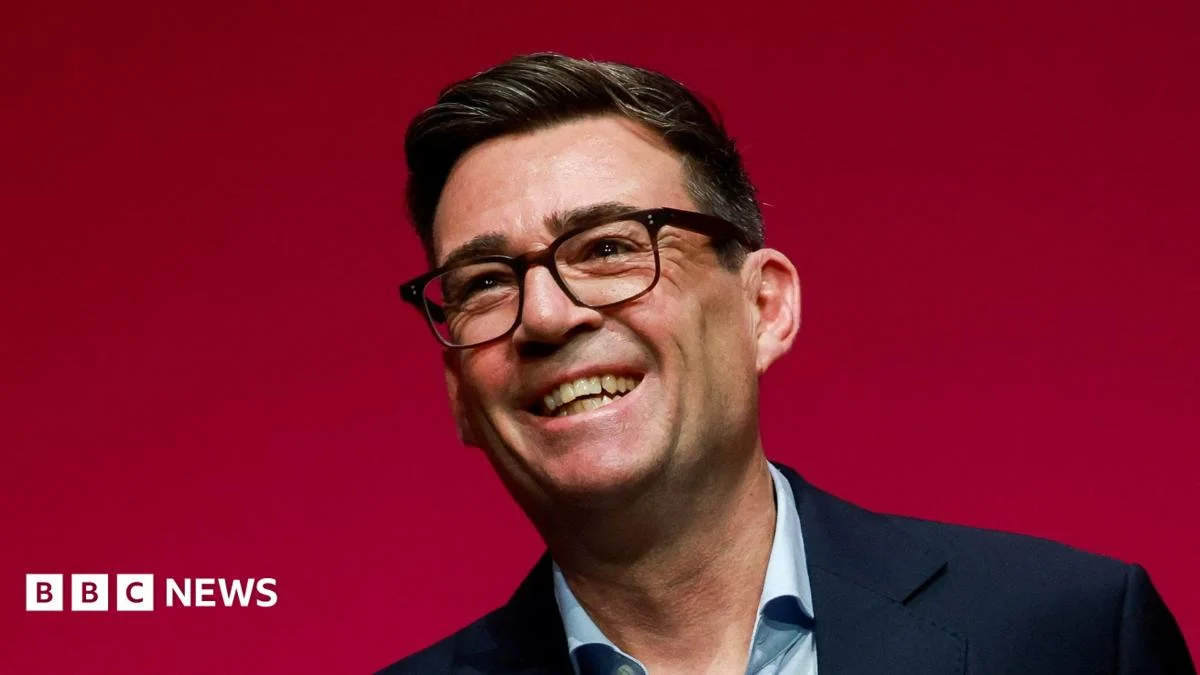
Burnham’s declaration marks a significant escalation of his long-held conviction that the current First-Past-The-Post (FPTP) system is no longer fit for purpose. He has been a vocal proponent of proportional representation (PR) for several years, famously telling last year’s conference that "PR’s time has come." This consistent advocacy underscores a deeply rooted belief that the UK’s democratic machinery requires urgent modernization to accurately reflect the increasingly diverse and fragmented political landscape.
The Westminster first-past-the-post system, which awards victory to the candidate with the most votes in each individual constituency, regardless of the overall national vote share, has faced mounting scrutiny. Critics argue that it distorts voter intent, creates safe seats, discourages participation, and often leads to governments elected with a minority of the popular vote. The debate has intensified dramatically following the 2024 general election, where Labour, despite amassing a "huge parliamentary majority," did so with only 34% of the national vote. This outcome, while advantageous for Labour in the short term, ironically highlighted the very flaws that Burnham now seeks to address, providing a stark, recent example of how FPTP can produce disproportionate results. Such an outcome fuels the argument that millions of votes are effectively "wasted," failing to contribute to the election of a representative.
The sentiment for change within Labour itself has been steadily growing. Earlier in the year, approximately 100 Labour MPs publicly supported a parliamentary amendment advocating for the creation of a commission to examine alternative electoral options. This internal momentum, combined with Burnham’s personal endorsement when he was Mayor of Greater Manchester, has clearly paved the way for this pivotal policy announcement. In his conference speech, Burnham articulated the profound risk of inaction, warning delegates: "We will all have failed in our public duties if we carry on as we are and open the door of No 10 to a divisive government on less than 30% of the vote or less." He further linked electoral reform to national stability, adding, "We can’t succeed in the eyes of the world if we continue with the levels of political turbulence we have seen in recent times." This statement suggests a vision where a more representative system could foster greater political consensus and reduce the cyclical swings of power that have characterized recent decades.
While Burnham’s vision is clear, the practical details of his proposed commission remain to be outlined. He did not specify who would lead the body, nor when its work would officially commence. However, it is anticipated that such a commission would comprise constitutional experts, political scientists, former politicians from across the spectrum, and possibly even international specialists in electoral systems. Its mandate would likely include not only reviewing existing models of proportional representation but also assessing their potential impact on UK governance, local representation, and the relationship between citizens and their elected officials. The timeline for its recommendations would be critical, given that the next general election must be held by 2029, and any substantial change would require significant public debate and parliamentary approval.
Predictably, the announcement has elicited varied responses from other political parties. The Liberal Democrats, long-standing champions of proportional representation, immediately welcomed Burnham’s pledge. For decades, the Lib Dems have campaigned on electoral reform, viewing it as a core principle to ensure fairness and prevent one-party dominance. They have consistently urged Labour to introduce PR, advocating for systems like the Single Transferable Vote (STV), which is already successfully employed in Scottish council elections and offers voters greater choice and ensures more proportional outcomes. Their support will be crucial if any reform proposals are to gain cross-party momentum.
Conversely, any move away from the first-past-the-post system is almost certain to face staunch opposition from the Conservative Party. Historically, FPTP has often benefited larger parties, providing them with strong majorities that allow for stable government, a key argument frequently put forward by its proponents. Conservatives typically argue that FPTP maintains a clear link between MPs and their constituencies and delivers decisive governments, avoiding the perceived instability of coalitions common under PR systems.
The stance of Reform UK, led by Nigel Farage, presents a more nuanced picture. While Reform UK (and its predecessor, the Brexit Party) had previously supported introducing PR at the last election, there has been speculation that the party’s enthusiasm for such a move may have since cooled. Speaking to broadcasters after Burnham’s speech, Farage acknowledged he was open to debating a potential change to the system "at some point" but emphatically stated that other issues were "far more urgent" for the nation. He added: "Is this an absolute priority for the general election after the next one? I don’t believe that it is." This shift could be strategic, as FPTP might increasingly benefit Reform UK if it consolidates its support in specific areas, making a less proportional system potentially advantageous in certain scenarios.
Even within the Labour Party, support for changing the voting system is not entirely universal. Deputy leader Lucy Powell acknowledged that "parts of the Labour Party" are not in favour of it. Traditional Labour arguments against PR often echo those of the Conservatives, emphasizing the importance of strong, decisive governments and the direct accountability of an MP to their constituency. Speaking to Politics Live on BBC 2, Powell confirmed her personal backing for electoral reform but declined to specify a proposed new system, noting that there were "lots of models" available. This highlights the complexity of the debate, even among those who support reform, as each alternative system comes with its own set of trade-offs and implications.
The commission would likely delve into various alternative models beyond STV. The Additional Member System (AMS), a hybrid model, is another prominent option. Used to elect members of the Scottish Parliament and the London Assembly, AMS combines constituency-based elections (often using FPTP) with regional party lists to achieve a more proportional overall result. This system aims to balance the benefits of local representation with the fairness of proportionality. Another system, closed-list proportional representation, was recently adopted for the first time for elections to the Welsh Senedd. Under this model, voters choose a party, and seats are allocated proportionally from pre-determined party lists, offering high proportionality but potentially reducing individual candidate accountability. Other systems like Open-List PR, where voters can express a preference for a specific candidate within a party list, or even more radical approaches like the Alternative Vote (AV), which was rejected in a 2011 referendum, might also be considered, though AV is not a proportional system.
Burnham’s pledge represents more than just a policy announcement; it signifies a deep commitment to institutional reform that could reshape the very fabric of British democracy. The establishment of a national commission signals a serious intent to move beyond theoretical debates and towards concrete proposals. While the path to electoral reform is fraught with political challenges, public education, and the need for cross-party consensus, Burnham has clearly indicated that this issue will be a defining feature of his premiership and a central battleground in the upcoming election campaign, aiming to create a political system he believes is more stable, representative, and responsive to the will of the people.



 George Anjay

 Nakalama John
 atisusanti