Nana Banana
Amidst this widespread devastation, hundreds of international trekkers navigating the iconic Annapurna Circuit—a crucial pillar of Nepal’s tourism-dependent economy—have been forced to abruptly halt their journeys and seek immediate safety. Many adventurers found themselves stranded in the remote districts of Manang and Mustang, high in the Himalayas, and have subsequently been airlifted by helicopters out of the perilous trekking circuit, which typically spans up to three weeks to complete. The ongoing natural calamities have cast a somber shadow over numerous communities across Nepal, as families mourn the loss of loved ones and grapple with the profound trauma of displacement and destruction.

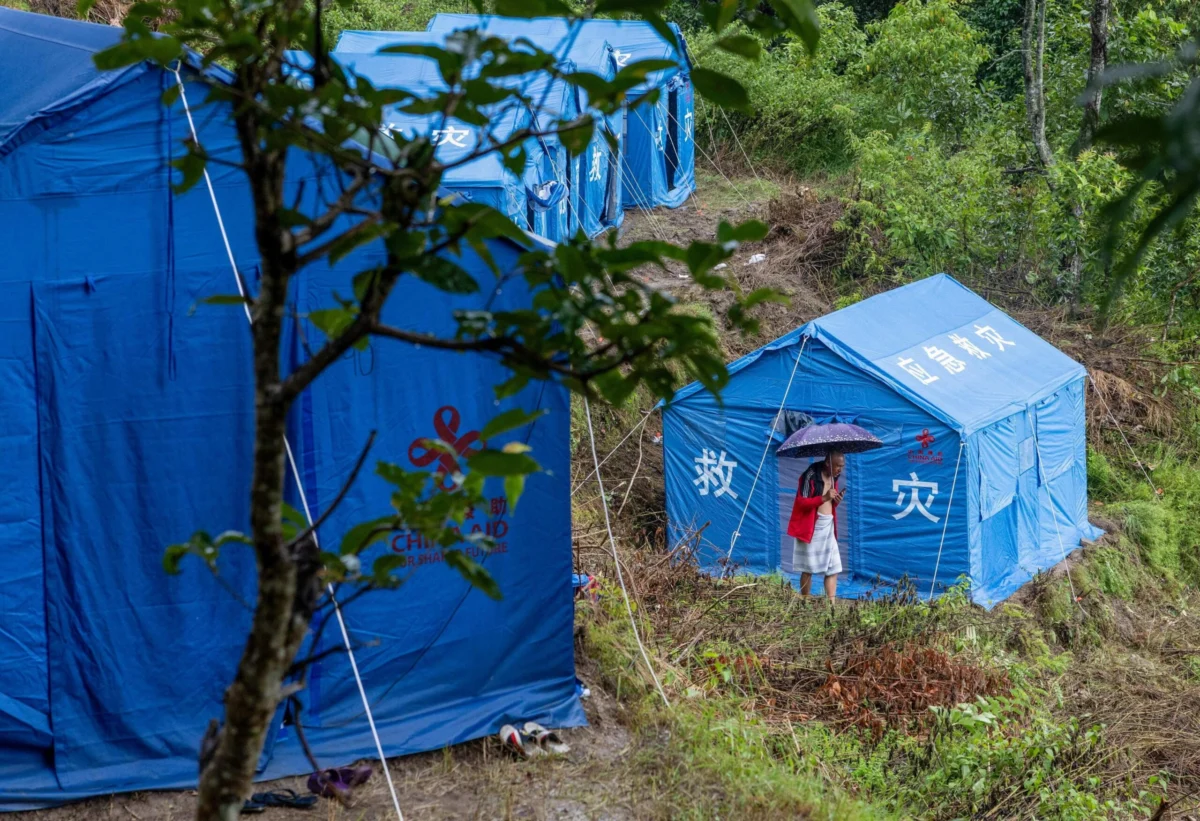
Speaking from the confines of a damp, blue emergency tent in Battar, a town situated north-west of the capital Kathmandu, Buti Tamang shared her harrowing experience with BBC Nepali. "We used to live in a hut, but now there is nothing left. We have lost so many of our relatives," she recounted, her voice heavy with grief. Her sentiments were echoed by Ramesh Ghale, another resident forced to flee his home. "Now it is raining and the tent leaks, so we’ve been facing a difficult situation. We have nowhere else to go," Ghale lamented, highlighting the precarious and uncomfortable living conditions faced by thousands rendered homeless by the incessant downpours and earth movements. The blue disaster-relief tents, a stark contrast against the muddy, forested hillsides, have become temporary homes for many Nepalis grappling with the latest extreme weather events, as depicted in images showing individuals huddling under umbrellas outside their makeshift shelters, emblazoned with relief-aid logos.
The descent from the mountains proved to be a harrowing ordeal for several trekkers and their experienced guides. Their journeys back down the treacherous slopes were fraught with peril, often stretching over three or four days and necessitating navigation through numerous collapsed roads and bridges that had been entirely swept away by raging rivers. Jake Stacy, a 21-year-old from Suffolk, England, vividly described his terrifying experience. Stranded with his guide in Yak Kharka, a village in upper Manang, due to heavy snowfall the previous week, Stacy wisely decided against continuing to the Thorang La pass, the circuit’s highest and most challenging point. "We made our own paths on mountain slopes," he recalled after finally reaching the relative safety of base camp in Pokhara on Tuesday night. "It was quite steep and we were clambering because there was a river below… It was very muddy and very wet." He confirmed that many other trekkers in the vicinity were also evacuated by helicopter, underscoring the widespread nature of the emergency. An image of Jake Stacy and his Nepalese guide, standing on a snow-covered mountain trail amidst steep white slopes and low clouds, perfectly encapsulates the challenging conditions they faced, forced to carve their own routes after heavy snowfall.

Australian trekker Andrew Graham and his guide, Prem KC, also recounted their arduous journey back from Manang village, which involved crossing over 15 landslides. "A few of them were quite dangerous; the residual risks have grown now," Graham observed, highlighting the unstable terrain. Their return was further complicated when they became stuck in the village of Chame, which had been evacuated due to imminent landslide threats. Forced to spend a night exposed in the jungle, their ordeal underscored the unpredictable dangers of the region. In Chame, a massive landslide has partially obstructed a river, creating a temporary lake that has submerged houses and a critical bridge. Local residents informed the BBC that authorities have been attempting for the past three days to release the impounded water using excavators, but with limited success, indicating the scale and complexity of the environmental damage.
Trekking guide Tse Ring Doma shared her group’s particularly challenging experience, stating they had to traverse an astonishing 28 landslides. She emphasized that the mental toll was even more difficult than the physical exertion, given the fresh and painful memory of August’s enormous disaster. "Even thunder would make us run and come out to see if anything was coming our way," she confessed, illustrating the deep-seated fear and anxiety that has gripped locals and visitors alike. Her client, Norwegian Ellen Wahlström, reflected on the disparity of impact, noting that visitors were fortunate enough to only leave some belongings behind, while local residents faced the devastating prospect of losing their homes and ancestral lands. Wahlström, however, commended the authorities for their responsiveness, remarking that they had been clearing many of the landslides "surprisingly fast." Images depict hikers with large backpacks and trekking poles struggling across a muddy, debris-strewn slope in a dense mountain forest, illustrating the landslide-ravaged landscape that confronted them.

Despite the widespread damage and disruption, Chief District Officer Mukti Prasad Khanal confirmed that no fatalities had been reported within the trekking region of Manang. However, he acknowledged the severe road damage, the loss of several bridges, and widespread communication outages in certain areas, underscoring the significant logistical challenges. The dangers extend beyond landslides; a separate tragedy unfolded near the base of Himlung Peak, close to the Tibetan border, where four bodies have been recovered and 12 individuals remain missing following an avalanche, further highlighting the perilous nature of Nepal’s high-altitude environments.
The Annapurna Conservation Area Project (ACAP), the local trekking authority, revealed that approximately 700 eager trekkers are currently waiting in Pokhara, unable to embark on the Annapurna Circuit. A representative from ACAP stated, "We have been holding back all these people who want to go to the Annapurna Circuit trek, although we are under pressure from the trekking industry to announce the route open." This decision reflects a difficult balance between ensuring safety and addressing economic concerns. Furthermore, Indian visitors typically undertaking a Hindu pilgrimage to the ancient Muktinath temple have been advised to fly from Jomson to Pokhara instead of driving, due to the impassable roads. A basic map illustrates the route of the Annapurna Circuit, weaving through the critical districts of Mustang and Manang, providing geographical context to the affected areas.

Interestingly, many of the old trekking trails on the Annapurna Circuit, which had fallen into disuse in recent years following the construction and introduction of motorable roads, are now proving invaluable. With main roads in some sections of the circuit completely washed away, trekking operators and guides are directing trekkers to these abandoned, traditional paths as the only viable routes for return. This unexpected reliance on forgotten trails underscores the profound and disruptive impact of the current environmental crisis. The situation is a stark reminder of Nepal’s inherent vulnerability to climate change, with extreme weather events becoming more frequent and intense, posing significant long-term challenges for its infrastructure, economy, and the resilience of its mountain communities. The country faces not only immediate relief and rescue operations but also the daunting task of rebuilding and adapting to a future where such deadly natural disasters may become increasingly common.

 George Anjay

 Nakalama John

 atisusanti

 Ramos Leo