Nana Banana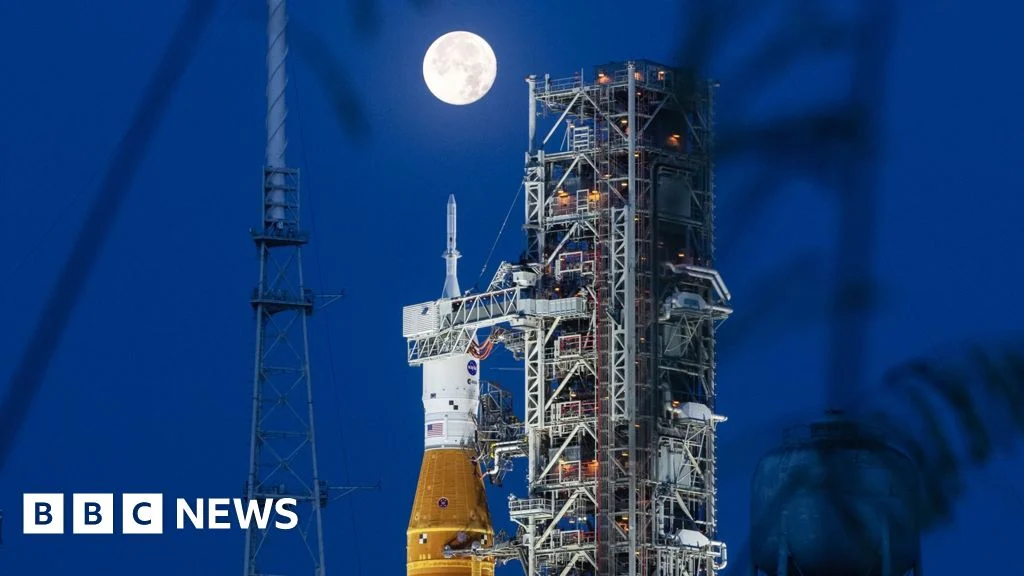
Originally slated for a March liftoff, the mission encountered a snag when a helium leak was detected. Helium plays a vital role in rocket operations, primarily used to pressurize fuel tanks and purge lines, ensuring the smooth flow of propellants to the engines. A leak, even a minor one, can compromise the integrity of the propulsion system and pose significant safety risks during launch. Consequently, the colossal rocket was carefully rolled back from Launch Pad 39B at Cape Canaveral, Florida, to the towering Vehicle Assembly Building (VAB) – one of the largest buildings in the world – for meticulous inspection and rectification.
NASA engineers have since addressed the issue, expressing confidence that the problem is resolved. With repairs complete, the agency is now preparing to transport the SLS rocket and its Orion spacecraft back to the launchpad on March 19, setting the earliest possible launch date for April 1. This aggressive timeline underscores the agency’s determination to maintain momentum for the Artemis program, which aims not only to return humans to the Moon but also to establish a sustainable lunar presence and pave the way for future crewed missions to Mars.
During a recent press briefing, NASA leaders acknowledged the inherent risks associated with such an ambitious endeavor. John Honeycutt, chair of the Artemis II Mission Management Team, emphasized the rigorous approach to safety: "We want to be sure that we’re thinking about everything that can possibly go wrong, and have we assessed and adjudicated all the risks to put us in the best posture to be successful." He candidly referenced historical data, noting that "if you look at the data over time, over the lifespan of building new rockets, the data would show you that one out of two is successful. You’re only successful 50% of the time." However, he quickly tempered this by stating, "I think we’re in a much better position than that. We do an outstanding job of understanding the risk, buying down the risk, mitigating the risk, and putting together controls to manage the risk." This reflects NASA’s deep-rooted culture of safety and methodical risk management, a legacy forged through decades of space exploration.
The four intrepid astronauts who will embark on this historic journey represent a diverse and highly experienced crew. Commander Reid Wiseman, a seasoned Navy pilot and veteran of a prior International Space Station (ISS) expedition, will lead the mission. Pilot Victor Glover, also a Navy aviator and a veteran of SpaceX’s Crew-1 mission to the ISS, will make history as the first African American to fly on a lunar mission. Christina Koch, an electrical engineer and a celebrated astronaut known for her record-breaking 328-day continuous stay on the ISS and participation in the first all-female spacewalk, will serve as Mission Specialist 1. Rounding out the crew is Jeremy Hansen, a fighter pilot and the first Canadian astronaut to be assigned to a lunar mission, serving as Mission Specialist 2. Their collective expertise and diverse backgrounds highlight the international collaborative spirit of modern space exploration.
Artemis II will be the maiden crewed flight of NASA’s colossal Space Launch System (SLS) rocket, the most powerful rocket ever built by the agency, capable of generating 8.8 million pounds of thrust at launch. Towering 322 feet tall, the SLS is designed to send the Orion spacecraft, its crew, and heavy cargo beyond low-Earth orbit. The Orion spacecraft itself, a marvel of modern engineering, blends the robust design principles of the Apollo era with cutting-edge technology. It features advanced life support systems, sophisticated navigation, and a state-of-the-art heat shield crucial for surviving the fiery re-entry into Earth’s atmosphere at speeds of nearly 25,000 miles per hour after its deep-space voyage.
Over the course of the planned 10-day mission, the crew will embark on a trajectory that takes them far beyond the orbital path of the International Space Station, venturing approximately 230,000 miles from Earth. Their primary objective is to fly around the far side of the Moon – the hemisphere that perpetually faces away from our planet – before executing a free-return trajectory that slingshots them back home. This complex maneuver will allow NASA to thoroughly test Orion’s systems with humans on board, evaluate its life support capabilities, communication protocols in deep space, and navigation accuracy, as well as assess radiation protection beyond the Van Allen belts. It’s a comprehensive test flight, preparing for the subsequent Artemis III mission, which aims to land astronauts on the lunar south pole.
A notable decision regarding pre-launch testing was also announced: NASA will not conduct another "wet dress rehearsal" for Artemis II. A wet dress rehearsal is a crucial pre-launch test where the rocket is fully fueled with cryogenic propellants and taken through a complete countdown sequence, stopping just before engine ignition. While a standard procedure for new rockets, Lori Glaze, acting associate administrator for the Exploration Systems Development Mission Directorate, explained the rationale: "There’s not a lot more to be gained from that. The next time we tank the vehicle will be when we’re attempting to launch." This decision reflects the agency’s confidence in the data gathered from previous tests, including the extensive wet dress rehearsals conducted for Artemis I, and the thoroughness of the recent repairs. It also streamlines the launch campaign, pushing the mission forward with greater urgency.
While the immediate focus is on the early April 2024 window, the Artemis program has already faced significant delays, pushing the Artemis II mission back by approximately two years from initial projections. These delays were partly attributed to issues discovered with the heat shield on the uncrewed Artemis I mission, which experienced unexpected ablation patterns during its high-speed re-entry. NASA has since implemented modifications and conducted extensive analysis to ensure the safety and reliability of the Orion heat shield for crewed missions. There is an overarching programmatic imperative to launch Artemis II well in advance of the planned Artemis III lunar landing, with an internal deadline for Artemis II generally understood to be before April 2026. This adds a layer of pressure to the current launch window.
As Glaze articulated, "I am comfortable and the agency is comfortable with targeting April 1 as our first opportunity, just keep in mind we still have work to go. There are still things that need to be done within the Vehicle Assembly Building and out at the pad, and as always, we’ll always be guided by what the hardware is telling us, and we will launch when we’re ready." This statement encapsulates NASA’s balanced approach: an ambitious target, but with an unwavering commitment to safety and the readiness of its sophisticated hardware. The world watches with bated breath as NASA prepares to usher in a new era of human lunar exploration with Artemis II, building on the legacy of Apollo and setting sights on even more distant horizons.




 George Anjay
 Nakalama John
 atisusanti
 Ramos Leo