Nana Banana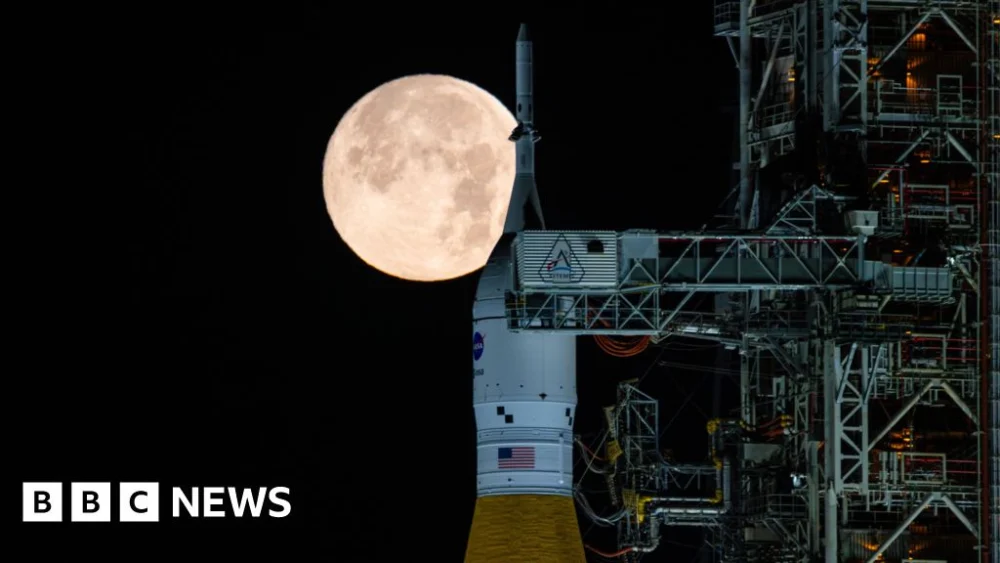
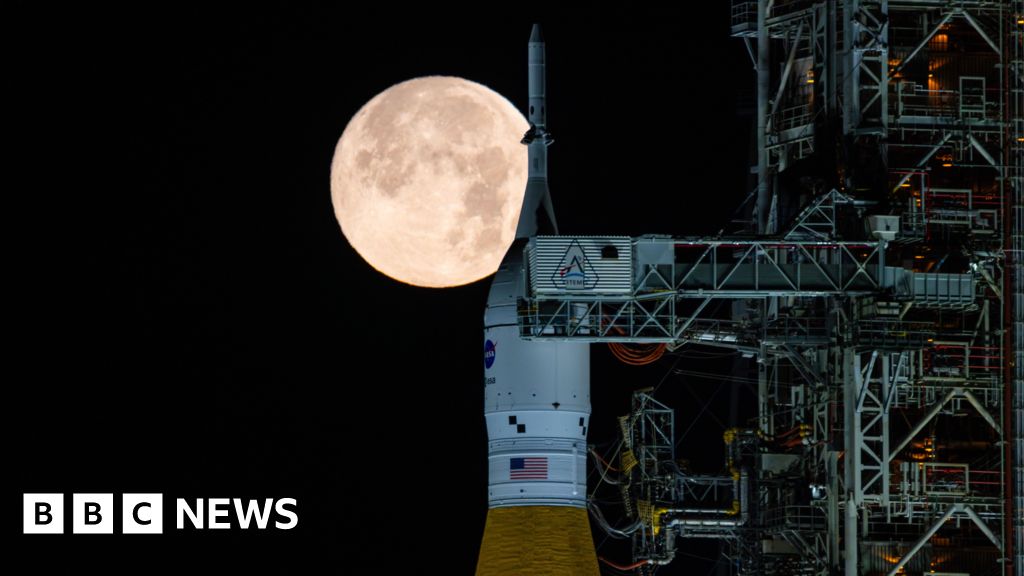
NASA is setting its sights on an early April launch window for the highly anticipated Artemis II mission, a landmark endeavor that will send astronauts around the Moon for the first time in over half a century. This crucial crewed test flight represents a significant step in humanity’s return to the lunar surface and a precursor to establishing a sustained human presence beyond Earth orbit. The mission, initially slated for March, faced a temporary setback after engineers detected a helium leak within the powerful Space Launch System (SLS) rocket, necessitating its return to the iconic Vehicle Assembly Building (VAB) at Cape Canaveral, Florida, for meticulous repairs.
Following a thorough assessment and successful resolution of the helium leak, NASA officials expressed confidence in the integrity of the rocket system. The agency is now meticulously planning to roll the colossal SLS and its Orion spacecraft back out to Launchpad 39B on March 19, setting the earliest possible launch date for April 1. This adjusted timeline underscores NASA’s unwavering commitment to safety and precision, prioritizing the readiness of both hardware and crew above all else.
During a recent press briefing, NASA leaders underscored the inherent risks associated with deep-space exploration, a candid acknowledgment of the formidable challenges that accompany such ambitious undertakings. The four pioneering astronauts selected for Artemis II – American astronauts Reid Wiseman, Victor Glover, and Christina Koch, alongside Canadian astronaut Jeremy Hansen – are poised to make history. They will be the first humans to journey aboard NASA’s monumental Space Launch System, the most powerful rocket ever developed by the agency, and its advanced Orion spacecraft, designed to withstand the rigors of deep-space travel.
The 10-day mission profile for Artemis II involves a complex trajectory that will take the crew far beyond low Earth orbit and around the far side of the Moon – a hemisphere perpetually hidden from Earth’s view. This lunar flyby will serve as a critical test of Orion’s systems with human occupants, evaluating life support, communication, navigation, and critical re-entry procedures under real-world deep-space conditions. It’s an essential dry run for future lunar landings, ensuring that every component functions flawlessly before committing to a surface descent.
John Honeycutt, chair of the Artemis II Mission Management Team, articulated the rigorous approach to mission planning: "We want to be sure that we’re thinking about everything that can possibly go wrong, and have we assessed and adjudicated all the risks to put us in the best posture to be successful." He acknowledged the historical probabilities associated with new rocket developments, stating, "If you look at the data over time, over the lifespan of building new rockets, the data would show you that one out of two is successful. You’re only successful 50% of the time. I think we’re in a much better position than that." Honeycutt emphasized NASA’s robust risk management protocols: "We do an outstanding job of understanding the risk, buying down the risk, mitigating the risk, and putting together controls to manage the risk." This philosophy underpins every decision, ensuring the crew’s safety remains paramount.
The crew themselves bring a wealth of experience and represent a new era of diverse space exploration. Reid Wiseman, the mission commander, is a seasoned Navy aviator and former ISS resident. Victor Glover, the pilot, is also a Navy aviator and has completed a long-duration mission on the ISS, making him the first African American to participate in a lunar mission. Christina Koch, a mission specialist, holds the record for the longest single spaceflight by a woman, providing invaluable insights into human endurance in space. Jeremy Hansen, another mission specialist, marks Canada’s first astronaut assigned to a lunar mission, highlighting the international collaboration inherent in the Artemis program. Their collective expertise and diverse backgrounds are vital for navigating the unprecedented challenges of this journey.
The Artemis program itself is a multi-stage initiative aimed at returning humans to the Moon and eventually preparing for missions to Mars. Artemis I, an uncrewed test flight that successfully orbited the Moon in late 2022, provided invaluable data on the performance of the SLS rocket and the Orion spacecraft. While Artemis I was deemed a resounding success, it did reveal some issues, particularly concerning the heat shield’s performance during atmospheric re-entry, which subsequently contributed to the overall delay of the Artemis II mission. The lessons learned from Artemis I have been meticulously integrated into the preparations for Artemis II, ensuring that the crewed flight benefits from every piece of acquired knowledge.
NASA’s Space Launch System stands as a testament to modern engineering prowess. Towering over 322 feet (98 meters) in its initial configuration, the Block 1 version of the SLS generates 8.8 million pounds of thrust at launch, making it significantly more powerful than the Saturn V rocket that propelled Apollo missions to the Moon. Its core stage, powered by four RS-25 engines, is flanked by two solid rocket boosters, all working in concert to escape Earth’s gravity and send the Orion capsule on its deep-space trajectory. The Orion spacecraft, built to carry up to four astronauts, is equipped with advanced life support systems, robust thermal protection, and sophisticated avionics to navigate the vastness of space and ensure a safe return.
A significant decision announced by the NASA team is their intent not to conduct another "wet dress rehearsal" (WDR) once the rocket is returned to the launchpad. A WDR is a comprehensive pre-launch test where the rocket is fully fueled with cryogenic propellants, and teams run through the entire countdown sequence, stopping just before engine ignition. "There’s not a lot more to be gained from that," explained Lori Glaze, acting associate administrator for the Exploration Systems Development Mission Directorate. "The next time we tank the vehicle will be when we’re attempting to launch." This decision reflects the agency’s confidence in the data gathered from previous WDRs and the success of the repairs, allowing them to streamline the pre-launch schedule.
Despite the renewed confidence, Glaze emphasized that work remains to be done before a definitive launch date can be confirmed. "I am comfortable and the agency is comfortable with targeting April 1 as our first opportunity, just keep in mind we still have work to go," she stated. "There are still things that need to be done within the Vehicle Assembly Building and out at the pad, and as always, we’ll always be guided by what the hardware is telling us, and we will launch when we’re ready." This mantra of "launch when ready" has been a cornerstone of NASA’s safety culture, particularly in human spaceflight.
The Artemis program has faced considerable pressure, both technical and political, to maintain its ambitious timeline. The initial two-year delay for Artemis II was primarily attributed to the aforementioned heat shield anomalies observed during Artemis I and the subsequent meticulous analysis and modifications required. In December 2024, the space agency had set a challenging deadline to launch Artemis II before the end of April 2026, a target that the current April 2025 window would comfortably meet. "At this point, we’re very focused on April," Glaze reiterated, signaling the agency’s concentrated efforts to meet this critical milestone.
Artemis II is more than just a test flight; it’s a symbolic journey that rekindles humanity’s direct connection with the Moon, bridging the gap from the Apollo era to a future where lunar exploration is sustainable and serves as a springboard for further deep-space endeavors. The success of this mission will validate the capabilities of the SLS and Orion systems, prepare the way for Artemis III – the mission slated to land humans on the lunar south pole, including the first woman and person of color – and ultimately advance the long-term vision of sending astronauts to Mars. As the world watches, NASA prepares to write the next chapter in human space exploration, guided by caution, innovation, and an unyielding spirit of discovery.




 Roy Suryo
 George Anjay
 Ramos Leo
 atisusanti