
 George Anjay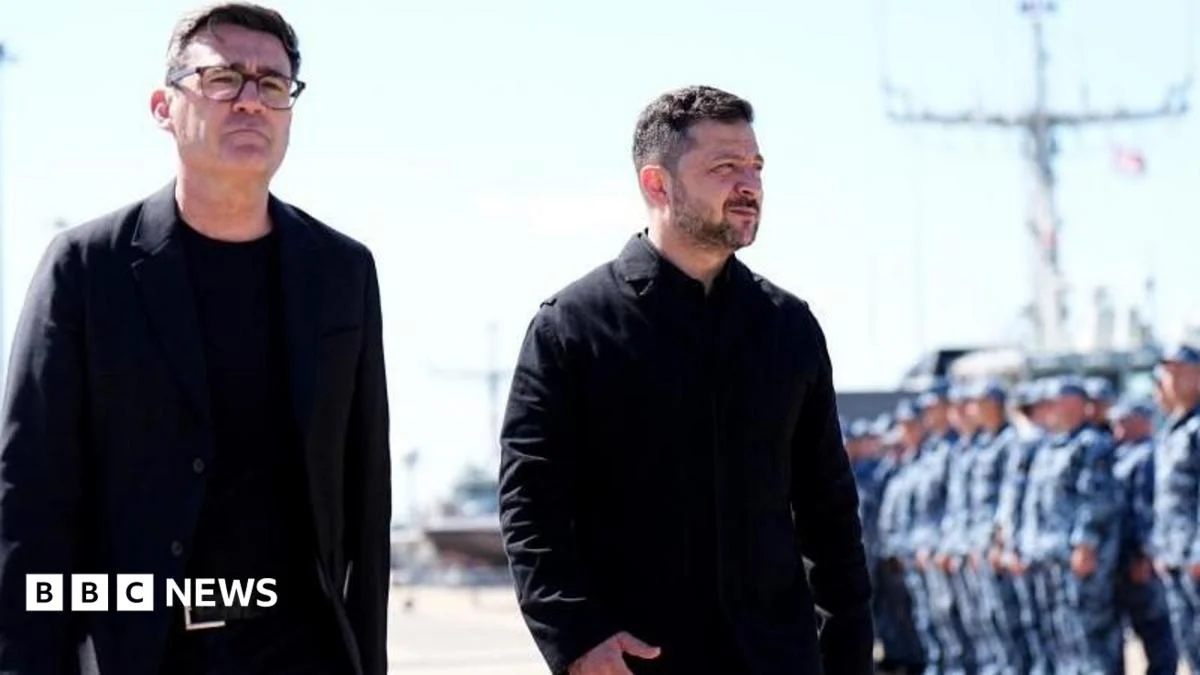
Andy Burnham is marking his first foreign visit as prime minister with a trip to Kyiv, a deeply symbolic gesture aimed at unequivocally reiterating the United Kingdom’s unwavering support for Ukraine and to honour the nation’s pivotal independence day. This significant visit, occurring on a day of profound national significance for Ukraine, underscores the UK’s enduring commitment to Kyiv’s sovereignty and territorial integrity in the face of relentless Russian aggression.
The prime minister’s itinerary includes chairing his inaugural meeting of the "coalition of the willing," a critical international alliance initially established by the United Kingdom and France under the leadership of his predecessor, Sir Keir Starmer. This coalition serves as a vital platform for coordinating international military and humanitarian assistance to Ukraine, and Burnham’s leadership in this forum signals a continuation and potential strengthening of these collaborative efforts. Furthermore, he is scheduled to formally accept a prestigious award on behalf of the British people, a tangible recognition of the United Kingdom’s substantial contributions and steadfast support for Ukraine. His participation in Ukraine’s independence day events will further cement the solidarity between the two nations.
Burnham’s reaffirmation of the UK’s backing for Kyiv comes at a particularly critical juncture, amplified by the recent escalation of Russian strikes across Ukraine. These brutal attacks have inflicted immense human suffering, most tragically exemplified by the recent strike on a crowded shopping centre on Friday, which resulted in the tragic loss of at least 16 innocent lives. The timing of the prime minister’s visit, therefore, carries added weight, offering a message of solace and resolve to a nation enduring immense hardship.
Speaking ahead of his crucial visit on Monday, Burnham articulated a clear and resolute message to the Ukrainian people: "On Ukraine’s 35th anniversary of independence, the Ukrainian people should be in no doubt: the UK is behind you today and for as long as it takes." This statement is designed to provide a powerful assurance of continued and enduring support, transcending immediate political cycles. He expressed profound pride in the contributions made by the United Kingdom, emphasizing his desire for the Ukrainian people to hear directly from him that their support will not falter. Burnham powerfully articulated the interconnectedness of their security, stating, "After all, Ukraine’s security is our security." This declaration highlights the strategic importance the UK places on Ukraine’s defence and the broader implications for European and global security.
He further emphasized the enduring nature of the friendship between Ukraine and the UK, asserting that it would "long outlast Russia’s illegal war." This sentiment speaks to a long-term vision of partnership and mutual respect, independent of the current conflict. Burnham issued a stern warning to Russia, stating, "Russia should be in no doubt of our resolve. We will not back down until there is a just and lasting peace." This unwavering stance signals the UK’s commitment to supporting Ukraine until a resolution that respects its sovereignty and upholds international law is achieved.
This significant diplomatic engagement occurs in the shadow of Moscow’s increasingly belligerent rhetoric and actions. Russia has issued direct warnings of "consequences" in response to Ukraine’s utilization of British-supplied drones in its recent wave of strikes targeting Russian infrastructure. This development highlights the escalating nature of the conflict and the potential for further international repercussions. Kyiv, emboldened by Western support, has indeed intensified its long-range attacks on Moscow and other Russian regions, strategically targeting key economic assets such as oil refineries and the logistical hubs of major online retailers like Wildberries. These actions demonstrate Ukraine’s determination to disrupt Russia’s war-fighting capabilities and to hold Russia accountable for its aggression.
The Russian embassy in the UK has vociferously criticized Britain’s involvement, accusing the nation of "deliberately opting for an escalation of the Ukraine crisis." Their statement further warned that "the deeper its involvement in the conflict… the higher the price it will pay," a clear attempt to intimidate and deter further Western support.
In a direct response to these threats, Burnham stated last week, unequivocally, "We are not fair-weather friends, we will be there in Ukraine’s hour of need and that won’t change." This firm declaration underscores the UK’s commitment to its allies and its refusal to be deterred by Russian intimidation tactics. When questioned on Tuesday about the specific Russian threat, Burnham maintained a consistent position, asserting that the UK was "providing support so that Ukraine can defend itself and that’s been the British position all the way through this conflict, by previous prime ministers – it remains the case with me." This emphasizes the bipartisan nature of the UK’s support for Ukraine, providing a stable and predictable policy framework.
A significant announcement anticipated from Burnham’s visit is the government’s agreement to allow defence company MBDA to declassify information pertaining to UK components used in the long-range Scalp missile. This French equivalent of the UK’s own Storm Shadow missile is a crucial weapon system for Ukraine. The shared British and French technology underpinning both missiles highlights the close defence cooperation between these two key allies. The potential for President Emmanuel Macron to explore setting up local assembly lines for Scalp missiles within Ukraine further underscores the strategic intent to bolster Ukraine’s indigenous defence manufacturing capabilities and reduce its reliance on external supply chains in the long term. This move signifies a deeper level of industrial and technological collaboration, aimed at empowering Ukraine to sustain its defence efforts.
The prime minister’s visit also coincides with significant diplomatic shifts, as Russia confirmed that its ambassador to the UK, Andrei Kelin, had recently departed his post in London. While the Kremlin has yet to formally announce a replacement, Russia’s embassy in the UK communicated to the BBC that this departure "does not reflect an intention to downgrade diplomatic relations between the two nations." This development, while potentially indicative of broader diplomatic tensions, does not appear to signal a complete severing of ties, though it adds another layer of complexity to the bilateral relationship. The UK’s steadfast support for Ukraine, as demonstrated by Burnham’s visit, remains a central pillar of its foreign policy, regardless of these diplomatic maneuvers. The ongoing conflict in Ukraine and the UK’s unwavering commitment to its defence will undoubtedly continue to shape diplomatic interactions and international relations for the foreseeable future.



 Roy Suryo

 Nakalama John
 atisusanti
 Ramos Leo
