
 George Anjay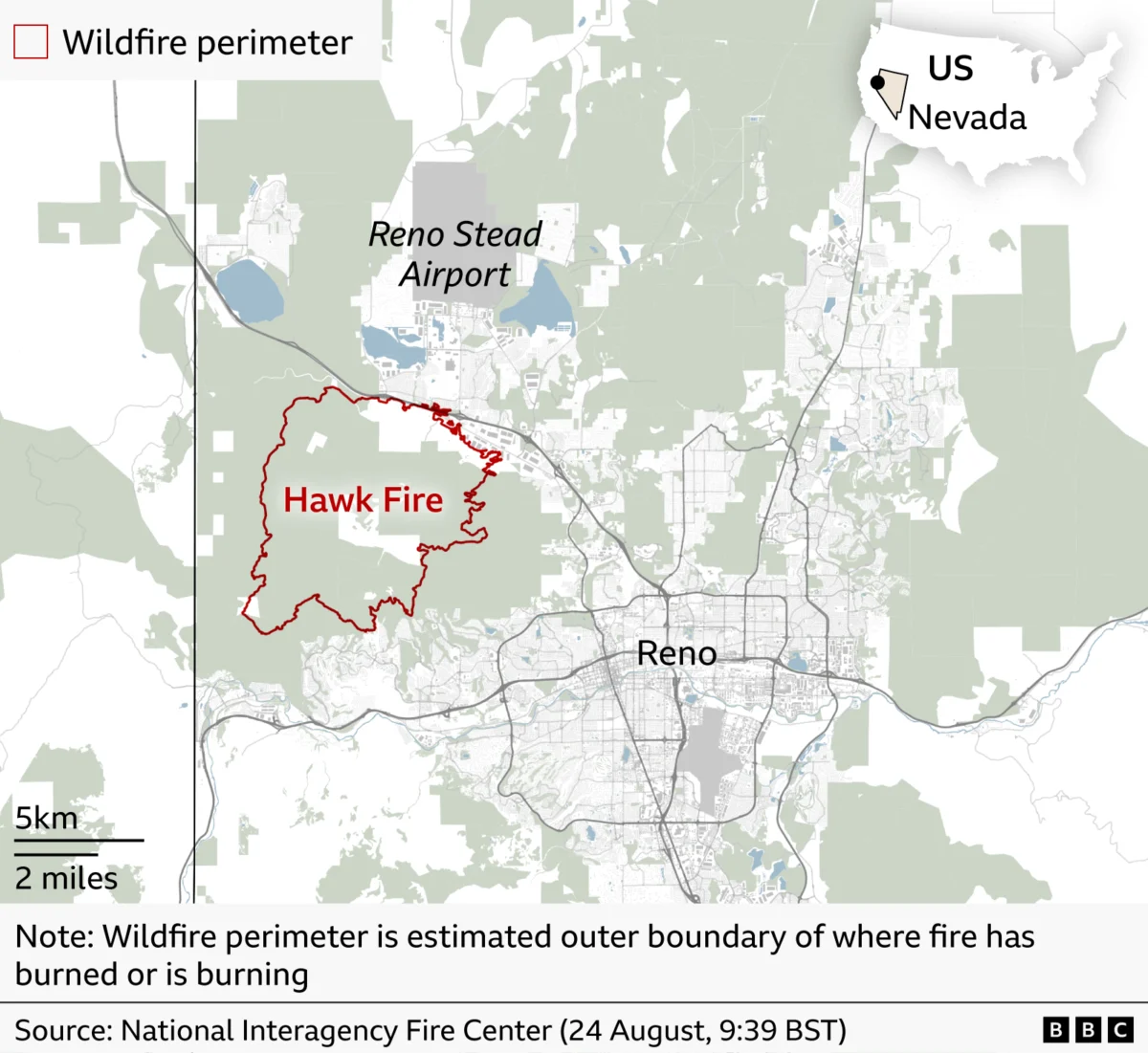
A devastating wildfire, now officially named the Hawk Fire, has forced approximately 90,000 residents to evacuate their homes in the vicinity of Reno, Nevada, as the inferno rapidly approaches the city’s outskirts. The blaze, which ignited on Saturday morning, has already caused injuries to six individuals, including three emergency responders, and its relentless spread is being exacerbated by strong, unpredictable winds and critically dry conditions. In response to the escalating crisis, Nevada’s Governor Joe Lombardo has declared a state of emergency in Washoe County and has mobilized the National Guard to bolster firefighting and law enforcement operations. "This is an active and rapidly evolving situation and I urge everyone in the affected areas to remain vigilant and follow the direction of local officials," Governor Lombardo stated, underscoring the gravity of the unfolding disaster.
The human-caused fire, first reported at 11:15 local time (18:15 GMT) on Saturday, has already consumed an estimated 15,000 acres, equivalent to approximately 23 square miles, according to the Washoe emergency information center. As of Sunday lunchtime, officials confirmed that no portion of the fire’s perimeter had been successfully contained, indicating the significant challenge faced by containment efforts. Local emergency services reported that the evacuation zone encompassed around 13,700 homes, prompting the establishment of two shelters to accommodate displaced residents.
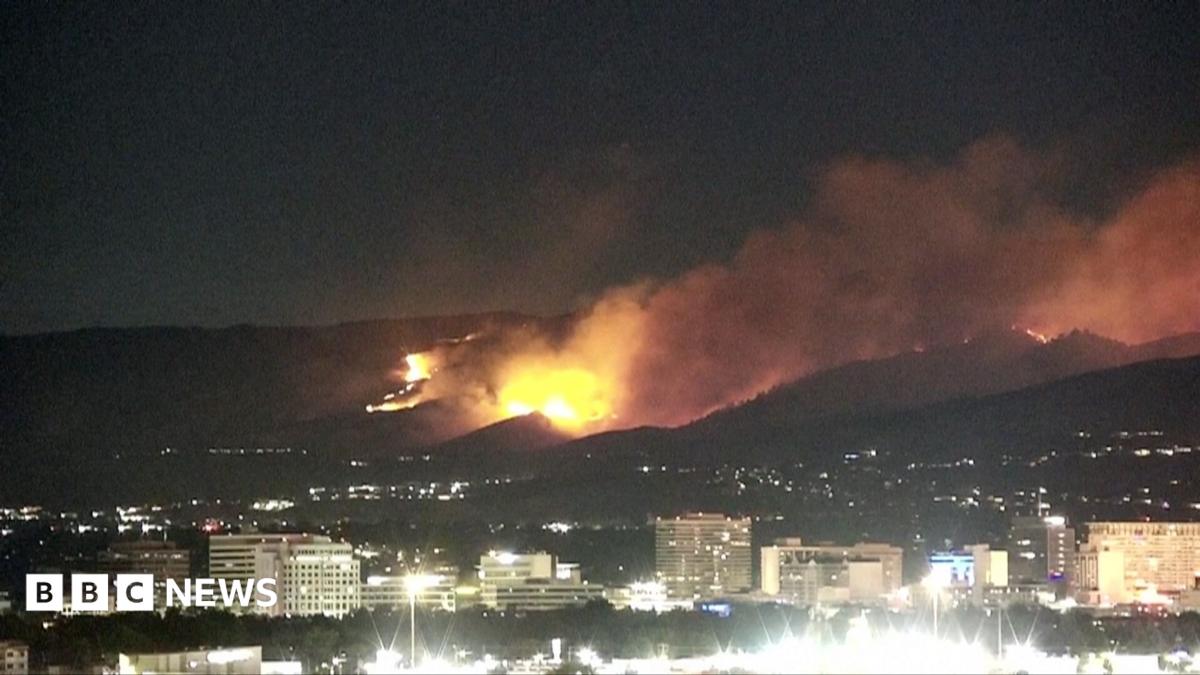
Lucia Starbuck, a local reporter for KNR Public Radio, described the fire’s alarming progression to the BBC. "The fire has definitely exploded in size," she said. "It’s burning these dry desert hills with neighborhoods at the bottom. We know some homes have been burned, we don’t know the exact number yet." The intensity of the fire has necessitated widespread road closures, and all Washoe County schools are scheduled to be closed on Monday, with the exception of one institution, further disrupting the community.
The "go now" evacuation zone and the broader "get set" area, where residents are urged to prepare for immediate departure, do not currently extend into the heart of Reno. However, these zones do encompass significant urban areas and a portion of a crucial highway, impacting daily life and essential access routes. The University of Nevada in Reno, with its main campus situated just outside the "get set" warning area, has announced that regular campus operations will continue. Nevertheless, the university is actively monitoring the situation and its potential impact.
In a significant display of support, the Nevada National Guard has deployed 72 personnel, along with one Chinook and one Black Hawk helicopter, to aid in the response efforts. These aerial assets, along with large air tankers, have been actively engaged in dropping water and fire retardants over the affected regions, battling the relentless flames.
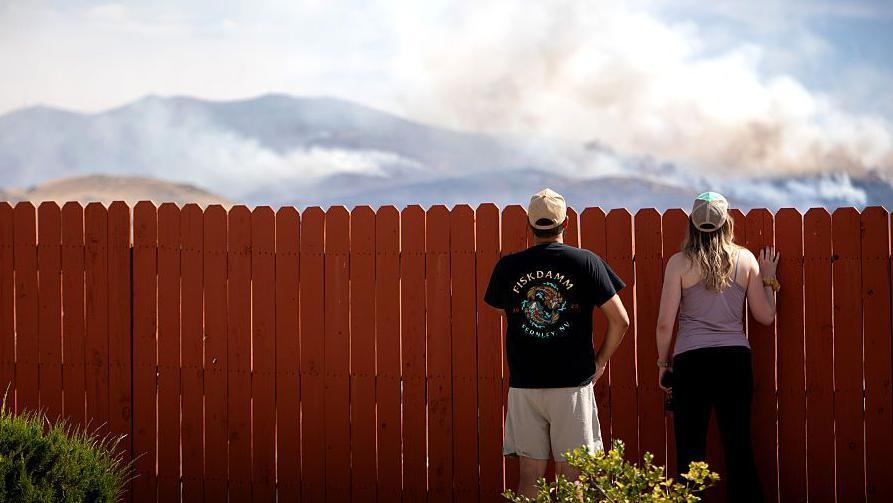
The Hawk Fire derives its name from its origin near the Hawk Meadow Trail, located to the west of Reno. Reno, a city of approximately 280,000 people, is situated in western Nevada, close to the California border. Wildfires are a recurring and increasingly severe threat in the southwestern United States, including Nevada, according to the National Oceanic and Atmospheric Administration. Currently, the state is contending with three large fires, contributing to a national total of 79 major wildfires. While many of these blazes typically occur in rural and less populated areas, the Hawk Fire’s proximity to a significant urban center highlights the growing risk of wildfires encroaching on population centers.
Scientists consistently point to human-induced climate change as a significant factor in the increasing severity and frequency of wildfires. The warming temperatures and prolonged dry spells, intensified by climate change, create ideal conditions for the rapid and aggressive spread of fires. Richard Edwards, fire chief at Truckee Meadows Fire and Rescue, confirmed the extreme fire conditions faced by the crews battling the Hawk Fire, stating that they had experienced "extreme fire conditions."
The rapid advancement of the Hawk Fire underscores the vulnerability of communities in fire-prone regions. The scale of the evacuations, affecting nearly 90,000 individuals, represents a significant displacement and a stark reminder of the devastating impact of wildfires. The coordinated response involving local authorities, state resources, and the National Guard highlights the multi-faceted approach required to combat such large-scale incidents. The ongoing efforts to contain the blaze are a testament to the dedication of the firefighters and emergency personnel working tirelessly to protect lives and property. The long-term implications of the Hawk Fire, including potential structural damage and environmental impact, are still being assessed as the situation continues to develop. The community faces a period of uncertainty as they await further updates and the eventual path to recovery. The visual impact of the smoke plumes rising over Reno serves as a constant, somber reminder of the battle being waged against the encroaching flames. The psychological toll on residents forced to flee their homes, uncertain of their fate, is immense. Authorities are working to provide essential services and support to those displaced, emphasizing the importance of community resilience in the face of such a crisis. The effectiveness of the aerial and ground suppression efforts will be crucial in determining the fire’s ultimate trajectory and the extent of damage to surrounding areas. The strategic deployment of resources and the ongoing weather patterns will play a pivotal role in the outcome of this critical firefighting operation. The incident serves as a potent illustration of the escalating challenges posed by wildfires in an era of climate change, prompting a renewed focus on prevention, preparedness, and effective response strategies. The economic and social ramifications of such a disaster are far-reaching, impacting not only the immediate community but also the broader regional landscape. The long-term recovery process will undoubtedly require sustained effort and collaboration from all stakeholders involved in mitigating the effects of this devastating event.




 Roy Suryo

 Nakalama John
 atisusanti
 Ramos Leo
