George Anjay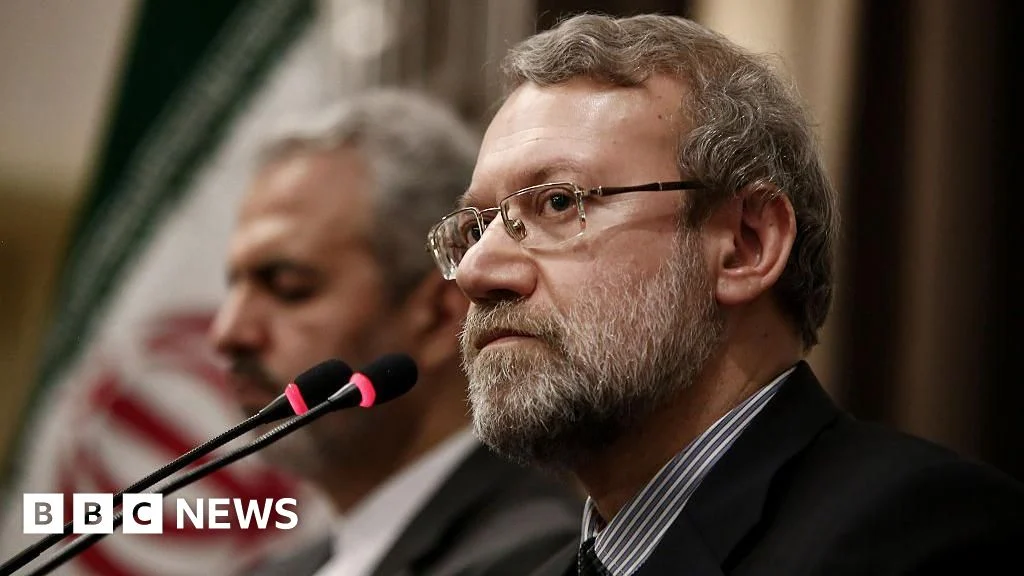
The Israeli air strike that eliminated Ali Larijani, Iran’s security chief, has removed one of the Islamic Republic’s most seasoned and influential policymakers at a pivotal juncture. Larijani, while not a military commander, was a linchpin in formulating Iran’s strategic decisions. As the secretary of the Supreme National Security Council, he occupied a central position in critical deliberations concerning war, diplomacy, and national security. His pronouncements carried significant weight across the political spectrum, particularly in navigating Iran’s complex and often confrontational relationship with the United States and Israel. Following the assassination of Supreme Leader Ali Khamenei on February 28th, Larijani adopted a defiant stance, signaling Iran’s readiness for an extended period of conflict.
His demise, now officially confirmed by state media, occurs amidst a broader campaign that has seen several senior Iranian officials and commanders assassinated within a matter of weeks. This pattern strongly suggests a deliberate and sustained effort to destabilize and weaken Iran’s leadership structure during a period of heightened wartime tension. Despite his avowedly hardline posture against Western powers, Larijani was often characterized within Iran as a pragmatist. He skillfully blended ideological fidelity with a distinctly technocratic approach, prioritizing calculated strategic planning over inflammatory rhetoric. While he harbored deep skepticism regarding engagement with Western nations, he was also instrumental in significant diplomatic initiatives, including his role as an envoy in Iran’s long-term cooperation agreement with China.
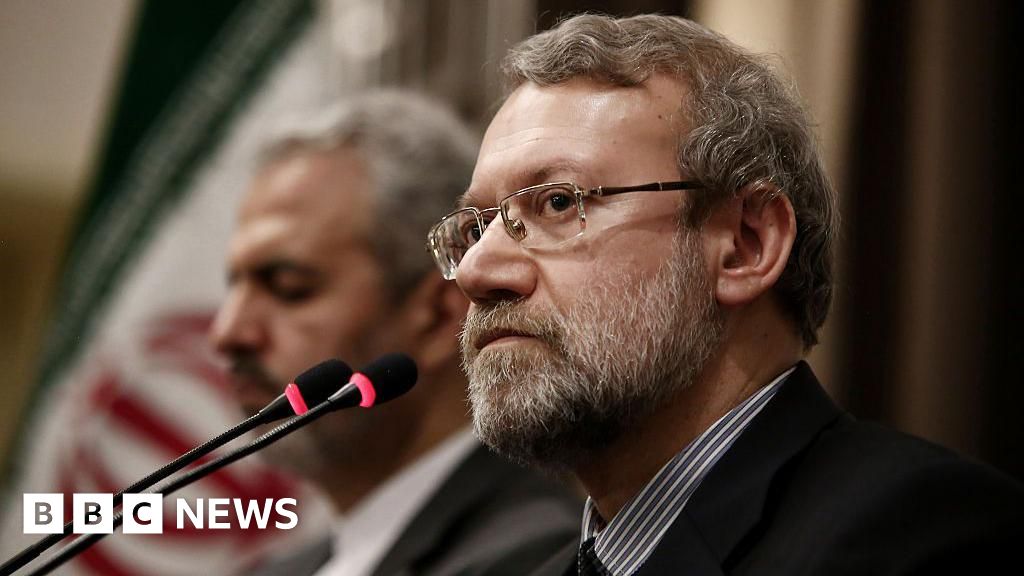
At the moment of his death, Larijani was tasked with managing a trifecta of critical crises. The foremost of these was the ongoing war itself. He had consistently advocated for Iran to prepare for a protracted struggle, arguing for the expansion of the conflict across the region and potentially beyond, including measures such as the closure of the Strait of Hormuz. The second major challenge was a burgeoning wave of domestic unrest. This movement, initially fueled by economic grievances, rapidly evolved into widespread protests demanding the overthrow of the Islamic Republic. The regime’s response was a brutal crackdown that resulted in the deaths of thousands of protesters across the nation. The third crisis revolved around Iran’s controversial nuclear program and the stalled, indirect negotiations with Washington, both of which had already been severely impacted by targeted military strikes.
Larijani’s removal leaves these complex issues unresolved, transferring the formidable burden to an as-yet-unidentified successor who will confront an extraordinarily precarious situation. Although Iran has demonstrated a degree of resilience, partly through its ability to disrupt global energy markets, its airspace remains vulnerable to continued aerial assaults. Any new senior figure appointed to replace Larijani will face the immediate and substantial risk of becoming a target. This vacuum in leadership may inadvertently shift greater power towards the military establishment. Recent pronouncements by President Masoud Pezeshkian have hinted that military units have been granted broad authority to act independently if the senior leadership is incapacitated. In practical terms, this could lead to swifter decision-making but at the cost of diminished central coordination.
Furthermore, there are observable signs that the current leadership is grappling with the complexities of succession. Iran has notably delayed public announcements and has kept certain key figures, including the new supreme leader Mojtaba Khamenei, largely out of the public eye. It remains unclear whether this reticence stems from heightened security concerns or from underlying internal uncertainty within the ruling elite. In the immediate aftermath, the most probable outcome is an exacerbation of the volatile situation. This could manifest as a more aggressive military posture in the ongoing war and an intensification of repressive measures domestically.
However, over a longer period, a political system that continues to lose its senior figures may find it increasingly difficult to function effectively, particularly within a nation of over 90 million people. The ramifications of Larijani’s death, therefore, extend beyond the mere loss of a single official. It significantly deepens a profound leadership crisis that possesses the potential to shape both the trajectory of the war and the very stability of the Iranian state itself. The intricate web of internal power dynamics, coupled with external pressures, creates an environment where the loss of experienced figures like Larijani could trigger cascading effects, further destabilizing an already fragile geopolitical landscape. His role as a bridge between hardline ideology and pragmatic execution made him a unique figure, and his absence will be keenly felt in the complex calculations that define Iran’s foreign and domestic policies. The succession, in particular, will be closely watched, as it will reveal much about the internal balance of power and the future direction of the Islamic Republic. The ongoing cycle of assassinations, whether officially acknowledged or not, points to a deliberate strategy aimed at decapitating Iran’s command and control, a strategy that has now claimed a key architect of its strategic thinking. The implications for regional security and the global energy market are substantial, as a weakened and potentially more unpredictable Iranian leadership could lead to unforeseen consequences. The leadership crisis, now amplified by Larijani’s death, represents a critical juncture for Iran, posing fundamental questions about its ability to navigate the multifaceted challenges it faces both internally and on the international stage. The vacuum left by his strategic acumen and political influence will be difficult to fill, potentially leading to a period of greater uncertainty and volatility.


 Nakalama John
 Ramos Leo
 Nana Banana