
 Nana Banana
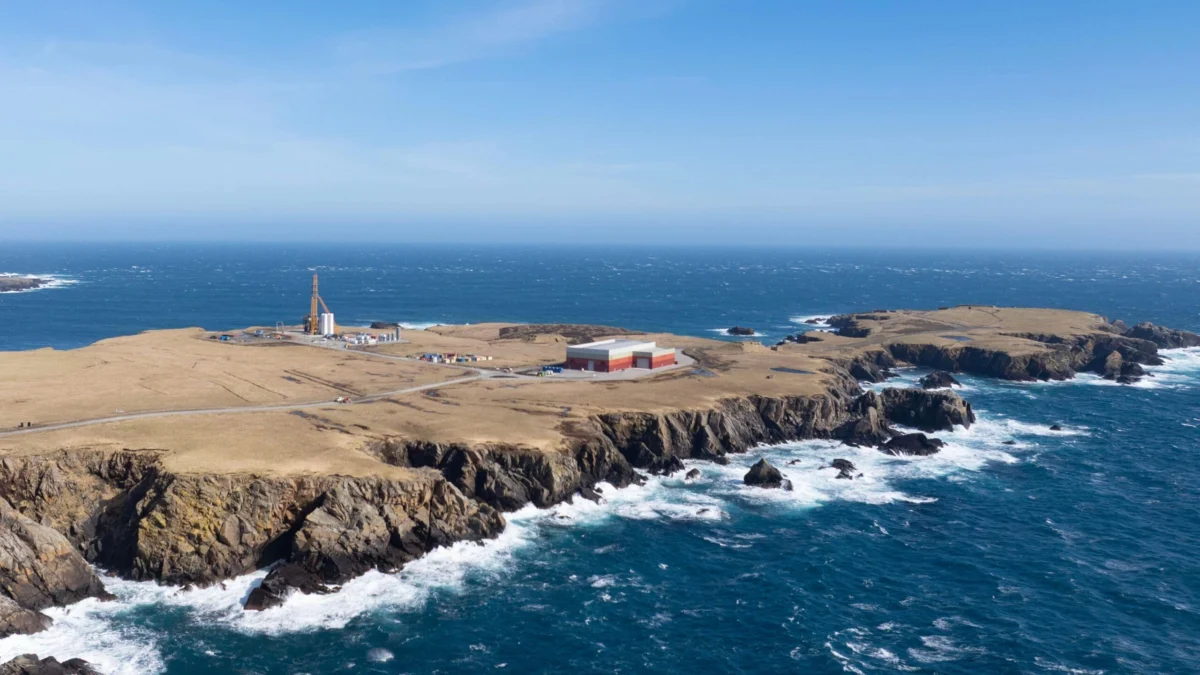
The vulnerability of this critical infrastructure has not gone unnoticed. A parliamentary report last year issued stark warnings about security weaknesses across vital sectors, including transport, supply chains, financial services, and payment systems, all of which rely heavily on these undersea networks. Beyond the digital realm, the newly established £30 million SaxaVord Spaceport in Shetland adds another layer of strategic importance, presenting a high-value asset that some fear could become a Russian target. The question is no longer if these threats are real, but rather how the UK, and specifically the Shetland Isles, should respond to this new, yet eerily familiar, landscape of hybrid warfare and strategic competition.

The current anxieties are deeply rooted in a series of recent incidents that underscore the fragility of undersea networks. The Baltic Sea has become a hotbed of such activity, with multiple instances of cables being damaged or severed. In December of the previous year, Finnish police investigated a vessel originating from Russia, suspected of causing damage to an undersea telecommunications cable stretching from Helsinki to Estonia across the Gulf of Finland. While these specific incidents occurred elsewhere, they serve as a potent reminder of the potential for disruption. Closer to home, Shetland itself has experienced its own share of cable woes. In 2022, the islands were effectively cut off from the mainland following damage to a subsea cable. The following year, two additional cable breaks further disrupted internet services, with one requiring weeks of painstaking repair work. Though there has been no direct evidence linking Russian involvement to these particular Shetland incidents, their occurrence highlights the inherent vulnerability of these vital connections and the devastating impact their disruption can have on island communities. The increasing frequency and proximity of Russian activity cannot be ignored; in July alone, Royal Navy warships and helicopters spent 21 days monitoring Russian activity in UK waters and the North Atlantic, a 25% increase compared to previous monitoring periods. This heightened surveillance underscores the growing concern among defense planners regarding Moscow’s intentions and capabilities in the region.
Shetland’s strategic significance is not a new phenomenon; it is deeply woven into its history and geography. As Jon Sandison, a local history teacher and tour guide, explains, the islands’ geographical position has always been pivotal. During World War Two, following Germany’s invasion of Norway in 1940, there were genuine fears that Shetland could become a stepping stone for an attack on Orkney and mainland Scotland. This perceived threat led to a substantial military buildup, with numerous army, naval, and RAF personnel stationed across the islands. Extensive coastal defenses were rapidly constructed to protect Lerwick, the capital, and other key areas of the archipelago. The site of the modern SaxaVord Spaceport itself was once an RAF base, with RAF Skaw playing a crucial role in detecting enemy aircraft from 1941.

The Cold War cemented Shetland’s role as a frontline outpost. RAF Saxa Vord became an integral part of NATO’s radar network, continuously monitoring Soviet activity across the vast expanse of the North Atlantic and Arctic. This era saw a significant military presence, with infrastructure built to withstand a potential conflict. However, with the end of the Cold War and the perceived reduction in threat, military presence in Shetland gradually dwindled, leading to the closure of the radar station in 2006. While the station was later revived in 2018 as an automated remote radar head for Arctic surveillance, the physical military footprint has remained significantly smaller than in previous decades. Sandison laments the loss of much of the wartime infrastructure, noting, "Not much of the infrastructure remains. It’s part of our history, and part of our past." Yet, he stresses that Shetland’s immutable geographical position – "in relation to the North Sea, the Arctic Circle and wider scope of Britain" – means its strategic importance will never truly diminish, regardless of the fluctuating levels of military presence.
The political response to these escalating concerns has been vocal. First Minister John Swinney has sharply criticized the UK government, asserting that it has left "Scotland’s vast coastline dangerously exposed." He specifically highlighted the waters off Shetland as an area experiencing significant Russian activity, arguing, "I don’t think we’ve got nearly the presence in those areas that we require today." Similarly, Liberal Democrat MP Alistair Carmichael, whose constituency encompasses Shetland, has been a leading voice in urging the UK government to intensify its efforts to protect critical infrastructure. Speaking to BBC Radio Scotland Breakfast, Carmichael emphasized the gravity of the situation: "This is something we do need to be taking seriously. We’re not expecting an imminent problem here but this is a time where the government is already telling us that we should all be keeping baked beans and a wind-up torch in a cupboard." This stark comparison underscores his frustration with what he perceives as a disconnect between official advice for civilian preparedness and the actual military readiness of strategically vital areas.

Carmichael contends that if the world has indeed changed so dramatically, then previous UK government decisions to reduce military presence in the northern isles must be re-evaluated. He points out that over the past two decades, Shetland has had only a single local full-time soldier managing a reserve unit, which is now overseen from the Scottish mainland. He advocates for the restoration of a dedicated full-time presence to support the unit and a concerted effort to recruit more reserves in the northern isles, where numbers are currently low. His argument is clear: "If the signal that the government is sending the community is that we don’t even think its important enough to send one full-time solider to run these units then you can’t expect the community themselves to be particularly enthusiastic about it."
A significant factor amplifying Shetland’s strategic importance is the SaxaVord Spaceport in Unst. As the UK’s first fully-licensed vertical launch spaceport, it is attracting considerable interest from companies aiming to launch small satellites into orbit. The UK government’s £30 million investment in the project, part of a broader £7.8 billion national space strategy, underscores its strategic value. Satellites launched from SaxaVord can provide vital Earth observation data, enhance communication networks, and support military intelligence and surveillance operations, making the spaceport a critical asset for the UK and its allies.

Alistair Carmichael correctly identifies that the spaceport will inevitably draw more international attention to Shetland, both from partners and potential adversaries. This strategic importance is further cemented by international collaborations. The German and UK governments have explicitly stated plans to use SaxaVord to deepen their cooperation on space. Following a meeting in Berlin in October, Prime Minister Andy Burnham and Chancellor Friedrich Merz announced closer collaboration on economic growth, defense, and technology, specifically identifying SaxaVord Spaceport as a focal point for immediate work on European launches. With two German companies already in a race to be the first to test a rocket from Shetland, the site’s profile is undeniably rising. Scott Hammond, Chief Executive of SaxaVord Spaceport, articulated its significance: "The space strategy is absolutely critical. We’re at the heart of the UK government’s plans for assured access to space. That’s also for our economic and Nato partners." While stressing that SaxaVord remains a private commercial company, he noted the UK government’s role as a majority investor with a board member, highlighting the intertwining of commercial enterprise and national security interests.
In response to the growing concerns, a Ministry of Defence (MoD) spokesperson affirmed: "We are clear-eyed about the threat Russia poses." The MoD detailed ongoing efforts, stating, "Through the UK-led Joint Expeditionary Force, we are leading allied activity across the High North, strengthening Nato’s northern flank and increasing our ability to respond rapidly to emerging threats." Furthermore, the government is "investing in the capabilities needed to meet those threats, with £1.5bn backing Atlantic Bastion to deliver a next-generation Hybrid Navy and a further £330m to strengthen the protection of critical undersea infrastructure." These commitments reflect an acknowledgment of the evolving threat landscape and a strategic pivot towards maritime and subsea defense.

The increasing frequency of Russian incursions and the growing reliance on vulnerable undersea infrastructure undeniably present a new paradigm for defense. The Shetland Isles, by virtue of their unique geography and burgeoning strategic assets like the SaxaVord Spaceport, are at the forefront of this challenge. While the MoD’s commitment to new capabilities and allied activities is a step in the right direction, the question remains whether these measures are sufficient to provide the comprehensive, "Cold War-style" military protection that many, including local politicians, believe is now necessary. The lessons of history and the realities of modern hybrid warfare suggest that a robust, visible, and enduring military presence in these vital northern outposts may be the only way to effectively deter aggression and safeguard national interests in an increasingly unpredictable world. The cost of inaction, as evidenced by the disruptions already experienced, could be far greater than the investment required to secure this critical frontier.




 George Anjay

 Nakalama John

 atisusanti

 Ramos Leo
