
 Nana Banana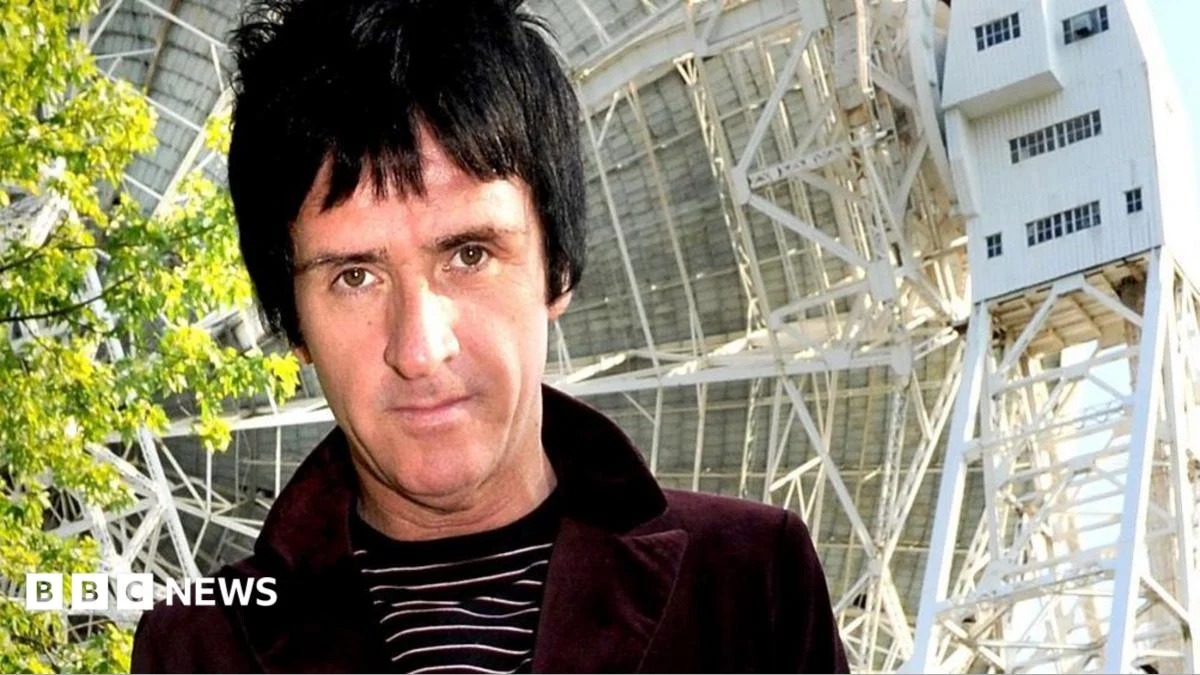
Jodrell Bank’s historical significance alone warrants its preservation. Established in 1945 by Sir Bernard Lovell, it rapidly became a global pioneer in radio astronomy, home to the colossal Lovell Telescope, a marvel of engineering completed in 1957. This impressive instrument, initially known as the Mark I, quickly became instrumental in tracking the Soviet Union’s Sputnik 1, marking a pivotal moment in the Space Race and solidifying Jodrell Bank’s place on the world stage. Over decades, it has been at the forefront of groundbreaking discoveries, from the detection of quasars and pulsars to pioneering gravitational lensing studies and the development of Very Long Baseline Interferometry (VLBI). Its contributions have fundamentally reshaped humanity’s understanding of the cosmos, providing an unparalleled legacy of innovation and scientific excellence that continues to inspire generations.
Beyond its scientific output, Jodrell Bank has cultivated a unique cultural resonance. The stark, majestic presence of the Lovell Telescope against the Cheshire sky has captivated artists and audiences alike, serving as a backdrop for a myriad of creative endeavors. The open letter specifically references figures who have played concerts or broadcast from the observatory, testament to its unique blend of science and art. The pioneering spirit of Kraftwerk, for instance, finds a natural echo in the observatory’s quest for the unknown, while the emotive soundscapes of bands like Elbow and Doves resonate with the vastness of space that Jodrell Bank explores. Comedian Dara Ó Briain, known for his passion for science communication, and Poet Laureate Simon Armitage, who often explores themes of humanity and discovery, further exemplify the broad appeal and inspirational power of this extraordinary site. This cultural connection ensures that Jodrell Bank is not merely a scientific facility but a profound source of inspiration, bridging the gap between the empirical and the imaginative.
The "beacon of science" at Jodrell Bank is described as "more ambitious than ever, with exciting plans already under way that will ensure the UK’s relevance and leadership in the rapidly evolving domain of space exploration and utilisation." This ambition is concretely demonstrated by its designation as the headquarters for the new Square Kilometre Array Observatory (SKAO). The SKAO represents the most ambitious scientific endeavor in human history, aiming to build the world’s largest radio telescope, spanning continents. As its central nervous system, Jodrell Bank will coordinate a global network of telescopes, processing unimaginable quantities of data to unlock secrets of the universe, from the dawn of the first stars and galaxies to the mysteries of dark energy and the search for extraterrestrial life. This role positions the UK at the very heart of global astronomy, fostering international collaboration, attracting top scientific talent, and driving technological innovation in areas such as computing, data science, and artificial intelligence.
Furthermore, Jodrell Bank’s capabilities extend beyond pure research into areas of critical global safety and security. The observatory plays an "essential role" in monitoring and tracking phenomena that pose potential threats to life and infrastructure on Earth. Its sophisticated instruments are vital for "tracking space debris," a growing concern as thousands of defunct satellites and rocket fragments orbit our planet, threatening operational spacecraft and future space missions. By contributing to comprehensive space situational awareness, Jodrell Bank helps mitigate the risk of collisions, which could cripple essential satellite services that underpin modern society.
The observatory’s capacity to monitor "destructive solar flares" is equally crucial. These powerful bursts of radiation from the Sun can unleash geomagnetic storms that disrupt power grids, communication networks, GPS systems, and even aircraft operations. Early warning systems, informed by observations from facilities like Jodrell Bank, allow for precautionary measures to be taken, minimizing the potentially catastrophic impact of such events. Additionally, its work in tracking "satellites and asteroids" contributes to planetary defense efforts. Identifying and monitoring near-Earth objects (NEOs), including potentially hazardous asteroids, is a vital task for ensuring global safety, providing crucial data that could inform strategies for deflection or mitigation should a collision threat arise.
Crucially, Jodrell Bank is also celebrated as "the birthplace of future UK science pioneers." Its commitment to education is profound, welcoming "more than 25,000 schoolchildren every year." These visits offer invaluable hands-on experiences, sparking curiosity and nurturing an early interest in STEM subjects. Through interactive exhibits, educational workshops, and direct engagement with cutting-edge research, Jodrell Bank inspires young minds, guiding them towards careers in science, engineering, and technology. This vital outreach extends to university students, with its deep connections to the University of Manchester ensuring a continuous pipeline of talent and research excellence. By investing in Jodrell Bank, the UK is directly investing in its future workforce, its innovative capacity, and its long-term economic prosperity, ensuring a supply of skilled individuals capable of addressing the complex challenges of the 21st century.
"This only begins to explain the value of Jodrell Bank," the open letter asserts, recognizing that its multifaceted contributions are difficult to fully quantify. The observatory represents not just a collection of telescopes but a symbol of human endeavor, curiosity, and the relentless pursuit of knowledge. It is a source of national pride, a magnet for international collaboration, and a cornerstone of the UK’s scientific reputation. The cultural and scientific capital it generates far outweighs its operational costs.
The letter concludes with a powerful, pragmatic statement: "If you were offered the opportunity to realise all of these huge national and global benefits, for an investment of just £2.8m a year, you’d be foolish not to seize it." This sum, a mere fraction of many national expenditures, represents a high-return investment in scientific discovery, global safety, cultural enrichment, and the inspiration of future generations. To neglect this opportunity would be to undermine the UK’s standing as a scientific leader, to compromise its contribution to global security, and to diminish a source of profound cultural and educational value. The stars have spoken, illuminating a clear path forward: secure the funding, protect Jodrell Bank, and safeguard a legacy that continues to reach for the stars.



 atisusanti
 George Anjay
 Nakalama John

 Ramos Leo