Ramos Leo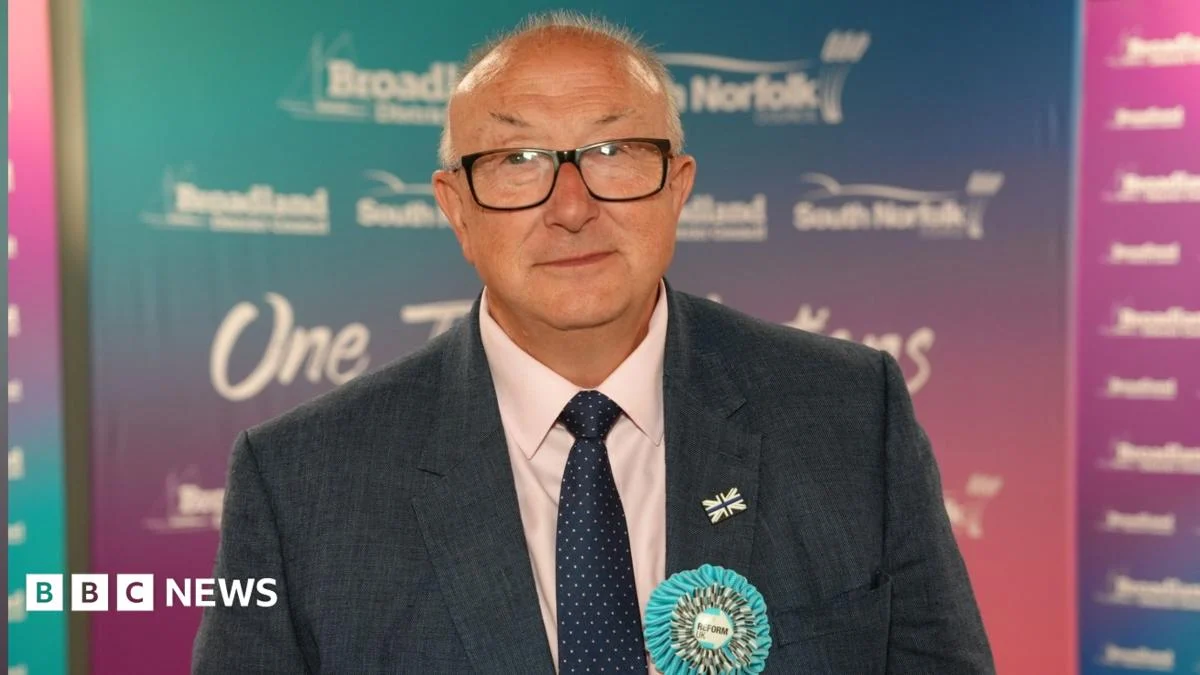
Sutton, renowned for leading several high-profile murder investigations during his extensive tenure in law enforcement, was confirmed as Norfolk’s new Police and Crime Commissioner on Friday. He secured a decisive win, garnering 32,647 votes and achieving a substantial majority of 14,299 over his closest rival, Conservative party candidate Matthew Taylor, who finished second.
The by-election itself was necessitated by the resignation of Sarah Taylor, who had initially been elected as a Labour Party commissioner but later quit the party to sit as an independent. Her departure was a protest against the impending abolition of the PCC role, a controversial move that forms part of broader plans to devolve powers to Norfolk and Suffolk and establish a new mayoral authority spanning the two counties. This context underscores the unique and possibly ephemeral nature of Sutton’s victory, as this is widely expected to be the final police and crime commissioner election held, barring any unforeseen resignations or departures.
Despite the historical significance for Reform UK, the election was marred by exceptionally low voter engagement. Turnout stood at a mere 17.14%, with only 122,739 people casting their ballots from the eligible electorate. This figure represents the second lowest turnout since the PCC role was established in 2012, with some polling station areas reporting participation rates as low as 6%. Such low engagement raises ongoing questions about the public’s understanding and value of the PCC position, even as it is slated for abolition.
For Reform UK, Sutton’s election represents a tangible breakthrough. While Rupert Matthews currently serves as a Reform UK PCC, he was initially elected as a Conservative candidate before later switching parties. Sutton’s win, therefore, is the first time a candidate has been voted into the role directly representing Reform UK, offering the party a significant boost and a platform to demonstrate its governance capabilities at a local level.
Upon the announcement of his victory, Sutton expressed profound joy and a commitment to his new responsibilities. Speaking from the stage, he vowed to "repay the trust the people of Norfolk have put in him" and declared his intention to "get to work on Monday." He added, "I’m overjoyed. Policing has been my life and it is the best job. I believe I can make a difference and make things better." This sentiment reflects his long-standing dedication to public service and his confidence in his ability to impact local policing.
Sutton’s professional background is undeniably impressive and forms a cornerstone of his public appeal. He is perhaps best known for his pivotal role in leading the investigation into Levi Bellfield, the notorious serial killer responsible for the murders of Milly Dowler, Marsha McDonnell, and Amélie Delagrange. The Bellfield case captivated the nation, involving complex forensic work, extensive witness testimony, and the painstaking process of linking multiple crimes across different jurisdictions. Sutton’s meticulous detective work and leadership were instrumental in securing Bellfield’s conviction, solidifying his reputation as a highly effective and determined police officer. This experience has endowed him with a deep understanding of criminal justice and public safety, qualities he hopes to bring to the PCC role.
After retiring from the police force in 2011, Sutton moved to Norfolk, but he remained a visible figure, continuing to appear in the media as a commentator on policing and criminal matters. This sustained public presence likely contributed to his name recognition and credibility during the election campaign.
Throughout his campaign, Sutton articulated a clear vision for policing in Norfolk, emphasizing a greater focus on rural crime. He argued that current priorities were "too focused on our city and towns," neglecting the specific challenges faced by Norfolk’s extensive rural communities, such as agricultural theft, fly-tipping, and isolation. His pledge to address these issues resonated with a significant portion of the electorate, particularly those living outside the major urban centres.
Matthew Taylor, the Conservative candidate, acknowledged the outcome with grace, stating he was "very happy" with his campaign efforts. "I put absolutely everything I had into this election campaign and travelled right across the length and breadth of Norfolk," he commented, reflecting on his vigorous engagement with voters across the county.
The Police and Crime Commissioner role, established in 2012, was designed to replace police authorities, aiming to make police forces more accountable to the public through directly elected officials. PCCs are responsible for holding their Chief Constables to account, setting local policing priorities, managing the police budget, and engaging with communities to ensure their voices are heard. However, the role has often been a subject of debate, with questions frequently raised about its effectiveness, public awareness, and the consistently low voter turnout in PCC elections across the country.
The impending abolition of the Norfolk PCC role is part of a wider governmental strategy to streamline local governance and enhance regional accountability through new mayoral structures. The Norfolk and Suffolk combined authority, headed by an elected mayor, is intended to oversee a broader range of responsibilities, including transport, housing, economic development, and potentially integrated public services, absorbing the functions previously handled by the PCC. This means that Colin Sutton’s tenure, while historically significant, will likely be a relatively brief one, serving until the new mayoral authority takes full effect.
Despite the short-term nature of the role, Sutton’s victory is a powerful statement about voter sentiment and the potential for newer parties like Reform UK to break through in local elections. It suggests a willingness among some voters to look beyond traditional party lines, particularly when presented with candidates who offer strong professional credentials and a clear, focused agenda.
The full results of the by-election were as follows:
- Colin Sutton, Reform UK: 32,647 (Elected)
- Matthew Taylor, Conservative: 18,343
- Martin Schmierer, Green Party: 16,907
- Marcus Pearcey, Independent: 16,402
- Beth Jones, Labour Party: 14,192
- Mark Buckton, Restore Britain: 13,319
- Christopher Brown, Liberal Democrat: 10,499
As Colin Sutton prepares to take office, his election not only marks a personal triumph but also underscores a pivotal moment for Reform UK, securing its first directly elected PCC amidst a backdrop of significant change in local governance for Norfolk and Suffolk. His challenge will be to demonstrate the impact of his experience and vision within a role that is both newly claimed and on the cusp of dissolution.



 Nakalama John
 George Anjay
 atisusanti
 Roy Suryo