Ramos Leo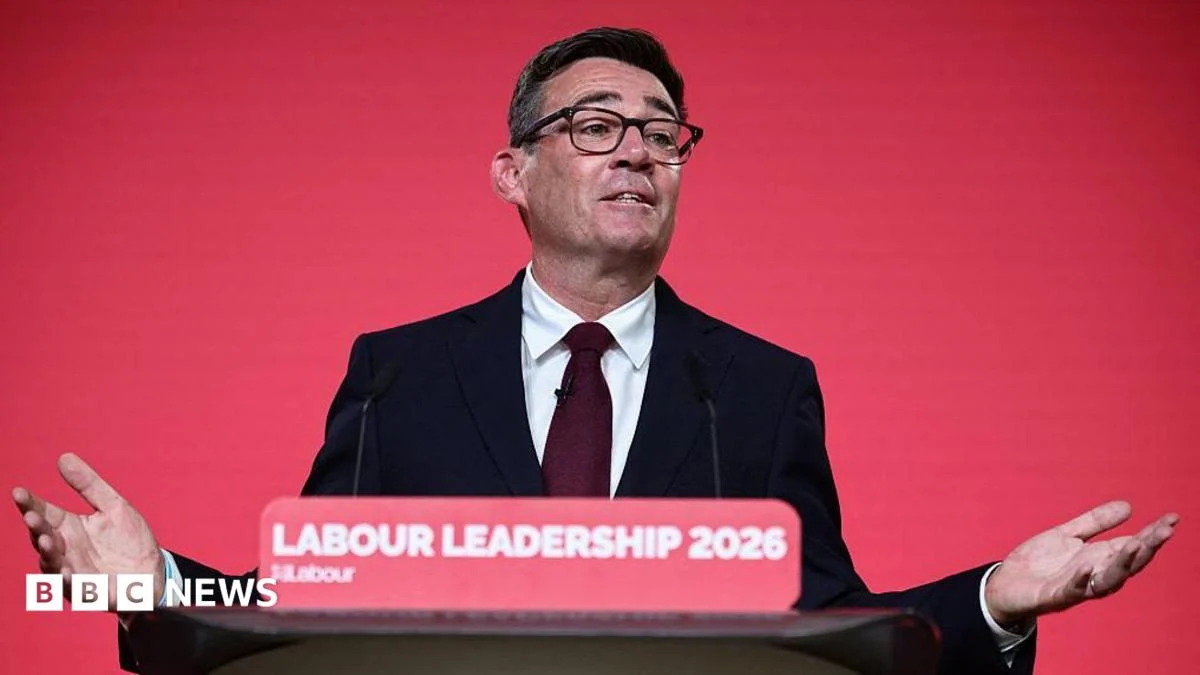
Reform UK leader Nigel Farage wasted no time in articulating his strong opposition, stating that Burnham "comes in with absolutely no mandate of any kind at all." Farage’s pointed criticism underscores a fundamental democratic debate, arguing for "an immediate general election so the country can decide the future." This demand highlights the extraordinary circumstances of Burnham’s premiership, which will commence without a popular mandate from a general election, instead stemming from an internal party leadership contest following Sir Keir Starmer’s resignation. The pressure from Reform UK is particularly acute, given that Labour has surprisingly trailed Farage’s party in opinion polls for nearly 18 months, a stark indicator of the electoral challenges Burnham inherits. For Farage, an early election presents an opportunity to legitimise his party’s growing influence and challenge the perceived democratic deficit of an unelected Prime Minister.
In stark contrast, Liberal Democrat leader Sir Ed Davey adopted a more conciliatory tone, expressing his welcome for Burnham’s call for a more collaborative politics, emphatically stating, "my door is open." Davey’s overture suggests potential avenues for cross-party engagement on pressing national issues. He specifically outlined the Lib Dems’ priorities for such collaboration, including significant changes to the beleaguered water industry, robust support for the National Health Service (NHS) amidst its persistent crises, and comprehensive reforms to social care, with particular emphasis on increased assistance for family carers. This willingness to engage, even from opposition benches, indicates a recognition of the severity of the challenges facing the nation and potentially a desire to influence policy from a constructive standpoint, offering Burnham a potential route to building broader consensus on key reforms.
Burnham’s path to power has been remarkably swift and decisive. Having returned to Parliament just a month ago through a by-election victory in Makerfield, his political trajectory rapidly accelerated. He cemented his status as the sole leadership candidate after securing overwhelming backing from within the Labour Party, garnering support from 379 Labour MPs and all 11 trade unions affiliated with the party earlier this week. This comprehensive endorsement signals a rare moment of unity within a party often prone to internal factionalism, suggesting a powerful mandate from Labour’s various wings. His ascension marks a successful culmination of previous leadership ambitions, having run twice before for the Labour leadership, learning lessons that evidently paved the way for this triumph.
The formal transition of power is scheduled for Monday, when Burnham will take over from Sir Keir Starmer as prime minister following a traditional reception with King Charles III. This ceremonial step will officially usher in a new era for the Labour Party and the country. As reporters pressed him on the composition of his first cabinet, Burnham maintained a degree of secrecy, stating, "I am finalising those decisions, and I will come to conclusions very shortly, and then I will announce those on Monday." This deliberate pacing suggests a careful and strategic approach to forming a team that will reflect his vision and unite the party.
In his inaugural speech as Labour leader, delivered at the historic TUC headquarters in central London, Burnham offered a glimpse into his governing philosophy and cabinet selection criteria. He affirmed that his appointments would reflect "all parts of our party" and "all communities," a clear signal of his intent to foster unity and broad representation. This commitment suggests a desire to bridge internal ideological divides and ensure diverse voices from across the UK are heard at the highest levels of government, potentially balancing different Labour factions and ensuring geographical and demographic diversity.
A central tenet of Burnham’s forthcoming government, as articulated in his speech, is a pledge to restore "hope back" to working-class communities, which he contended the political class had "turned its back on." This powerful rhetoric underpins his long-standing commitment to devolve power away from Westminster to the regions, a message that has been a consistent cornerstone of his political platform since he announced his bid to replace Sir Keir. His extensive experience as the former Mayor of Greater Manchester provides him with unique insights into the practicalities and benefits of regional autonomy, shaping his belief that local communities are best placed to address their own challenges.
Burnham vowed that his government would deliver the most significant changes in decades, explicitly rejecting the "neoliberal" policies that have dominated the past 40 years, a period that notably includes his own time in previous Labour governments. This marks a clear ideological pivot, promising a return to more interventionist, state-led approaches. A key component of this vision is a commitment to "reindustrialise the country," signaling potential major investments in manufacturing, green technologies, and infrastructure, aimed at rebuilding the nation’s productive capacity and creating high-quality jobs outside of traditional economic hubs.
Addressing Labour MPs directly, Burnham underscored the paramount importance of internal cohesion, stating his intention to work relentlessly to build a culture of "one Labour team." He issued a stark warning against internal strife, declaring, "We won’t beat Britain’s new right if we are consumed by infighting and pulling in different directions." This message reflects a deep understanding of the historical challenges Labour has faced due to factionalism and an urgent desire to present a united front against formidable political opponents. He further articulated his governing approach as being characterised by "problem-solving rather than point-scoring," a pragmatic stance aimed at fostering constructive engagement and effective governance. Reassuring his audience, he concluded with a declaration of conviction: "I have a plan," signaling confidence in his strategic direction.
While his initial speech was notably light on specific policy details, these are widely anticipated to be unveiled as he settles into Downing Street next week. However, he did highlight one top priority: reforming the social care system. Burnham pledged to "expend quite a lot of political capital" on what he described as a long-neglected sector, underscoring the urgency and personal significance of this issue for him. The complexities of social care reform are significant, particularly because social care is a devolved matter, meaning any reforms Burnham intends to implement will primarily apply only to England, requiring careful coordination and potentially different approaches across the UK’s constituent nations.
The issue of how social care should function and be funded has been a persistent Gordian knot for successive governments and opposition parties. Unlike the NHS, which is free at the point of use, social care is not, and the exorbitant costs frequently compel individuals to sell their homes to afford necessary care. Burnham has been a vocal advocate for reform for many years. During his tenure as health secretary under Gordon Brown, just weeks prior to the 2010 general election, he published a white paper proposing the creation of a National Care Service that would operate on a free-at-the-point-of-use basis, mirroring the NHS. This deeply personal commitment is rooted in his own family experience; he shared with reporters, "My dad has Alzheimer’s, and you see what the staff have to put up with. It’s not their fault. The system’s broken." He passionately criticised Westminster’s historical failure to tackle this issue, adding, "You can’t leave social care like this. And this is part of my criticism of Westminster. It has flinched over the years from these big decisions."
The Conservative Party, through its chairman Kevin Hollinrake, immediately challenged Burnham to recall Parliament, currently in recess until September, to explain his plan to MPs. Hollinrake asserted, "It’s not too late for Andy Burnham to do the right thing, make a statement, and answer questions from members of Parliament on Monday about his ‘plan’." This demand is a clear political maneuver, aiming to put immediate pressure on the incoming Prime Minister to articulate his agenda under parliamentary scrutiny, potentially exposing any perceived gaps or weaknesses.
Meanwhile, trade unions, a crucial pillar of Labour’s support base, voiced their high expectations. Linda Hobson, from Unison, one of the unions affiliated with Labour, emphasised the weight of responsibility on Burnham, stating that he "must get this right and bring back the hope he promises." This sentiment encapsulates the hopes of many Labour supporters who are looking to Burnham to revitalise the party and deliver tangible improvements to public services and working conditions.
Having run twice previously for the Labour leadership, Burnham’s successful bid this time round marks a remarkable and rapid return to national prominence following his by-election victory in Makerfield just last month. This unexpected surge to power comes at a critical juncture for Labour, which has been struggling in opinion polls against Reform UK for an extended period. Supporters are desperately hoping that Burnham’s arrival as prime minister will reverse their party’s fortunes and provide a much-needed boost ahead of a future general election.
Sir Keir Starmer’s resignation last month, driven by his candid admission that he was "not best placed to lead his party into the next general election," set the stage for Burnham’s rise. Heavy Labour losses in May’s local elections, coupled with Burnham’s by-election win, had intensified calls from within his own MPs for Sir Keir to step aside and allow Burnham to take the helm. Despite the circumstances of his departure, Burnham paid tribute to Sir Keir on Friday, celebrating his record in government, which included improving rights for workers and renters, overseeing a reduction in NHS waiting lists, and bringing rail back under public control. This gesture of appreciation underscores a desire for continuity and unity, even amidst a significant leadership change. As Burnham prepares to enter Downing Street, he carries the hopes and expectations of a party eager for renewal and a nation grappling with profound challenges, all while facing the immediate scrutiny of a political system eager to test his "plan."


 Roy Suryo
 Nakalama John
 atisusanti