
 Ramos Leo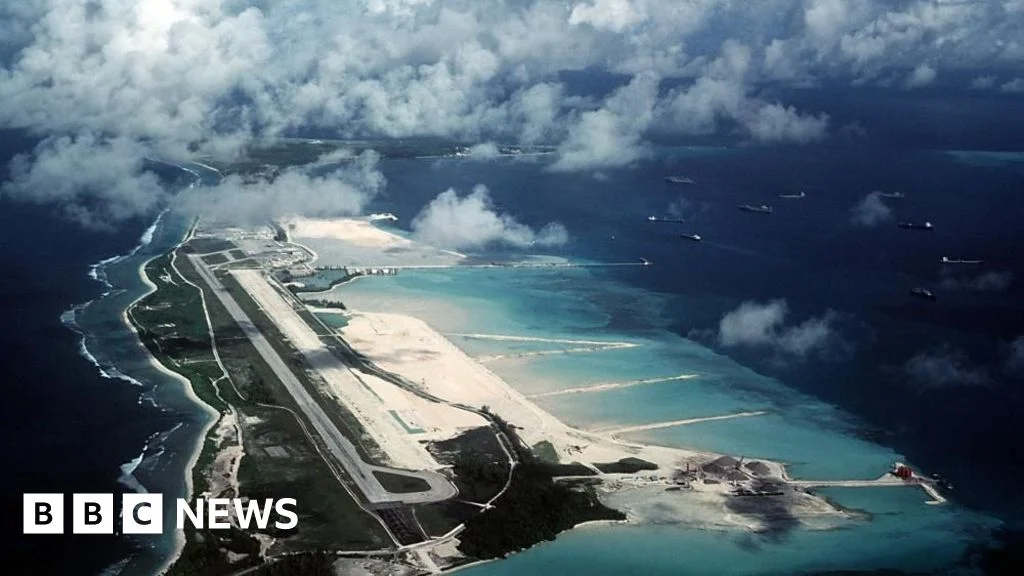
The United Kingdom’s Foreign Secretary, Yvette Cooper, has unequivocally stated the nation’s unwavering commitment to providing robust defensive support against what she termed "reckless Iranian threats." However, she adamantly insisted that Britain would not be drawn into a wider, potentially destabilizing conflict in the already volatile Middle East. This crucial statement came in the wake of alarming reports indicating that Tehran had targeted the strategically vital joint US-UK military installation situated on Diego Garcia, a remote island within the Chagos Archipelago. Initial intelligence suggested that two ballistic missiles had been launched towards the island, raising immediate concerns across international diplomatic and security circles.
Speaking after the emergence of these significant developments, Cooper underscored that safeguarding UK interests inherently included taking proactive defensive measures against such sophisticated ballistic missile threats. She explicitly acknowledged Iran’s escalating pattern of threats not only to international shipping lanes, which are critical arteries of global commerce, but also to Britain’s key partners in the Gulf region. Reaffirming the government’s position, the Foreign Secretary reiterated the UK’s desire for a swift and comprehensive resolution to the ongoing conflict, emphasizing the imperative of de-escalation.
Detailed accounts from reputable sources, including The Wall Street Journal and CNN, citing unnamed US officials, confirmed the firing of ballistic missiles at Diego Garcia. Crucially, these reports also indicated that neither weapon successfully reached its intended target. One of the ballistic missiles reportedly experienced a catastrophic failure during its flight trajectory, while the other was effectively intercepted and neutralized by a US warship stationed in the vicinity, preventing any impact on the base or its personnel. The BBC has independently corroborated these reports, understanding them to be accurate, further solidifying the veracity of the incident.
Despite the attempted strike, considerable skepticism persists regarding Iran’s actual capability to deploy missiles with the requisite range to hit Diego Garcia, which lies approximately 2,350 miles from Iranian territory. This vast distance poses a significant technological challenge for many conventional missile systems. The BBC further understands that the Iranian missile launches occurred sometime during the period spanning late on Thursday night into Friday morning. Initial information surrounding the incident was initially limited, only confirming that it had taken place before Friday afternoon. This timeline is significant as it preceded a critical meeting of ministers in London where discussions centred on the regional conflict and, notably, the UK’s agreement to permit the US to utilize British military bases for potential retaliatory strikes against Iranian sites implicated in targeting shipping through the Strait of Hormuz. In line with its standard operational security protocols, the US military has, to date, declined to offer any official comment on the incident.
Foreign Secretary Yvette Cooper firmly reiterated the UK government’s consistent position during her interview on Saturday, underscoring the delicate balance the nation seeks to maintain. "As the Prime Minister has made clear," she stated, "we will provide defensive support against these reckless Iranian threats, but we have not been – and we continue not to be – involved in offensive action." She further elaborated on the strategic rationale behind this approach: "We will not be drawn into a wider conflict because we think we need to see as swift as possible resolution in the UK national interest but also to support regional stability." This carefully articulated stance aims to deter aggression while simultaneously preventing an expansion of hostilities that could have devastating consequences for the region and beyond.
The airbase on Diego Garcia holds immense strategic importance, serving as a critical asset for both the US and UK. Its geographical location in the heart of the Indian Ocean makes it an ideal staging ground, capable of accommodating long-range bombers and facilitating extensive operations. For many years, it has functioned as a crucial launchpad for military operations across the Middle East and parts of Asia. However, its potential use in direct US strikes against Iran has been deliberately limited by the UK government. British policy dictates that its airbases can only be utilized for strikes targeting sites that pose a direct threat to UK interests and those of its allies in the region, a condition that has guided decisions regarding the scope of operations originating from Diego Garcia.
In a related development, Prime Minister Sir Keir Starmer held a telephone conversation with the Cypriot president on Saturday. During this call, the Prime Minister explicitly reiterated that RAF Akrotiri, a significant British airbase located in Cyprus, would not be among the bases used by the US to target Iranian missile sites. This assurance came after a recent incident earlier in the month, where Tehran launched several unmanned drones towards the military base in Cyprus. One of these drones reportedly struck the runway, causing "minimal" damage, highlighting Iran’s broader campaign of projecting its military capabilities and intentions.
The escalating tensions have drawn sharp criticism from Iran’s Foreign Minister, Abbas Araghchi, who earlier this week warned that the UK’s participation was "putting British lives in danger" and asserted that Iran would "exercise its right to self-defence" should its interests be threatened. Domestically, the UK government’s approach has also faced scrutiny. The Liberal Democrats and the Green Party have vociferously called for a parliamentary vote in the House of Commons on the contentious issue of allowing the US to utilize UK bases for potential strikes, arguing for greater democratic oversight and accountability. Meanwhile, Conservative leader Kemi Badenoch has criticized the government’s decision, dramatically labeling it the "mother of all U-turns," suggesting a perceived inconsistency or shift in policy.
Beyond the immediate security concerns, the conflict’s ripple effects are expected to impact the global economy. Prime Minister Sir Keir Starmer is scheduled to convene a Cobra meeting next week, focusing on comprehensive plans to mitigate the inevitable impact of the war on the cost of living within the UK. The International Energy Agency has already issued warnings, anticipating that disruptions to global oil supplies, particularly from the Middle East, will significantly affect wider energy markets, leading to potential price hikes and economic instability. Foreign Secretary Cooper underscored this concern on Saturday, stating that Iran’s "reckless attempt to hijack the global economy" was directly contributing to the rising cost of living, and that supporting families through this economic turbulence remained the government’s "top priority."
Adding another layer of geopolitical complexity to the situation is the long-standing issue of British control over the Chagos Islands, of which Diego Garcia is the largest. In a significant diplomatic move, the UK government has agreed to cede sovereignty of the Chagos Islands to Mauritius, while crucially retaining the ability to lease back the vital military base on Diego Garcia. Sir Keir Starmer has previously defended this intricate deal, insisting it was absolutely "necessary to protect the continued operation of the base" amidst persistent attempts from Mauritius to dispute the legality of British sovereignty over the islands through international legal channels.
Historically, the Chagos Islands have been under continuous British control since 1814, initially administered as a dependency of Mauritius, another British colony at the time. However, in 1965, a pivotal decision was made: the Chagos Islands were controversially separated from Mauritius and formally constituted as a distinct British overseas territory in their own right, a move that preceded Mauritius gaining its independence. As part of this arrangement, the UK government provided Mauritius with a compensation grant of £3 million, a sum that has long been a point of contention and legal dispute. The current agreement, therefore, represents an attempt to resolve this historical grievance while simultaneously safeguarding the strategic military presence that Diego Garcia provides for Western security interests in a critical global region. The interplay of these historical, diplomatic, and military factors underscores the multifaceted challenges facing the UK as it navigates the volatile geopolitical landscape of the Middle East and its broader international responsibilities.




 Roy Suryo

 Nakalama John
 atisusanti
