
 George Anjay
Stew, a 35-year-old from Montana, found himself drawn into the burgeoning world of prediction markets after a few successful forays into sports betting. Roughly 18 months ago, he downloaded the Kalshi app, initially for its familiar sports wagering functionalities. However, his curiosity soon led him down a more provocative path. After encountering reports of unusual pizza delivery spikes near the Pentagon during a late-night social media scroll, Stew placed a $10 bet on the likelihood of Iran’s Ayatollah Ali Khamenei being "out" by March 1st. This wager, while seemingly innocuous to him, pushed the boundaries of what Americans are permitted to bet on, igniting a broader debate about the ethics and regulation of these increasingly popular platforms.
Prediction markets, platforms like Kalshi and Polymarket that allow users to trade contracts based on the outcome of future events, have experienced an explosive surge in popularity over the past year, facilitating over $44 billion in trades. This rapid growth signifies a dramatic shift in the American betting landscape, a territory that was largely illegal for sports until 2018 and for elections until as recently as 2024. While a significant portion of activity on these platforms centers on sporting events, users can speculate on an astonishing array of subjects, ranging from local election results and Federal Reserve interest rate decisions to eschatological predictions about the Second Coming of Jesus Christ. The platforms gained significant traction during the 2024 US presidential campaign, particularly after a pivotal legal victory that permitted election betting, with many users observing the shifting odds favoring Donald Trump.
However, it is the more grim and unsettling wagers, particularly those tied to ongoing military conflicts involving Iran, Venezuela, and Israel, that have recently captured public and regulatory attention. The core issue is that, in theory, such bets directly contravene existing US financial regulations, which explicitly prohibit trading on contracts related to war, terrorism, assassination, gambling, and other illegal activities. Despite these prohibitions, these platforms have seen millions of trades executed, raising serious concerns among critics.

These critics are now calling for a stringent crackdown on these prediction market applications. They argue that these platforms are not merely facilitating speculation but are actively enabling what they describe as unseemly, and potentially illegal, war profiteering. Furthermore, concerns have been raised about the potential for these markets to generate national security risks and create avenues for insider trading and corruption. Craig Holman, a government affairs lobbyist for the Public Citizen advocacy group, voiced his alarm, stating, "You have now opened up gambling basically on almost anything and it has turned into this very, very gruesome type of thing on the death of a head of state." Public Citizen recently filed a complaint regarding these specific types of bets.
Polymarket, in particular, has become a focal point of this controversy. Bloomberg estimates that the platform has hosted over $500 million in bets related to the Iran conflict, at one point even offering odds on the possibility of a nuclear detonation. While Polymarket, headquartered in New York but operating with limited US presence, eventually removed the nuclear detonation market after it drew significant social media scrutiny, users can still place bets on events such as the timing of US forces entering Iran. The company did not respond to requests for comment from the BBC.
Kalshi also eventually cancelled the Khamenei market, which had garnered $54 million in trades. The company cited US regulations that bar "having a market directly settling on someone’s death." Kalshi, which also declined to comment for this article, has asserted that such war-related bets are occurring on unregulated exchanges operating outside the United States.
These controversial war bets have become entangled in a larger, ongoing battle over the appropriate regulatory framework for prediction market firms. Unlike traditional gaming companies, which set their own odds, prediction market platforms function more akin to stock exchanges, allowing users to bet against each other on future event outcomes through "event contracts." This structure has led the Commodities Futures Trading Commission (CFTC), the national financial regulator, to claim oversight.

However, a significant contingent of critics argues that these platforms are essentially gambling operations masquerading as financial exchanges, an attempt to evade the stricter rules and taxes faced by traditional gaming firms, which are typically regulated at the state level. This fundamental disagreement over regulatory jurisdiction has resulted in numerous legal battles across the United States, as states assert their authority to regulate these companies as gaming entities, rather than deferring oversight entirely to the CFTC.
Even some Republican lawmakers have expressed unease, and traditional gaming firms have intensified their lobbying efforts, enlisting the help of Mick Mulvaney, a former Trump administration official, to champion their cause in Washington. Ben Schiffrin, director of securities policy at Better Markets, an organization advocating for financial reforms, stated, "Nobody is saying that gambling shouldn’t be allowed. What the states are saying and other advocates are saying is things that are gambling should be regulated as gambling."
The timely and suspicious nature of bets related to military operations involving Israel, Venezuela, and Iran has further fueled these calls for regulatory action. Advocacy groups have issued alerts to consumers, warning them about the risks of insider trading, and have urged the Biden administration to more rigorously enforce existing rules against wagering on war.
Despite these mounting pressures, the likelihood of a comprehensive crackdown appears uncertain. The Biden administration had previously adopted a firm stance, proposing a ban on sports and politics-related event contracts. However, this regulatory push faltered after a court defeat and the subsequent election of Donald Trump, whose administration signaled a more hands-off approach to regulation. In a significant development last month, the CFTC announced its intention to withdraw the proposed ban on sports and election-related contracts. Furthermore, the CFTC has sided with prediction market firms in their legal disputes with states, a stance that Michael Selig, Trump’s former chairman of the Commodity Futures Trading Commission, criticized in a recent op-ed as "overzealous." Selig argued that event contracts serve "legitimate economic functions," enabling businesses to hedge against risks triggered by specific events. He concluded, "It’s clear that Americans like the product and want to participate," while emphasizing that platforms must still adhere to existing rules.
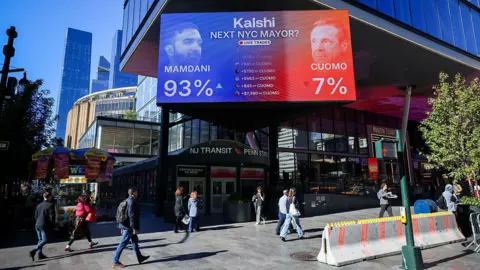
As scrutiny intensifies, Polymarket has announced measures to more formally police suspicious activity. Kalshi, which prominently advertises its status as a "regulated exchange," has become more transparent about its efforts to combat insider trading. The company recently disclosed punishments in two insider trading cases and revealed that it had initiated 200 investigations over the past year. Kalshi also ultimately cancelled the $54 million market related to Khamenei’s potential ouster, stating in a series of public announcements that it does not "list markets directly tied to death," a carve-out that was already part of its terms of service. The firm promised to make its terms clearer from the outset, acknowledging that it had "learned a lot" from the incident.
However, this decision still ignited outrage among some users, including Stew, who felt the company had initially "buried" the relevant rules. He found the explanation disingenuous, given the limited number of plausible scenarios for Khamenei’s departure. Stew, who received a refund for his bet, expressed skepticism about whether stricter regulation was the ultimate solution. He sympathized with the notion that the debate seemed to be bogged down in semantics, observing, "They call it contract trading, which I guess technically speaking, that’s what it is. But if we’re all being honest here, it’s still betting."



 Nakalama John
 atisusanti
 Ramos Leo
 Roy Suryo
 Nana Banana