
 Ramos Leo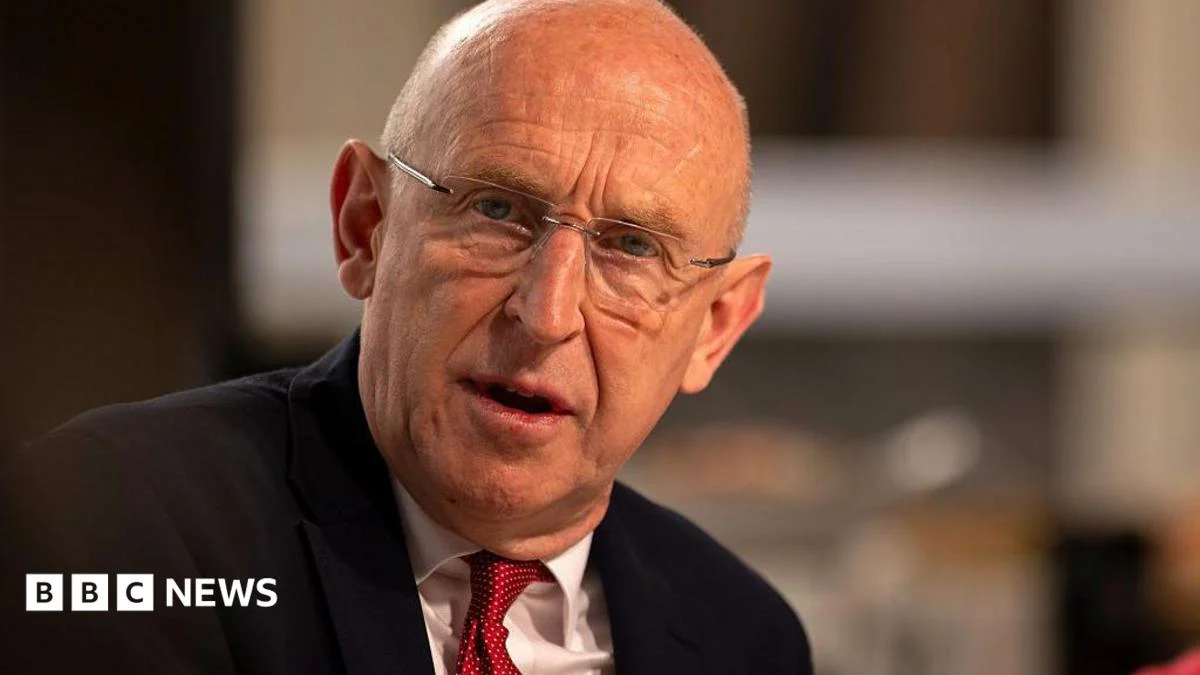
In his concise but impactful message, Healey articulated the core philosophy underpinning the forthcoming financial blueprint. He stated, "This will be a Budget that moves money and power out of Westminster, and into every postcode around Britain." This declaration underscores a central tenet of the Burnham government’s agenda: a profound commitment to devolution and regional empowerment. It suggests a departure from a highly centralized model, aiming to rebalance economic and political influence across the nation. This vision aligns directly with Prime Minister Burnham’s broader strategy to foster local growth, enhance regional accountability, and ensure that investment and decision-making are tailored to the specific needs of communities beyond the capital. The practical implications are expected to include significant new funding streams and enhanced fiscal autonomy for local authorities and combined authorities, potentially transforming the landscape of public service delivery and regional economic development.
Healey further emphasized the bedrock principles guiding his fiscal strategy: "It will be built on fiscal discipline. It will meet our fiscal rules. It’ll give businesses and families some of the stability they need to plan for the future." The commitment to fiscal discipline is a crucial message aimed at reassuring financial markets and the public alike. Following a period of economic volatility, the government is keen to project an image of responsible stewardship. Meeting the government’s self-imposed fiscal rules – which typically involve targets for reducing national debt as a proportion of GDP and controlling day-to-day borrowing – will be a significant challenge, but one the Chancellor appears determined to meet. This adherence to strict financial parameters is intended to cultivate an environment of economic stability, providing a predictable framework within which businesses can invest and expand, and families can plan their personal finances with greater certainty. The closing remark, "Now, let’s get on with the job," conveyed a sense of urgency and determination, reflecting the scale of the economic challenges and the government’s resolve to address them swiftly.
Prime Minister Andy Burnham has consistently reinforced the government’s steadfast commitment to Labour’s fiscal rules on spending and borrowing. These rules are designed not only to manage the national debt responsibly but also to provide the government with credibility on the global stage. Crucially, Burnham has also repeatedly vowed to uphold the party’s explicit 2024 manifesto pledges, which include an iron-clad guarantee not to increase income tax, Value Added Tax (VAT), or national insurance contributions. These "tax lock" pledges represent a significant political promise, offering reassurance to the electorate that the new government will not raise the tax burden on ordinary working families. However, these commitments simultaneously present a considerable fiscal constraint, narrowing the Treasury’s options for generating additional revenue to fund new policy initiatives or address existing pressures on public services.
Economists have widely pointed out the tightrope the government must walk. They warn that the administration has only a small margin of error for hitting its fiscal targets, especially given the self-imposed tax restrictions. The national debt remains substantial, and the long-term impact of recent global events continues to weigh on the economy. Furthermore, several of Prime Minister Burnham’s stated policy priorities, while popular and necessary, are inherently costly and will inevitably put additional strain on the public finances. For instance, the commitment to increased defence spending, driven by evolving geopolitical realities and a desire to bolster national security, requires significant investment. Similarly, the ambition for better social care, a sector that has long faced underfunding and increasing demand from an aging population, will necessitate substantial new allocations. Balancing these expenditure demands with the fiscal rules and tax pledges will be Chancellor Healey’s central challenge.
Since taking office earlier this month, Prime Minister Burnham has already unveiled a host of new cost-of-living policies, signaling an immediate focus on alleviating the financial pressures faced by households across Britain. A standout measure among these is the scrapping of VAT from domestic electricity bills, a move designed to directly reduce household energy costs. This policy, while popular, carries a substantial price tag for the Treasury, further narrowing the fiscal headroom available. The Budget is expected to provide more details on how such measures will be funded within the strict fiscal framework, potentially through efficiency savings elsewhere or by re-prioritizing existing spending. These interventions demonstrate the government’s awareness of the ongoing cost-of-living crisis and its determination to provide tangible relief to families struggling with rising expenses.
A key pillar of the government’s regional agenda was highlighted last Friday when the Prime Minister announced a groundbreaking initiative: for the first time, all mayors of city regions in England would receive a share of income tax revenue. This radical policy is a tangible manifestation of Burnham’s efforts to decentralize power and resources away from London. It aims to empower local leaders with greater financial autonomy, allowing them to make investment decisions that are directly relevant to their specific regions rather than being dictated by central government. The idea is that local accountability will lead to more effective and targeted spending on infrastructure, skills, and regeneration projects, fostering economic growth and opportunity in areas that have historically felt overlooked. The precise details of what portion of taxes the mayors will receive, and the mechanism for its distribution, are eagerly anticipated and are expected to be a central feature of the upcoming Budget statement. This move could fundamentally reshape local governance and finance in England.
Beyond domestic policy and fiscal constraints, Chancellor Healey will also have to grapple with the profound and ongoing impact of the war in the Middle East on the global and national economy. Geopolitical instability in this crucial region has historically led to spikes in energy prices, disruptions to supply chains, and increased market volatility. The persistent inflation observed recently, partly exacerbated by the "Iran war" as mentioned in the original context, poses a direct threat to economic stability and household purchasing power. Higher energy costs feed into the cost of goods and services, contributing to a broader inflationary environment that erodes the value of savings and increases the cost of living. Managing these external shocks will require careful economic forecasting and potentially proactive measures to shield consumers and businesses from the worst effects.
The Chancellor inherits a financial landscape shaped by his predecessor, Rachel Reeves, who left a buffer of approximately £22 billion against her fiscal rules. This "headroom" represented a cushion that allowed for some flexibility in spending or unexpected economic shocks. However, the relentless pressure of persistent inflation, significantly influenced by the geopolitical tensions and supply chain disruptions emanating from the Middle East, could have substantially eroded this buffer. Inflation increases the cost of government borrowing, public sector wages, and procurement, meaning that the same amount of money buys less. Healey will need to assess the true extent of this erosion and determine how much fiscal flexibility, if any, remains. His Budget will therefore not only set the course for the new government but also provide a crucial update on the nation’s financial health in the face of complex domestic and international challenges. It will be a defining moment for the Burnham administration, testing its ability to deliver on its promises while maintaining fiscal responsibility in a volatile world.


 George Anjay
 Nakalama John
 atisusanti
 Roy Suryo
 Nana Banana