atisusanti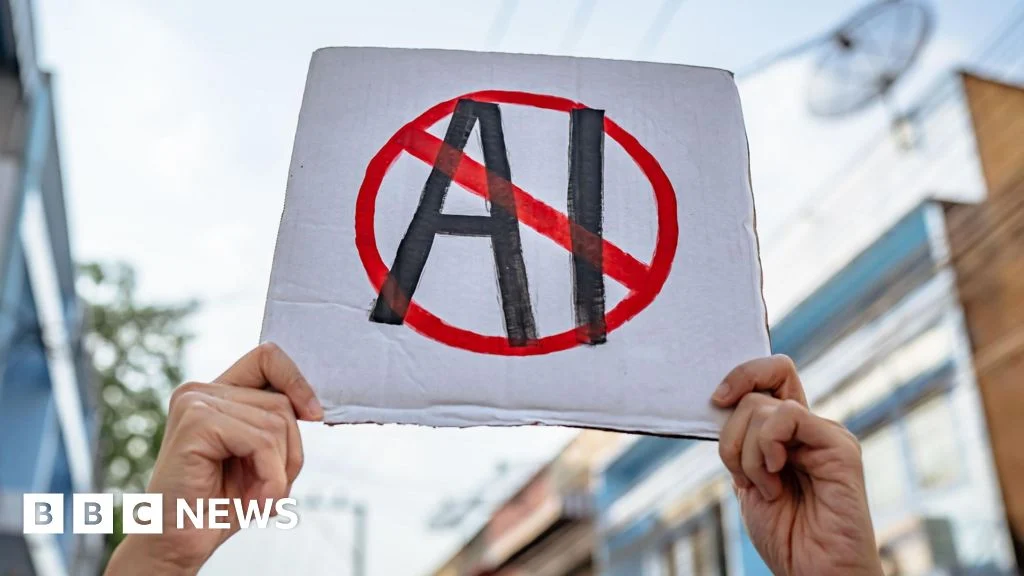
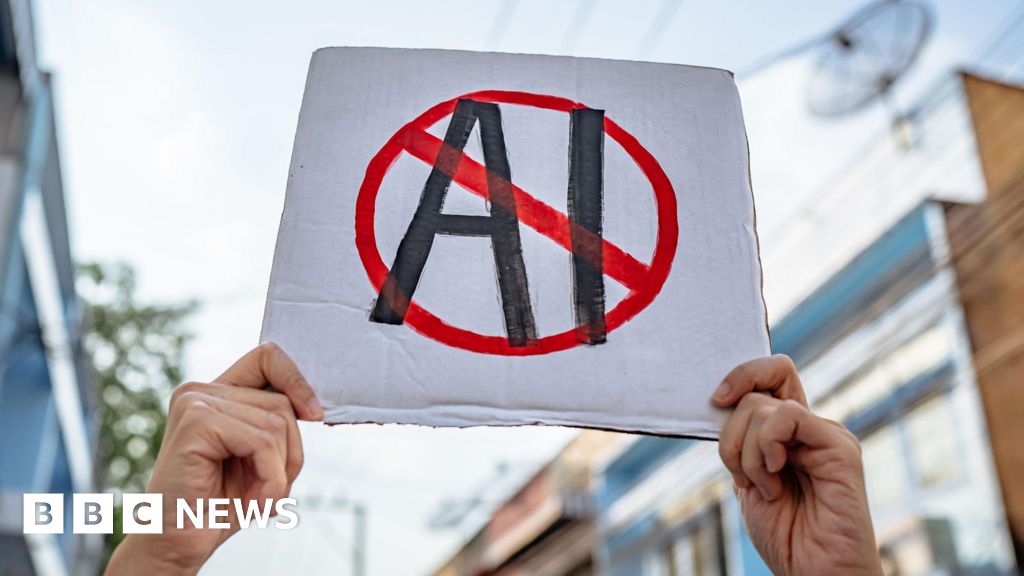
In an era increasingly defined by artificial intelligence, a global movement is rapidly gaining momentum, driven by a collective desire to distinguish human creativity from algorithmic output. Organizations worldwide are engaged in a high-stakes race to develop a universally recognized "human-made" label, a counter-movement against the burgeoning integration of AI in creative and professional fields. Declarations such as "Proudly Human," "Human-made," "No A.I," and "AI-free" are proliferating across various mediums, including films, marketing campaigns, literary works, and websites, reflecting growing anxieties about AI-driven automation and its potential to displace human jobs and professions.
BBC News has identified at least eight distinct initiatives striving to create a globally recognized mark of authenticity, akin to the established "Fair Trade" logo that signifies ethically produced goods. However, the proliferation of competing labels and the inherent ambiguity surrounding the definition of "AI-free" risk confusing consumers, according to experts who emphasize the urgent need for a unified standard.
"AI is creating significant disruption, and competing definitions of what is ‘human made’ are confusing consumers," states Dr. Amna Khan, a consumer expert at Manchester Metropolitan University. "A universal definition is essential to build trust, clarification, and confidence," she emphasized in a conversation with BBC News.
This surge in demand for AI-free certification systems stems from the widespread adoption of generative AI tools. These powerful technologies are increasingly being employed to automate tasks and generate content that was once the exclusive domain of human professionals in industries spanning fashion, advertising, publishing, customer service, and music. The organizations spearheading these labeling efforts are diverse, encompassing both commercial enterprises and non-profit entities based in the United Kingdom, Australia, and the United States.
How the Certifications Work
The approaches to AI-free certification vary significantly. Some platforms, like no-ai-icon.com, ai-free.io, and notbyai.fyi, offer downloadable labels that can be used freely or for a fee, often with minimal or no auditing processes. In contrast, systems such as aifreecert implement a more rigorous and costly vetting process. This involves professional analysts and specialized AI-detecting software to verify whether a product has indeed eschewed AI.
However, AI experts caution that achieving industry-wide consensus on what constitutes "human-made" will be an intricate challenge, given the pervasive nature of AI in contemporary tools and workflows. "AI is now so ubiquitous and so integrated into different platforms and services, that it’s truly complicated to establish what ‘AI free’ means," observes AI Research Scientist Sasha Luccioni. "From a technical perspective, it’s hard to implement. I think that AI is a spectrum, and we need more comprehensive certification systems, rather than a binary with AI/AI-free approach," she elaborated.
Generative AI-Free: A Specific Focus
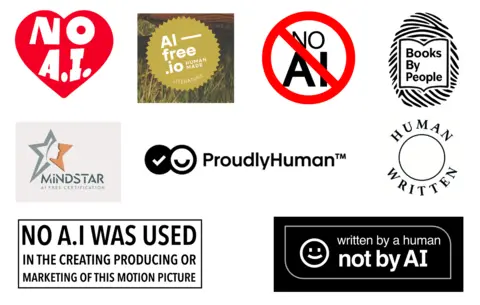
A common sentiment among those advocating for these labels is that the line should be drawn specifically at the use of generative AI – the sophisticated chatbots capable of producing text, code, music, or video in response to human prompts. This distinction is crucial, as generative AI represents the most significant disruption to creative professions.
The producers of the 2024 Hugh Grant thriller, "Heretic," notably included a disclaimer in the closing credits, stating: "No generative AI was used in the making of this film." Building on this precedent, film distributor The Mise en scène Company has adopted a similar "No AI was used" stamp for the poster of its latest film, a project largely conceived, written, directed, and edited by a single individual. The company has also published its own classification system online, with the aspiration that other industry players will adopt it. "We support the AI industry and we think its an exciting time, but we think that as a result of AI content there is an economic premium put on human-made content and we want to lean into that," says CEO Paul Yates.
AI Disruption Across Industries
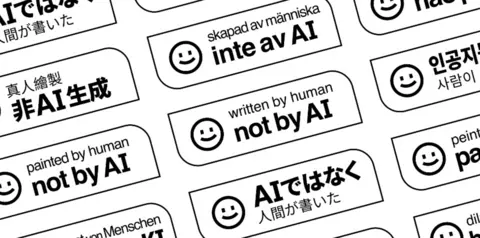
The arts and entertainment sectors are currently at the forefront of this backlash against AI, largely due to the rapid and cost-effective production of entire books and films using AI. Bollywood film studio Itelliflicks, for instance, openly advertises its specialization in creating films entirely with AI.
However, the transparency surrounding AI’s involvement in product creation is not always consistent. In the literary world, the prominent publishing house Faber and Faber began implementing a "Human Written" stamp on select books. Author Sarah Hall, who requested this designation for her novel "Helm," decried the use of books to train AI models as "creative larceny at scale." Yet, Faber has not provided details on its definition of "Human Written" books or the auditing processes in place to ensure AI-free content.
The UK-based company Books by People champions the need for a trusted standard for disclosing human authorship. "Publishers are grappling with a new landscape where books can be produced in minutes rather than months or years, and readers can no longer be sure if a book reflects a human experience or machine imitation," remarks co-founder Esme Dennys. The company has already partnered with five publishers and applied its stamp to the book "Telenova," released in November. Books by People employs a publisher fee structure that mandates questionnaires about their practices and author vetting, alongside periodic book sample checks for AI-generated text.

In Australia, the competing company Proudly Human employs an even more stringent system to guarantee that authors are not utilizing generative AI. Their auditors conduct thorough checks at every stage of publication, meticulously examining any alterations from manuscript to ebook edition. Proudly Human is poised to announce partnerships with several major publishing houses and plans to expand its verification services to music, photography, film, and animation. Company director Alan Finkel asserts that systems like his are indispensable, given the perceived failure of industry-led efforts to analyze and label AI-generated content. "A certification of ‘human origin’ is needed, but self-certification is not good enough, so we have a full verification process to make sure that its truly human originated material," he concluded.

 George Anjay
 Nakalama John
 Ramos Leo
 Nana Banana